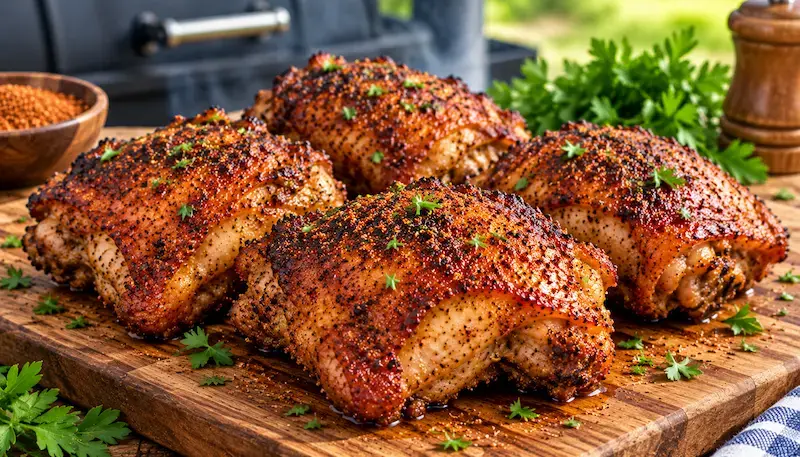
Smoked Chicken Thighs (Juicy with Crispy Skin)
Smoked chicken thighs are an easy way to get juicy, tender chicken with deep smoky flavor and beautifully crisp skin. This recipe uses bone-in, skin-on chicken thighs, a simple savory BBQ seasoning, and a two-stage smoking method that builds smoke flavor before finishing at higher heat for better skin.
Whether you’re cooking on a pellet grill or another backyard smoker, you’ll learn how long to smoke chicken thighs, the best smoker temperature to use, and how to tell when they’re perfectly cooked. Serve them for an easy family dinner, weekend BBQ, or summer cookout with your favorite sides.
Round Steak Recipes Snapshot
- Recipe Ideas: 12 easy dinner recipes
- Main Ingredient: Round steak (top round or bottom round, depending on the recipe)
- Cooking Methods: Skillet, slow cooker, and oven
- Difficulty: Easy to moderate
- Best For: Budget-friendly weeknight meals and family dinners
- Flavor Options: Garlic butter, savory gravy, herbs, and bold seasonings
Table of Contents
Ingredients for Smoked Chicken Thighs
You only need a handful of simple ingredients to make flavorful smoked chicken thighs. Bone-in, skin-on thighs work especially well because they stay juicy during smoking, while a light coating of oil helps the seasoning stick and promotes better browning during the high-heat finish.
- 6 bone-in, skin-on chicken thighs (about 2½–3 lb total)
- 1 tablespoon avocado oil or olive oil
- 2 teaspoons smoked paprika
- 1½ teaspoons kosher salt
- 1 teaspoon garlic powder
- 1 teaspoon onion powder
- 1 teaspoon brown sugar
- ½ teaspoon ground black pepper
- ½ teaspoon dried thyme
- ¼ teaspoon cayenne pepper, optional
- ⅓ cup BBQ sauce, optional for glazing
Key Ingredients and Why They Work
Bone-in, skin-on chicken thighs: The higher fat content helps the meat stay moist during smoking, while the skin protects the surface and can become crisp during the hotter finishing stage.
Smoked paprika: Adds color and a mild smoky flavor that complements the smoke from the grill without overpowering the chicken.
Garlic and onion powder: Build a savory base and distribute more evenly over the chicken than fresh minced aromatics.
Brown sugar: Adds a subtle sweetness and helps with browning. Only a small amount is needed so the seasoning stays savory rather than overly sweet.
Avocado or olive oil: Helps the dry seasoning adhere to the chicken and encourages browning during the finishing stage.
Cayenne pepper: Completely optional. Add it if you want a little heat without changing the overall flavor of the recipe.
BBQ sauce: Also optional. Brush it on near the end of cooking rather than at the beginning so the sugars are less likely to darken too quickly.
Easy Ingredient Substitutions
No avocado oil? Olive oil works well. You can also replace the homemade seasoning blend with your favorite low-sugar BBQ rub. For a sweeter finish, use BBQ sauce during the final minutes of cooking. If you prefer a more savory flavor, skip the brown sugar and BBQ sauce entirely.
How to Smoke Chicken Thighs
Learning how to smoke chicken thighs is simple when you use temperature in two stages. Start at 250°F to build smoky flavor, then increase the heat to 350°F toward the end of cooking to help render the skin and give it a better texture. Use an instant-read thermometer rather than relying on cooking time alone.
Step 1: Prep and Season the Chicken
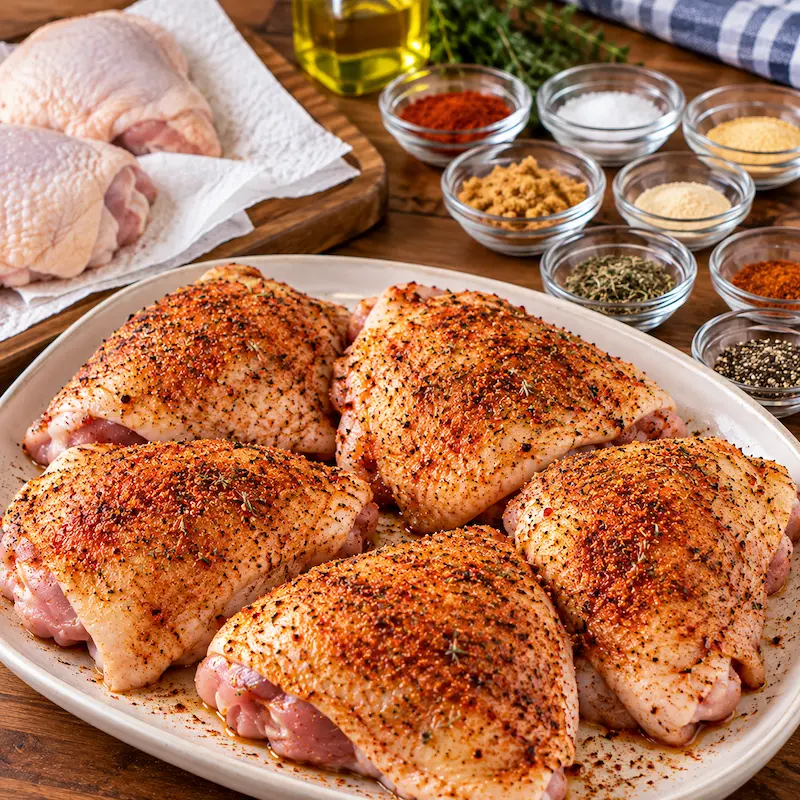
Pat the chicken thighs thoroughly dry with paper towels, especially on the skin side. Trim away any loose pieces of skin or excess fat. Lightly coat the thighs with avocado oil or olive oil, then combine the smoked paprika, kosher salt, garlic powder, onion powder, brown sugar, black pepper, thyme, and optional cayenne. Season the chicken evenly on all sides.
Step 2: Preheat the Smoker to 250°F
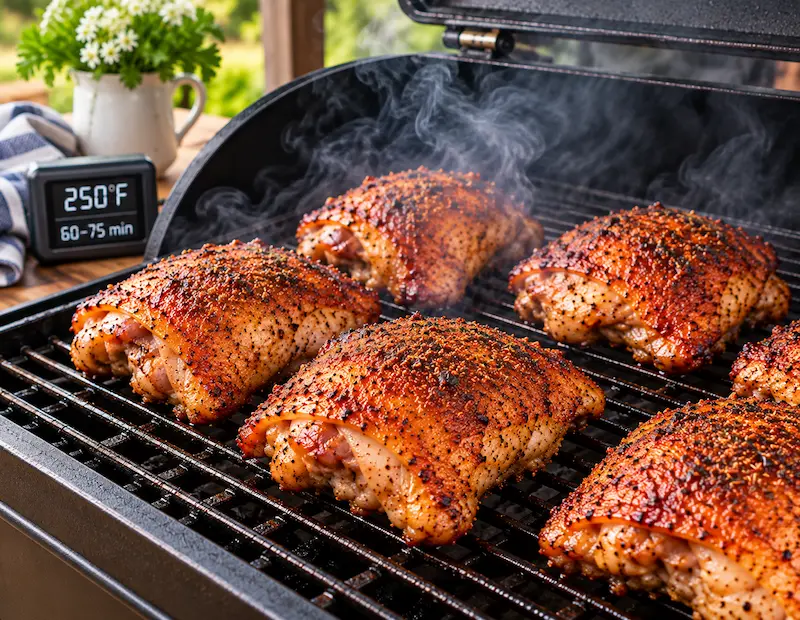
Preheat your smoker to 250°F and allow the temperature to stabilize. Place the seasoned chicken thighs directly on the grill grates, skin-side up, leaving a little space between each piece so smoke and heat can circulate evenly.
Step 3: Smoke Until the Chicken Builds Color
Smoke the chicken thighs at 250°F for about 60–75 minutes, keeping the lid closed as much as possible. The skin should begin to deepen in color and the chicken should develop a noticeable smoky aroma. Cooking time can vary depending on the size of the thighs and how steadily your smoker holds temperature.
Step 4: Increase the Heat for Better Skin
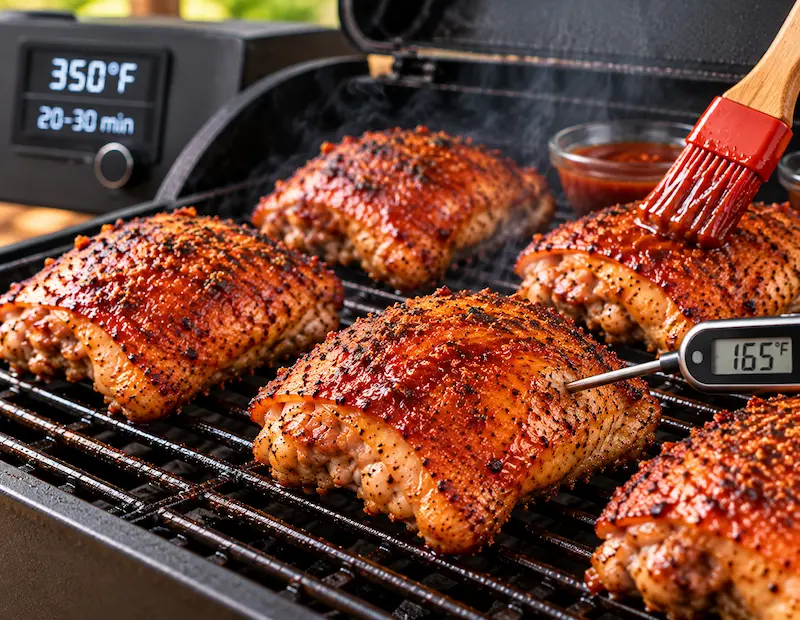
Increase the smoker temperature to 350°F and continue cooking for approximately 20–30 minutes, or until the chicken reaches a safe internal temperature. If using BBQ sauce, brush on a light layer during the final 10–15 minutes so it can set without burning.
Step 5: Check the Temperature and Rest
Insert an instant-read thermometer into the thickest part of each thigh without touching the bone. For food safety, chicken should reach a minimum internal temperature of 165°F, as recommended by the USDA. Once cooked, remove the thighs from the smoker and let them rest for 5–10 minutes before serving.
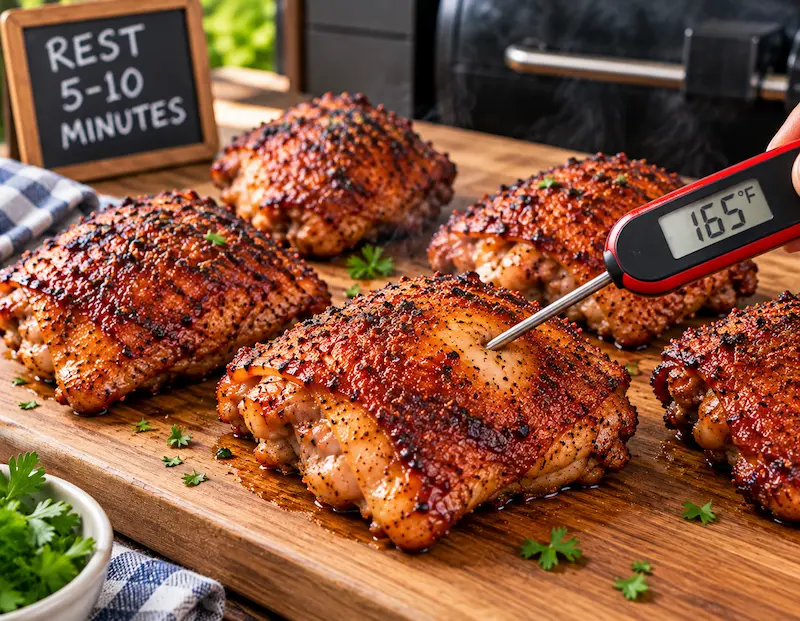
Pro Tip: For crispier skin, make sure the chicken is very dry before seasoning and avoid crowding the smoker. If the skin still needs more color at the end, give the thighs a brief high-heat finish while watching them closely to prevent burning.
How Long to Smoke Chicken Thighs
How long to smoke chicken thighs depends on the smoker temperature, the size of the thighs, and whether they are bone-in or boneless. For bone-in, skin-on thighs, plan on roughly 1½ to 2 hours at 250°F, including the higher-heat finishing stage used in this recipe.
Use cooking time as a guide rather than a guarantee. The most reliable way to know when smoked chicken thighs are done is to check the thickest part with an instant-read thermometer. Poultry should reach at least 165°F for food safety.
| Smoker Temperature | Approx. Cooking Time* | What to Expect |
|---|---|---|
| 225°F | 2–2½ hours | More time for smoke flavor; skin may stay softer |
| 250°F | 1½–2 hours | Good balance of smoke, moisture and cooking time |
| 275°F | 1¼–1¾ hours | Faster cooking and better rendering of the skin |
| 350°F | Used as a finishing temperature | Helps finish cooking and improve skin texture |
Cooking times are estimates for bone-in, skin-on chicken thighs and can vary with thigh size, smoker type, outdoor temperature, and temperature fluctuations. Always verify doneness with a food thermometer.
How Long to Smoke Chicken Thighs at 250°F
At 250°F, bone-in chicken thighs generally need about 1½ to 2 hours total, depending on their size and your smoker. For this recipe, smoke the thighs at 250°F for about 60–75 minutes, then raise the smoker to 350°F to finish cooking and improve the skin.
Start checking the internal temperature during the final stage rather than waiting for a fixed cooking time. Insert the thermometer into the thickest part of the thigh without touching the bone.
Bone-In vs. Boneless Smoking Time
Boneless chicken thighs usually cook faster than bone-in thighs. If you substitute boneless, skinless thighs, begin checking them earlier because their smaller size and lack of bone can shorten the cooking time. Use 165°F as the minimum safe internal temperature, rather than relying only on the clock.
Best Temperature for Smoked Chicken Thighs
The best temperature for smoked chicken thighs depends on whether you prioritize deeper smoke flavor, faster cooking, or crispier skin. For this recipe, 250°F is a great starting temperature because it gives the chicken time to absorb smoky flavor while cooking gently.
Once the thighs have developed good color and smoke flavor, increase the smoker to 350°F to finish cooking. The higher heat helps render more fat beneath the skin and improves its texture while the dark meat stays juicy.
Whatever smoker temperature you choose, use an instant-read thermometer to determine doneness. Chicken thighs should reach at least 165°F in the thickest part, with the thermometer positioned away from the bone.
Quick Answer: Start smoked chicken thighs at 250°F, then increase the smoker to 350°F for the final stage. This two-temperature method balances smoky flavor with better skin texture.
How to Get Crispy Skin on Smoked Chicken Thighs
Crispy skin can be challenging when smoking chicken at low temperatures because the skin contains fat and moisture that need enough heat to render properly. A few simple preparation and cooking techniques can make a noticeable difference.
1. Dry the Chicken Thoroughly
Pat the chicken thighs very dry with paper towels before adding oil and seasoning. Removing excess surface moisture gives the skin a better chance to crisp instead of steam.
2. Don’t Use Too Much Oil
A light coating is enough to help the seasoning stick. Too much oil can leave the surface greasy rather than crisp.
3. Smoke Skin-Side Up
Arrange the thighs skin-side up with space between each piece. Good airflow helps the heat and smoke circulate around the chicken.
4. Finish at Higher Heat
This is the most important step in our method. After smoking at 250°F, increase the smoker to 350°F for the final stage. The additional heat helps render the fat beneath the skin and produces a better texture than low-temperature smoking alone.
5. Add BBQ Sauce Near the End
If you want saucy smoked chicken thighs, wait until the final 10–15 minutes before brushing on BBQ sauce. Adding a sugary sauce too early can soften the skin and may cause the sugars to darken too quickly.
Pro Tip: If the chicken is fully cooked but the skin still needs more crispness, give the thighs a brief high-heat finish while watching them closely. Rendered fat and sugary seasonings can brown quickly.
Best Wood for Smoking Chicken Thighs
Choosing the right wood can add another layer of flavor to smoked chicken thighs without overpowering the chicken. Mild to medium smoking woods generally work best with poultry, especially when the recipe already includes a savory BBQ seasoning.
Apple and cherry wood are excellent choices for this recipe because they add a mild, slightly sweet smoke that pairs well with chicken. Pecan gives the thighs a richer, nuttier smoke flavor, while hickory provides a stronger, more traditional BBQ taste.
| Wood | Smoke Flavor | Best For |
|---|---|---|
| Apple | Mild, slightly sweet | Balanced everyday smoked chicken |
| Cherry | Mild, fruity | Subtle sweetness and deeper color |
| Pecan | Medium, nutty | Richer BBQ flavor |
| Hickory | Strong, savory | Bold traditional smoke flavor |
Our Best Choice for This Recipe
For this smoked chicken thighs recipe, apple or cherry wood is our preferred starting point. Both complement the smoked paprika, garlic, and small amount of brown sugar without overwhelming the chicken. If you prefer a stronger smoke profile, try pecan or use hickory more moderately.
Pro Tip: If you’re new to smoking chicken, start with a milder wood such as apple or cherry. You can always use a stronger wood next time, but overly heavy smoke is difficult to correct once the chicken is cooked.
Can You Marinate Chicken Thighs Before Smoking?
Yes, you can marinate chicken thighs before smoking. A marinade can add extra flavor and help season the meat beyond the surface, making it a good alternative to the dry rub used in this smoked chicken thighs recipe.
Before placing marinated thighs in the smoker, let the excess marinade drip off and pat away excess moisture from the skin with paper towels. A drier surface gives the skin a better chance to develop good texture during the higher-heat finishing stage.
If you want to use a marinade instead of the dry seasoning in this recipe, try our chicken thigh marinade recipe for a simple, flavorful option. After marinating, follow the smoking temperature and doneness guidelines in this recipe.
How Long Should You Marinate Chicken Thighs?
For most marinades, a few hours is enough to add flavor to chicken thighs. The ideal marinating time depends on the ingredients in the marinade, especially its acidity, so follow the timing recommended in the marinade recipe you’re using. Always marinate raw chicken covered in the refrigerator, not at room temperature.
What to Serve with Smoked Chicken Thighs
Smoked chicken thighs pair well with classic BBQ sides, fresh vegetables, and simple comfort-food favorites. Since the chicken already has a rich smoky flavor, a mix of creamy, fresh, or slightly tangy sides can help balance the meal.
For an easy family dinner or backyard BBQ, try them with:
- Creamy coleslaw — cool and tangy against the smoky chicken.
- Baked beans — a classic choice for a BBQ-style meal.
- Corn on the cob — especially good grilled alongside the chicken.
- Potato salad — an easy make-ahead option for cookouts.
- Mac and cheese — a richer choice for a comfort-food dinner.
- Roasted or grilled vegetables — a lighter option that keeps the meal simple.
- Mashed potatoes — ideal when serving the thighs as a family dinner rather than a cookout.
If you’re serving a crowd, choose two or three sides with different textures rather than making everything heavy. A creamy side, fresh vegetable, and warm BBQ favorite create a more balanced plate.
Don’t Have a Smoker?
No smoker? You can still enjoy juicy chicken thighs with crisp skin using your oven. The flavor won’t have the same natural smoke profile, but oven baking is an easy alternative for weeknight cooking.
Try our crispy baked chicken thighs for an oven method designed specifically for juicy meat and crisp skin.
How to Store and Reheat Smoked Chicken Thighs
Leftover smoked chicken thighs store well, making them a convenient option for meal prep or an easy meal the next day. Proper storage and reheating help preserve both flavor and texture while keeping the chicken safe to eat.
Refrigerating Leftovers
Let the leftovers cool briefly, then place the chicken thighs in a shallow airtight container and refrigerate them promptly. Cooked chicken should be refrigerated within 2 hours and kept at 40°F or below. Use refrigerated leftovers within 3–4 days.
Freezing Smoked Chicken Thighs
For longer storage, place cooled chicken thighs in a freezer-safe airtight container or freezer bag, removing as much excess air as practical. Freeze individual portions if you want to reheat only what you need.
Thaw frozen leftovers safely in the refrigerator before reheating. Refrigerator-thawed leftovers can be kept for 3–4 days before use.
Best Way to Reheat Smoked Chicken Thighs
For better skin texture, reheat the chicken in an oven or air fryer rather than relying on the microwave. Heat until the chicken is hot throughout and reaches 165°F internally. Avoid overheating it longer than necessary, which can dry out the meat.
The microwave works when speed matters, but the skin will usually be softer. When microwaving, cover the chicken and rotate or reposition it as needed for more even heating.
Quick Storage Guide
| Storage Method | How Long | Important Tip |
|---|---|---|
| Refrigerator | 3–4 days | Keep at 40°F or below |
| Freezer | Longer storage | Use airtight freezer-safe packaging |
| Reheating | Until 165°F internally | Oven or air fryer helps preserve skin texture |
Food Safety Tip: At a summer cookout, refrigerate leftover chicken within 2 hours, or within 1 hour when the outdoor temperature is above 90°F.
Frequently Asked Questions About Smoked Chicken Thighs
Do You Need to Flip Chicken Thighs While Smoking?
No. When smoking the thighs skin-side up with indirect heat, you generally don’t need to flip them. Leaving them in place also avoids unnecessary opening of the smoker, which can cause temperature fluctuations. Check their position if your smoker has noticeable hot spots.
Can You Make Smoked Chicken Thighs on a Pellet Grill?
Yes. This recipe works well on a pellet grill. Preheat it to 250°F, smoke the chicken as directed, then increase the temperature to 350°F for the finishing stage. Cooking times can vary between grills, so use internal temperature rather than the clock alone to determine doneness.
Can I Use Boneless, Skinless Chicken Thighs?
Yes, but they will cook faster and won’t develop the same crispy skin as bone-in, skin-on thighs. Start checking their internal temperature earlier and cook them to at least 165°F.
Should I Put BBQ Sauce on Chicken Thighs Before Smoking?
It’s better to wait until near the end of cooking. Brush on BBQ sauce during the final 10–15 minutes so the sauce can set without exposing its sugars to heat for the entire smoking process. You can also skip the sauce entirely and serve the thighs with the dry rub alone.
How Do I Know When Smoked Chicken Thighs Are Done?
Check the thickest part of the thigh with an instant-read thermometer without touching the bone. Chicken must reach at least 165°F internally for food safety. Check each thigh individually because pieces of different sizes may finish at slightly different times.
Why Is the Skin on My Smoked Chicken Thighs Rubbery?
Rubbery skin usually happens when chicken skin cooks too long at low heat without enough higher-temperature cooking to render the fat effectively. Pat the thighs dry before seasoning and use the 350°F finishing stage in this recipe to improve the skin texture.
Final Thoughts
These smoked chicken thighs bring together deep smoky flavor, juicy dark meat, and better skin texture without making the cooking process complicated. Starting low for smoke flavor and finishing at higher heat gives you a practical method that works well for family dinners, weekend BBQs, and summer cookouts.
Keep the dry rub simple, use a wood flavor you enjoy, and let the internal temperature—not just the clock—guide you to doneness. Once you’ve made them, this is an easy smoking method to come back to whenever chicken thighs are on the menu.
Did You Make These Smoked Chicken Thighs?
If you tried this recipe, leave a star rating and a comment below. Tell us which smoking wood you used and whether you served the thighs dry-rubbed or finished with BBQ sauce. Your feedback can help other home cooks get great results, too.
We’d Love Your Feedback
Made this recipe? We’d love to hear how it turned out! Leave a star rating and share your experience to help other home cooks cook with confidence.
There are no reviews yet. Be the first one to write one.