
Easy Turkey Sausage Patties Recipe for Busy Mornings
Some mornings feel like a rush: packing school lunches, getting ready for meetings, and wanting something simple and warm. You don’t have to use processed meats or unknown ingredients for a protein-packed start. Making turkey sausage patties yourself lets you control the taste and health, and it’s quicker when you prepare them ahead.
This homemade turkey sausage recipe uses lean ground turkey (usually 93% lean) and a few spices from your pantry. It makes a tasty breakfast sausage that goes well with eggs, fruit, or a whole-wheat English muffin. Prep and cooking times are short, taking 20–45 minutes, and you get eight patties that can be stored in the fridge or freezer for later.
In this article, you’ll find clear steps, useful tips, and easy substitutions. These turkey sausage recipes for dinner or breakfast can fit into your busy weeknight schedule and meal prep plans.
Table of Contents
Why choose turkey sausage patties for breakfast
You want a breakfast that fuels your morning without weighing you down. Turkey breakfast sausage is a lean, protein-rich option. It fits busy routines and simple meal plans.
High-protein start to your day
Lean ground turkey delivers about 22–23 grams of protein per typical serving. This amount helps sustain energy and curb mid-morning hunger. It also supports daily protein goals, whether you work out or head to the office.
Health benefits versus processed breakfast meats
When you make turkey sausage homemade, you control the ingredients. You avoid many preservatives and additives found in processed options. Using 93% lean ground turkey lowers total and saturated fat compared with typical pork sausage.
Nutrition examples for a serving often fall in the range of 169–198 calories. This includes roughly 9–11 grams of fat and about 23 grams of protein. Sodium will depend on how much salt you add, with common recipes ranging from about 290–500 mg per serving.
Versatility for busy schedules
Patties cook quickly and store well. You can cook them fresh, refrigerate uncooked or cooked patties for 4–5 days, or freeze up to three months. This flexibility makes turkey sausage patties ideal for meal prep.
If you need something faster, a turkey sausage homemade crumble works great. Cook the ground meat, toss in seasoning, and use it in sandwiches, bowls, or casseroles when you don’t have time to shape patties.
Practical uses are many: serve patties with eggs, tuck them into English muffins or biscuits, chop them into scrambled eggs, place them under eggs over easy, or add them to breakfast casseroles and savory bowls for a filling morning meal.
| Feature | Typical Value | Why it matters |
|---|---|---|
| Protein per serving | ~22–23 g | Supports muscle maintenance and satiety |
| Calories per serving | ~169–198 kcal | Fits most calorie goals for a balanced breakfast |
| Total fat | ~9–11 g | Lower than many pork sausages for heart-conscious diets |
| Sodium range | ~290–500 mg | Adjustable when you make turkey breakfast sausage at home |
| Storage | Refrigerate 4–5 days, freeze up to 3 months | Supports batch cooking and easy reheats |
What you need: ingredients for homemade turkey sausage
Creating great turkey sausage at home is easy with just a few ingredients. Start with lean ground turkey and add classic breakfast seasonings. This way, you can make turkey sausage for dinner or a week’s worth of meals.
Primary ingredients
Begin with 1 pound of lean ground turkey (93% lean). This will yield about eight patties. Doubling the recipe gives you around 16 patties, making it perfect for a crowd.
Key seasonings for classic flavor
Season with 1 to 1.5 teaspoons of salt and black pepper. Add 1 teaspoon of ground sage and 1 teaspoon of fennel or 1½ teaspoons of toasted fennel seeds. These give a classic breakfast taste.
For a bit of heat, use 1/8 to 1/4 teaspoon of cayenne or red pepper flakes. A teaspoon of paprika, sweet or smoked, adds color and depth. These choices help make a true turkey breakfast sausage.
Optional aromatics and flavor boosters
Adding minced onion or shallot enhances the savory flavor. Fresh herbs like thyme or extra sage add brightness. A tablespoon of apple cider vinegar or red wine vinegar adds a tangy touch.
A small pinch of sugar or a teaspoon of maple syrup balances acidity. Nutmeg adds warm undertones. Toasted fennel seeds deepen the anise flavor. For a twist, try diced roasted red peppers or shredded cheddar.
| Ingredient | Amount (per 1 lb turkey) | Purpose |
|---|---|---|
| Ground turkey (93% lean) | 1 lb | Protein base; light texture for patties |
| Salt | 1–1.5 tsp | Enhances flavor balance |
| Black pepper | 1–1.5 tsp | Peppery bite |
| Ground sage | 1 tsp | Classic breakfast aroma |
| Fennel / toasted seeds | 1–1½ tsp | Sweet anise note like pork sausage |
| Garlic powder | 1 tsp | Base savory layer |
| Ground ginger | ¾–1 tsp | Warm, slightly citrusy accent |
| Cayenne or red pepper flakes | ⅛–¼ tsp | Optional heat |
| Paprika (sweet or smoked) | 1 tsp | Color and mild depth |
| Optional: onion, herbs, vinegar, sweetener | To taste (see notes) | Texture, brightness, balance |
Try using ground chicken, bison, or pork to change the flavor. If you skip fennel, caraway is a good substitute. These options let you customize your turkey sausage for any meal.
Equipment and prep tips to save time
Get your tools and workflow ready before you start with the meat. A small kit and simple habits can reduce morning stress. They also help keep your turkey breakfast sausage fresh.
First, gather essential tools for shaping and cooking. Use a large mixing bowl for even seasoning. Measuring spoons help balance salt and spices. A spatula is key for safe flipping.
A nonstick or heavy skillet ensures steady browning. Keep an instant-read thermometer ready to check for 165°F without overcooking.
Portion control is important for even cooking. A food scale helps divide meat into equal parts. Aim for about 2 oz each for eight turkey sausage patties from 1 pound. Parchment or wax paper prevents sticking while shaping and resting patties.
Use skillet spray or 1–2 teaspoons olive oil to start the pan.
Adopt time-saving prep strategies to build flavor and save mornings. Mix spices into the meat and form patties the night before. This allows your turkey sausage homemade to meld flavors. Refrigerate uncooked patties up to 24 hours for the best texture.
For convenience, double the batch and freeze extras. Freeze patties individually on a tray, then move them to a freezer bag for up to three months. When rushed, use the crumble method: cook ground turkey, stir in seasonings with a splash of water, and simmer briefly to make turkey sausage crumble without forming patties.
Work in a simple batch workflow to avoid sticky hands and uneven browning. Shape all patties and lay them on parchment while you work. If your skillet is small, cook in two batches to avoid overcrowding. Brown on medium-high, then lower the heat to finish to 165°F. This approach saves time and keeps the patties juicy.
| Task | Tool or Tip | Why it helps |
|---|---|---|
| Portioning | Food scale, 2 oz target | Even cooking and predictable servings for meal planning |
| Shaping and resting | Parchment or wax paper | Prevents sticking and speeds assembly line shaping |
| Cooking | Nonstick or heavy skillet, spatula, skillet spray | Even browning and easy flipping for consistent turkey sausage patties |
| Doneness check | Instant-read thermometer | Ensures safe internal temp of 165°F without drying |
| Make-ahead | Tray freezing, freezer bags | Store extras up to 3 months for quick turkey breakfast sausage on busy days |
| Quick option | Crumble method | Skip forming patties when you need fast turkey sausage homemade for bowls or sandwiches |
Step-by-step recipe: make turkey sausage patties
Follow this easy guide to make delicious turkey breakfast sausage. It’s simple and quick, perfect for busy mornings. You’ll learn how to make turkey sausage homemade with just a few steps.
Combine and season the meat
In a big bowl, mix 1 lb of 93% lean ground turkey. Add 1 teaspoon each of salt, black pepper, fennel, garlic powder, sage, and thyme. Also, add 1/4 to 3/4 teaspoon ground ginger and 1/8 to 1/4 teaspoon red pepper flakes for taste.
Mix gently with your hands or a spatula. Make sure the seasonings are spread out evenly. Don’t overmix to keep the patties tender.
Shape and chill
Split the mixture into eight equal parts. Shape each part into a patty, about 2 ounces. Use parchment or wax paper to prevent sticking.
Chill the patties in the fridge for 15–30 minutes. This helps them keep their shape. If you can, chill them overnight for even more flavor.
Cook to safe temperature
Heat a skillet over medium-high and add 1–2 teaspoons of olive oil or nonstick spray. Cook the patties in a single layer without crowding.
Brown the patties 2–3 minutes on each side. Then, lower the heat, cover, and cook until they reach 165°F (74°C). Use a thermometer for the best results.
Prep time is 5–20 minutes, and cooking takes about 15 minutes. One pound makes eight patties. You can make more by scaling the ingredients for the week.
Quick-cook alternative: turkey sausage crumble
Turkey sausage crumble is great for when you’re in a hurry. It’s quicker than making patties and can be ready while your coffee brews. It’s perfect for adding to casseroles, topping eggs, or mixing with pasta for a quick dinner.
It’s perfect for busy days, making breakfast casseroles, or adding protein to salads. The texture blends well into dishes, giving a classic taste without extra effort. It’s great for dinner recipes and homemade meals.
When to choose crumble
Choose crumble for quick meals, busy mornings, and last-minute dinners. It’s great for layering flavors in one skillet or spreading meat evenly. It’s also perfect for meal prep, keeping cooked turkey ready for days.
How to make crumble
Heat a skillet over medium-high heat and add ground turkey. Brown the meat, breaking it apart with a spatula until no large pieces remain. Then, stir in the seasoning mix: salt, pepper, fennel, sage, thyme, garlic powder, ginger, and a pinch of cayenne.
Add 1–2 tablespoons of water or apple cider vinegar to loosen the spices. Simmer briefly to meld flavors. Check the internal temperature reaches 165°F before serving. This method is quick and flavorful, just like homemade turkey sausage.
Use the crumble to top scrambled eggs, mix into pasta, grain bowls, or stuffed peppers. It’s versatile and saves time on busy weeknights.
Flavor variations to suit your tastes
Start with a basic turkey sausage homemade blend and tweak spices to match your mood. Small changes transform turkey sausage patties from plain to memorable without extra effort. Below are easy swaps and additions you can try at home.

Herb-forward and classic breakfast
Use 1 tablespoon each of fresh sage and thyme if available. Add toasted fennel seeds and a pinch of nutmeg for that traditional breakfast profile. If you prefer a brighter finish, stir in a teaspoon of finely grated lemon zest before shaping the patties.
Smoky, spicy, or savory twists
For a smoky edge, mix in smoked paprika and a dash of red wine vinegar. Turn up the heat with cayenne or red pepper flakes to taste. Add minced roasted red pepper or shredded cheddar to make savory, melty turkey breakfast sausage that pairs well with eggs and toast.
Swap proteins and ingredient substitutions
Try ground chicken, bison, or pork to change fat content and flavor. Omit fennel or substitute with caraway if you dislike licorice notes. Use apple cider or white wine vinegar instead of red wine vinegar when you want a milder tang.
If you follow low-carb or keto guidelines, replace sugar with monk fruit or skip sweetener completely. For paleo-friendly options, use maple syrup or honey to add a natural sweet note that melts into turkey sausage recipes for dinner or breakfast. These swaps keep texture and taste balanced while letting you adapt the recipe to diet and pantry staples.
Meal pairing ideas using turkey sausage
Start with simple pairings that highlight turkey breakfast sausage. You can create tasty plates in minutes. These ideas are great for breakfast or to speed up your morning routine.
Breakfast combinations
Try a cheddar biscuit sandwich with a fried egg and hot patty for a quick meal. Slice patties and add them to an omelet with spinach and feta for more protein.
Top whole-wheat English muffins with cottage cheese, a crumbled patty, and tomato for a filling breakfast. Pair pancakes or waffles with a savory patty for a mix of sweet and salty.
Mix crumbled sausage into a breakfast bowl with roasted potatoes, avocado, and a soft-poached egg for a hearty start. Build a casserole of eggs, potatoes, and turkey sausage for a weekend brunch that feeds many.
Recipes using turkey sausage beyond breakfast
Use crumbled turkey sausage in stuffed peppers with quinoa and marinara for a lean dinner. Swap pork for turkey in pasta sauces to cut fat while keeping flavor in family meals.
Make savory muffins or frittata muffins with turkey sausage and cheddar for easy lunches. Toss crumbled sausage into grain bowls with farro, roasted vegetables, and a lemon-tahini dressing for a balanced meal.
Stretch turkey sausage recipes for dinner by making tacos with pickled onions, salsa, and cotija cheese. Try a skillet dinner of turkey sausage, zucchini, tomatoes, and herbs for a quick, low-effort meal.
For meal prep, assemble a batch of breakfast casseroles or sheet-pan dinners that use the same cooked patties or crumble across several meals. This approach saves time while letting you enjoy a variety of recipes using turkey sausage throughout the week.
Make-ahead and meal prep strategies
Prepping turkey sausage homemade ahead saves time on busy mornings. It keeps flavors consistent. You can form patties, chill or freeze them, then finish cooking when you need a hot breakfast. A simple workflow makes weeklong breakfasts quick and reliable.
Storing uncooked patties
Form turkey sausage patties and place them on a tray lined with parchment. Chill them uncovered for 10–15 minutes to firm up. Then, transfer to an airtight container for up to 24 hours in the refrigerator.
If you need longer storage, freeze patties individually on a tray until solid. Move frozen patties into a labeled freezer bag or vacuum-sealed pack to avoid freezer burn. Proper packaging keeps turkey breakfast sausage fresh for up to three months.
Batch cooking and reheating
Cook a large batch of turkey sausage patties and cool them quickly on a wire rack. Store cooked patties in an airtight container in the fridge for 4–5 days. For longer storage, wrap patties tightly or use freezer-safe containers for up to three months.
Reheat thawed patties in a skillet over medium heat, in an air fryer at 350°F until heated through, or in the microwave with brief intervals to avoid toughness. For frozen patties, use the microwave with extra time or finish in the air fryer for a crisp edge.
You can par-cook patties, then assemble sandwiches during the week for grab-and-go meals. This approach pairs well with egg whites, whole-grain English muffins, and a slice of avocado for balanced breakfasts centered on turkey sausage patties.
Nutritional information and portion guidance
Here’s a quick guide to what’s in turkey sausage patties. It helps you fit them into your daily protein needs. The numbers are based on tested recipes and homemade batches. Your results might change based on portion size and ingredients.
Typical nutrition per serving
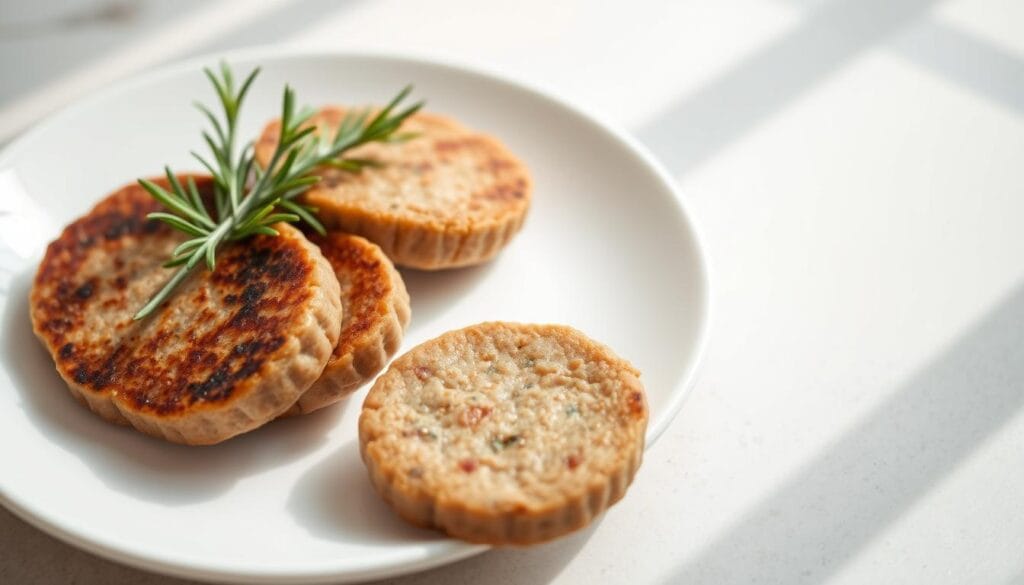
Two standard patties (about 4 ounces total) usually have 169 to 198 calories. They have 9 to 11 grams of fat and 1 to 4 grams of carbs. Each serving has around 22 to 23 grams of protein.
Cholesterol is about 84 mg. Sodium can vary, from 290 to 500 mg, depending on salt and ingredients. You’ll get some iron and potassium in each serving.
| Metric | Per serving (2 patties) | Range |
|---|---|---|
| Calories | ~180 kcal | 169–198 kcal |
| Total fat | ~10 g | 9–11 g |
| Carbohydrates | ~2.5 g | 1–4 g |
| Protein | 22–23 g | 22–23 g |
| Cholesterol | ~84 mg | ~84 mg |
| Sodium | ~395 mg | 290–500 mg |
| Notable micronutrients | Iron, potassium | Modest amounts |
Portioning for protein goals
Two patties give you 20–30 grams of protein, perfect for a morning meal. This makes turkey breakfast sausage a great choice for a filling start.
For more protein, add a third patty or pair with eggs and Greek yogurt. This helps on heavy training days.
Labeling and adjustments: cut sodium by using less salt or low-sodium substitutes. Swap in higher-fat meats like pork for more calories and fat. For exact macros, weigh your patties and track them in a nutrition app.
Food safety and cooking tips
Keeping food safe and cooking smart is key to protecting your family. It also makes turkey sausage patties taste better. Follow simple checks and use a few technique tweaks to avoid common problems when making turkey breakfast sausage at home.
Safe internal temperature
Always cook ground turkey to 165°F (74°C). Use an instant-read thermometer in the thickest part of a patty. For turkey sausage crumble, stir and check several spots until the thermometer reads 165°F and no pink remains.
Avoiding dryness and maximizing juiciness
Choose 85–93% lean turkey depending on how juicy you want the patties. Leaner meat trims fat and calories while a slightly fattier mix gives a better mouthfeel for turkey breakfast sausage.
Don’t overmix. Handle the meat gently when you form turkey sausage homemade patties to keep them tender. Pressing or packing too hard makes dense, dry results.
Start with medium-high heat to brown the outside and build flavor. After a good crust forms, lower the heat and cover the pan to finish cooking through. A splash of olive oil in the skillet helps prevent sticking and creates a crisp edge.
For extra moisture, fold in a tablespoon of grated onion, a teaspoon of vinegar, or two tablespoons of olive oil per pound of meat. Sautéed aromatics like onion and garlic add moisture and depth without masking the spice blend.
When reheating, warm gently in a skillet over low heat with a lid or in a 300°F oven. Rapid, high heat dries patties out and ruins texture.
Common troubleshooting and recipe tweaks
Small fixes often save a batch of turkey sausage patties. Quick checks can keep texture and flavor right when making turkey breakfast sausage at home.
When patties fall apart, it’s often because they were shaped too loosely, the meat was too warm, or the pans were too hot. Press the patties firmly when shaping and chill them for 15–30 minutes before cooking. This step firms the fat and helps seals form without crumbling.
Avoid overcrowding the pan. Give each patty room to brown. Sear until a crust forms, then flip only once to keep them intact. If you’re getting breakage, add a small binder: one beaten egg or 1–2 tablespoons breadcrumbs. This will help hold the turkey sausage homemade without changing cook time much.
Patties falling apart
Check your grind and moisture. Extra-lean ground turkey can be dry and crumbly. Mix gently; overworking makes tough patties. If the meat is too wet, add a tablespoon of breadcrumbs or chill the mix before shaping.
- Chill 15–30 minutes before cooking.
- Press patties firmly when shaping.
- Use one flip after a good sear.
- Add 1 egg or 1–2 Tbsp breadcrumbs as a binder.
Too bland or too spicy
For bland turkey breakfast sausage, boost fennel, sage, salt, black pepper, or smoked paprika. A splash of apple cider vinegar or a teaspoon of sugar sharpens flavors. Sautéed onion and fresh herbs add depth without extra heat.
If your patty is too spicy, dial back cayenne or red pepper flakes. Balance heat with a pinch of sugar or a dairy side like cottage cheese or scrambled eggs. Swap some cayenne for sweet paprika to keep the smoky profile without burning the palate.
| Problem | Quick Fix | Notes |
|---|---|---|
| Patties crumble | Chill patties; add 1 egg or 1–2 Tbsp breadcrumbs | Firm shaping and one flip preserve texture |
| Bland flavor | Increase fennel, sage, salt, smoked paprika; add sautéed onion | Try a splash of apple cider vinegar or red wine for brightness |
| Too spicy | Reduce cayenne; use sweet or smoked paprika; add a touch of sugar | Serve with dairy or eggs to mellow heat |
| Strong fennel/licorice note | Omit fennel or toast seeds before adding | Toasting mellows the anise flavor |
| Need more richness | Add shredded cheddar or a tablespoon of olive oil to mix | Cheese adds moisture and savory depth |
Use these tweaks next time you test a batch of turkey sausage patties. Small adjustments help tailor your turkey breakfast sausage to taste, texture, and family favorites when you prepare turkey sausage homemade.
Key Takeaways
- Homemade turkey sausage patties are a quick, high-protein alternative to processed breakfast meats.
- Use 93% lean ground turkey and simple spices for reliable turkey breakfast sausage flavor.
- Typical total time is 20–45 minutes and most batches yield about eight patties.
- Patties can be made ahead: refrigerate or freeze for fast breakfasts all week.
- These turkey sausage recipes for dinner also work well in skillet dishes and pasta bowls.
Conclusion
Making turkey sausage patties at home is quick and packed with protein. It’s perfect for busy mornings and meal prep. By using 93% lean ground turkey, you get great flavor without too much fat.
Simple seasonings like fennel, sage, thyme, ginger, and cayenne make the sausage taste amazing. You can adjust these to your liking.
Remember to cook the patties to 165°F for safety. If they fall apart, chill them or use a light binder. When you’re in a rush, try the turkey sausage crumble method. It cooks fast and keeps the flavor rich.
Freezing batches of patties makes reheating a breeze on weekdays. This saves you time and effort.
These homemade turkey sausage recipes are great for any meal. Use patties for breakfast sandwiches or crumbled sausage in skillets. You can also use it in lunch and dinner recipes.
Feel free to change the seasonings and try different proteins. This way, you can control the sodium and additives better than store-bought options.
FAQ
What is the quickest way to make turkey breakfast sausage if I’m short on time?
How much protein will I get from homemade turkey sausage patties?
Can I make the patties ahead and freeze them?
What internal temperature should turkey sausage reach for safety?
My patties fall apart in the pan. How do I prevent that?
Which seasonings create a classic breakfast sausage flavor?
How do I keep lean turkey patties from drying out?
Can I substitute ground chicken or pork for turkey in this recipe?
What are easy ways to vary the flavor—smoky, spicy, or herb-forward?
How many patties does 1 pound of turkey make and what is the typical prep/cook time?
What are practical serving ideas and recipes using turkey sausage beyond breakfast?
How can I reduce sodium and yet keep good flavor?
Is it better to cook patties in a skillet, oven, or air fryer?
Can I add cheese or vegetables to the patties?
How should I reheat frozen cooked patties for breakfast sandwiches?
We Value Your Opinion!
Tell us how this recipe worked for you — your voice counts.
There are no reviews yet. Be the first one to write one.