Top 5 Miso Salmon Recipes You’ll Love Cooking
You know that quiet pride when a simple dinner becomes something memorable. Maybe you’ve stood over the stove, nervous about timing, or wished for a foolproof dish to impress without fuss. This guide meets you there.
You’ll get five clear, tasty approaches that fit weeknights and small celebrations alike. Options range from a quick broiled fillet that caramelizes on top to a gentle baked method that keeps the center tender.
Learn when to broil for a glossy finish and when baking or an air fryer trims time while protecting texture. I explain targeting 120–130°F for juiciness versus the USDA 145°F guidance, and how carryover heat can help you hit the sweet spot.
Practical tips cover marinating windows, choosing proper ingredients like aged bean paste and mirin, and storage: refrigerate cooked fish 3–4 days or freeze 1–3 months. Reheat gently—low oven heat or a moist wrap keeps the meal satisfying.
Table of Contents
Why miso salmon hits the spot right now
You want big taste with minimal fuss. A short marinade and quick, high heat give you a glossy glaze and a tender center in the same time it takes to steam a side vegetable.
What makes the trio so umami-rich
White miso (shiro miso) is a fermented soybean paste with sweet, salty depth that lifts mild fish. Tamari or soy sauce adds clean salinity, while sesame oil brings a nutty aroma that feels rich, not greasy.
The present-day appeal: quick protein, big flavor, weeknight ease
You get restaurant-level results with pantry staples and little prep. Natural glutamates in fermented paste heighten savory flavor, and a touch of sweetness helps the surface caramelize under a broiler or in an air fryer.
- Short marinate, fast cook—max impact in minimal time.
- Lean, high-quality protein stays juicy when glazed well.
- Scales easily from one pan to a family tray with consistent results.
Top miso salmon recipes to try at home
This roundup puts five practical methods side by side so you can pick the one that fits your schedule and tools. Each approach targets a different finish: deep caramelized tops, gentle bake, fast air fry, sticky honey-mirin glaze, and a warming ginger rice bowl.
How this roundup is organized
Method-first: broil, bake, air fry, glaze, and bowl. Each entry lists time, oven or basket placement, and the key ingredients so you can scan and decide fast.
Time, thickness, and sodium notes before you start
Broiling uses the top element’s radiant heat; baking relies on circulating hot air. Thick center-cut, skin-on fillets under 1 inch cook most predictably.
- Marinate 30 minutes to 2 hours; overnight may push sodium too high with miso-based marinades.
- Brush off excess marinade before high heat to avoid scorching when sugar or honey is present.
- If short on time, the air fryer at 400°F finishes standard fillets in about 9–10 minutes.
“Choose similar-sized pieces so everything cooks evenly and you avoid guesswork.”
Broiled miso salmon with caramelized glaze
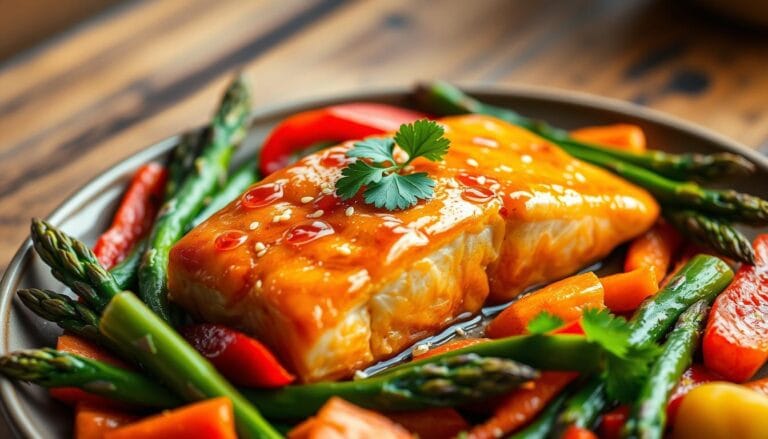
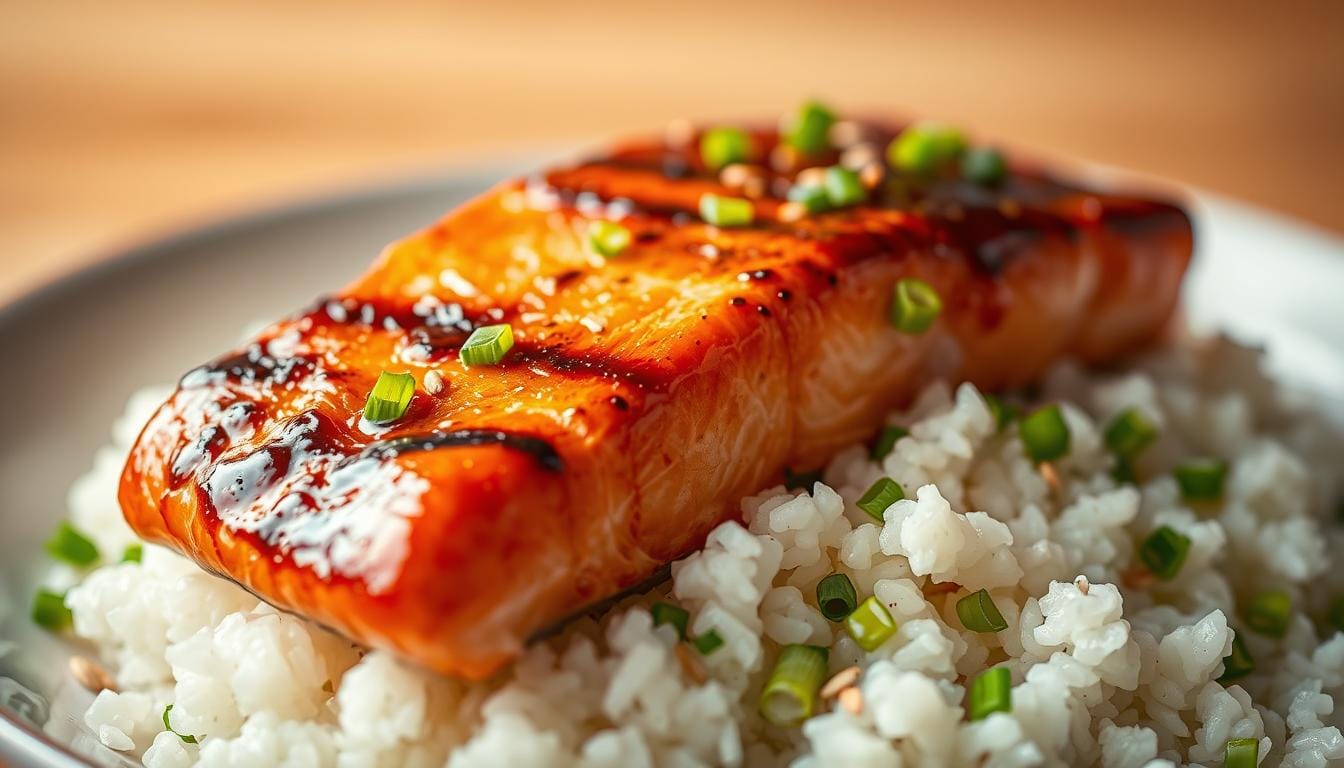
A quick blast of top heat gives you a shiny, slightly charred glaze while keeping the center tender. This method is fast, dramatic, and built for texture contrast: a crisp surface and moist interior.
Positioning the rack under the broiler for golden, lightly charred tops
Preheat your broiler on High and place the rack 4–9 inches below the element. Closer works for thin cuts; lower the rack for thicker fillets so heat can penetrate without burning the top.
Internal temp guidance: balancing USDA 145°F with juicy results
Line a sturdy baking sheet with foil—parchment can catch fire—and lightly oil it. Before you place salmon on the pan, scrape off excess marinade. Thick layers of paste or sugar burn under direct heat and turn bitter.
- Arrange pieces with space so each top browns evenly; crowding traps steam and dulls the glaze.
- Broil about 7–13 minutes depending on thickness; check at 5 minutes for progress.
- For juicier results, pull at 120–130°F and rely on carryover heat; the USDA recommends 145°F if you want firmer flesh.
- Brush a little thinned marinade on the hot surface after broiling for extra sheen, then let the fish rest briefly on the sheet before serving.
“Visual cues matter: flesh goes opaque and flakes gently without weeping excess albumin.”
Baked miso salmon on a sheet pan
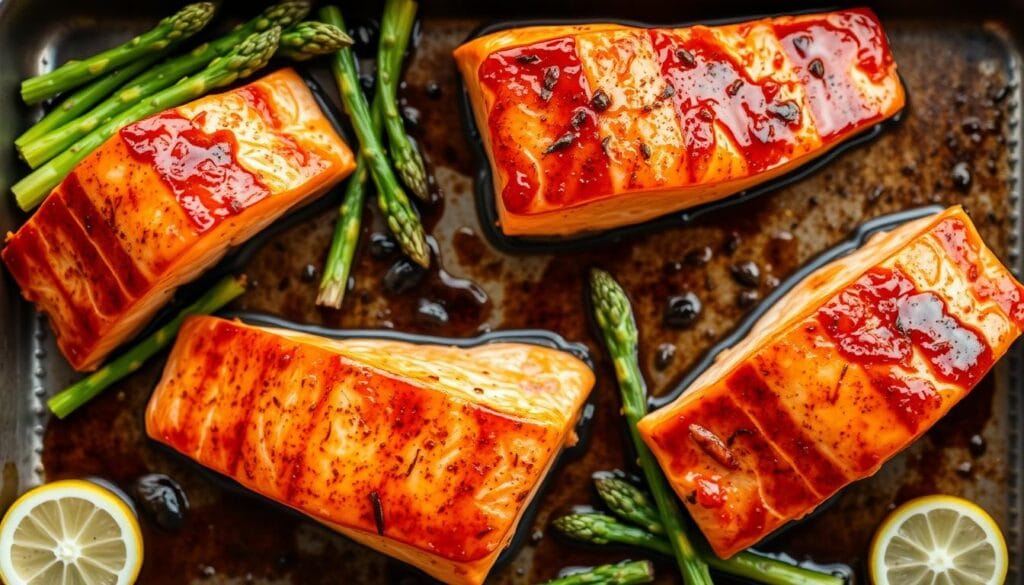
A hot, steady oven turns a sheet pan into a simple stage for glossy, evenly cooked fillets.
Preheat the oven to 425°F and place the sheet on the center rack. If you use convection, drop the temperature by 25°F.
Line a baking sheet with parchment for baking to cut sticking and speed cleanup. Scrape excess marinade away so sugars don’t scorch at the edges.
- Timing: Bake about 18–20 minutes, or roughly 5 minutes per 1/2 inch of thickness.
- Temperature: Pull at 120–130°F for a juicy finish; the USDA recommends 145°F for well-done fish.
- Finish option: Underbake slightly and broil 2–3 minutes for color without drying the interior.
Baking on a sheet pan is forgiving and ideal when you cook several portions. Leave space between fillets so heat circulates and don’t overcrowd the tray.
“Serve right away while the glaze is tacky and aromatic for the best texture.”
Air fryer miso salmon in minutes
A hot basket and quick cycles make the air fryer a go-to for weeknight glazed fillets.
Preheat your air fryer to 400°F so the glaze sets and the fish cooks evenly. Remove excess marinade and place salmon in the basket with space around each piece to avoid steaming.
Lightly oil the basket if needed. Brush off extra paste before cooking to prevent burning in the confined space.
Air fry 9–10 minutes; check at 8–9 minutes for thinner pieces. The flesh should flake easily when done.
If you want a saucier finish, simmer the leftover marinade with a splash of water for a minute or two and drizzle sparingly after cooking.
- Use an instant-read thermometer and account for carryover heat.
- Avoid overcrowding — cook in batches for consistent browning.
- Rest briefly in the basket, then transfer and serve right away for best texture.
“Air frying is ideal when you want speed, minimal preheat time, and an easy cleanup.”
Honey-mirin miso glaze variation
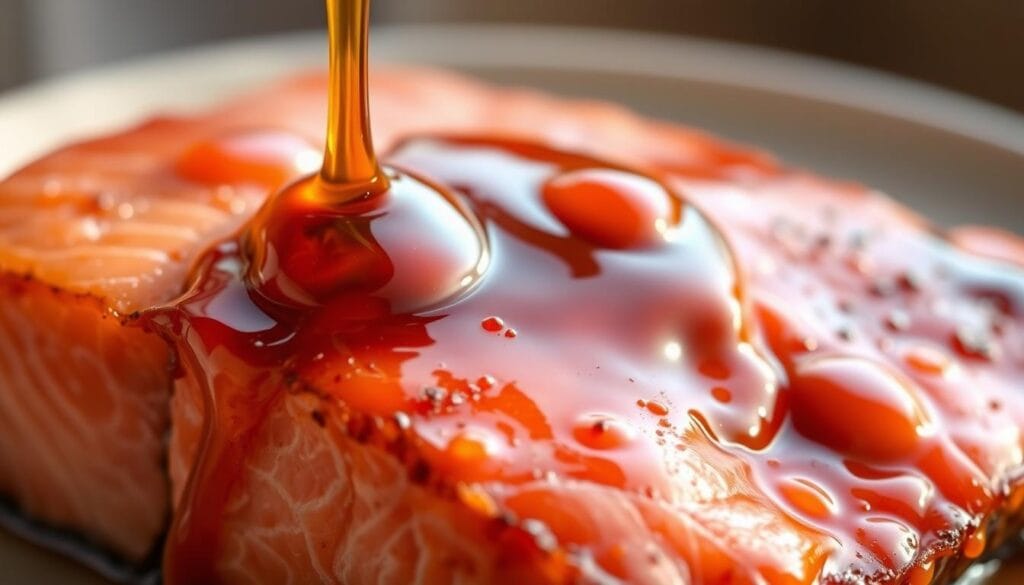
A quick honey-mirin glaze gives a shiny, savory-sweet finish that plays well with bright ginger notes.
Whisk white miso with mirin, a touch of honey, soy or tamari, and a few drops of sesame oil to build a balanced glaze. Reserve a small portion before it touches raw fish so you can brush one last time after cooking.
When to brush, when to simmer, and how to avoid scorching
Scrape off excess marinade before you broil. Heavy layers of paste or sugar will burn and turn bitter under direct heat.
- Whisk white miso, mirin, and honey (or a little brown sugar) so sweetness helps caramelize without overwhelming the savory core.
- Reserve some glaze to brush immediately after cooking while the surface is hot and receptive.
- If you want extra sauce, simmer the used marinade with a splash of water until slightly thickened and safe to serve.
- Brush lightly during the final minute of baking or right after broiling; sugars can go from caramelized to burnt fast.
- Add a hint of ginger for brightness and a tiny dash of sesame oil for toastiness—use sparingly.
“Keep a close eye after the five-minute mark under high heat—caramelization can flip to char in seconds.”
Tip: Use a small offset spatula to remove excess paste before high heat so the finish is glossy, not bitter. This keeps your glazed fillets vivid and aromatic when you serve.
Miso ginger salmon rice bowl
Build a hearty bowl by pairing a warm, ginger-scented bed of rice with glossy, sliced fish for easy, satisfying bites.
Start with warm rice scented with a touch of grated ginger. Fluff it so each spoonful stays separate and steamy as you assemble the bowl.
Top the rice with large flakes of tender, glazed fish. Slice the fillet into easy-to-eat pieces so each mouthful mixes fish and rice.
- Add crisp elements like an Asian cucumber salad or lightly steamed greens tossed with a hint of sesame for balance.
- Drizzle a small amount of reserved or gently simmered marinade as a sauce—use sparingly so the rice doesn’t go soggy.
- Finish with a scattering of sesame seeds for texture and a bright hit of aroma.
“Assemble right before eating so the glaze stays glossy and the rice remains hot.”
Meal prep tip: Store rice and fish separately, then combine just before serving to keep textures vivid and satisfying.
Mastering the miso marinade
Nailing the glaze starts with a balanced paste that hits sweet, salty, and bright on the first bite. Build your marinade until it spreads easily and clings to the fish. That smooth base helps you get a glossy finish under high heat.
White miso vs darker paste: flavor and sodium
White miso is milder and slightly sweet, so it flatters delicate fish without overpowering them. Darker paste brings stronger umami and more sodium, which can dominate thin cuts.
Marinate smartly: 30 minutes to 2 hours, not overnight
Keep timing short. Marinate salmon for 30 minutes to 2 hours depending on thickness. Longer contact raises salt uptake and firms the surface.
Cut a large piece into similar portions so the marinade absorbs evenly. Before cooking, scrape off excess to prevent scorching under the broiler or in an air fryer.
Sugar, mirin, and ginger: balance sweet, salty, aromatic
Mix miso paste with a splash of mirin, a touch of soy sauce or tamari, and a little sesame oil to round the edges.
Add a hint of sugar or honey and fresh ginger to lift the flavor without overwhelming it. Taste the mix and adjust in small steps.
- Reserve a bit of glaze before it touches raw fish to brush after cooking.
- For gluten-free, choose tamari and paste labeled wheat-free.
- Finish with a quick-simmered reserved glaze if you want extra shine.
“Keep the window short and the balance precise — the best marinated fillets are glossy, not salty.”
Cooking methods, timing, and thickness tips for miso salmon recipes
Deciding between high, direct heat and steady oven warmth shapes both texture and timing for glazed fillets. This short guide helps you pick the right method for your cut and schedule.
Broil vs bake vs air fry: heat source, speed, and texture
Broiler delivers fast, intense top heat for deep caramelization. Adjust the rack 4–6 inches from the element for thin pieces and lower for thicker fillets to avoid burning.
Baking in the oven at about 425°F gives gentler, even heat. Use baking for consistent doneness on a sheet when you cook several portions.
Air frying combines circulation and speed—think ~400°F for roughly 9–10 minutes for standard portions to get crisp edges without long time in the oven.
Fillet thickness, center-cut preference, and thermometer use
Favor center-cut, skin-on pieces so thickness stays uniform. That makes glazing and cooking time predictable.
Use an instant-read thermometer to check the center. Pull early if you prefer a tender finish and rely on carryover heat.
Parchment vs foil under high heat and broiler safety
Under the broiler, line a baking sheet with foil—parchment can burn. For baking, parchment works well to prevent sticking and ease cleanup.
- Scrape away heavy marinade before high heat so sugars don’t scorch and taste bitter.
- Give fillets space on the sheet so air circulates and the glaze sets evenly.
- If you want extra color after baking, finish with a short broil for a light char without overcooking the interior.
“Time is a guideline—start checking early and watch for opaque flesh and gentle flaking.”
Serving, storing, and reheating your miso salmon
A thoughtful pairing turns a single fillet into a satisfying, balanced meal for any weeknight. Keep sides light so the glaze stays the focus and flavors stay bright.
Smart side ideas
Pair your salmon with warm ginger rice for aromatic comfort and steamed broccoli or green beans for a crisp, clean counterpoint.
Bright cucumber salad adds crunch and contrast. Finish with a sprinkle of sesame seeds and thinly sliced green onions for texture and color.
Storing leftovers safely
Chill cooked fish promptly in an airtight container. Store in the fridge for 3–4 days to keep quality.
For longer holding, freeze portions individually with parchment between pieces; thaw overnight before reheating.
Gentle reheating tips
Reheat low and slow in a 275–300°F oven until just warm to preserve moisture and glaze shine.
If you use a microwave, cover with a damp paper towel and heat in short bursts to avoid a rubbery texture.
- Plan sides that reheat quickly—rice can be fluffed with a splash of water in under a minute.
- Make extra rice and veggies for easy lunches that come together in minutes.
“Serve immediately after reheating to keep the glaze glossy and the textures balanced.”
Conclusion
Finish strong: pick the method that fits your time and tools—broil for fast caramelization, bake for even heat, or air fry for crisp edges in about 9–10 minutes.
Keep the core simple: a balanced paste, a splash of soy sauce or tamari, mirin, and a hint of sesame oil deliver big flavor without fuss.
Marinate for 30–120 minutes, scrape excess before high heat, and use an instant-read thermometer. Aim near 120–130°F for tender flakes, or follow the USDA 145°F if you prefer firmer fish.
Place fillets on a well-prepped baking sheet with room to breathe. Store leftovers in an airtight container for 3–4 days or freeze up to 1–3 months. Reheat gently at 275–300°F to protect the glossy glaze and texture.
With these cues, you can turn a straightforward recipe into a reliable, restaurant-quality dinner or a cozy bowl in minutes—finish with sesame seeds and thinly sliced green onions for a quick, polished touch.
FAQ
What makes the paste, soy sauce, and sesame oil combination so umami-rich?
How long should you marinate fillets for best flavor without over-salting?
What internal temperature should you target to keep the fish juicy?
Should you broil, bake, or air fry for the best crust and glaze?
How do you prevent the glaze from burning under high heat?
Which paste variant is better for fish: white or darker styles?
Can you prepare the glaze in advance and store it?
How should you space fillets in an air fryer basket or on a baking sheet?
What sides pair best with this style of fish?
How do you store leftovers and how long do they keep?
What’s the best way to reheat without drying out the fish?
Do you need to adjust seasoning for thicker versus thinner fillets?
Is parchment or foil better under high heat and broiling?
Can you use store-bought glaze instead of making your own?
We Value Your Opinion!
Tell us how this recipe worked for you — your voice counts.
There are no reviews yet. Be the first one to write one.