Ultimate Seafood Boil Sauce Recipes: Cajun & Garlic Butter
Ultimate Seafood Boil Sauce Recipes: Cajun & Garlic Butter
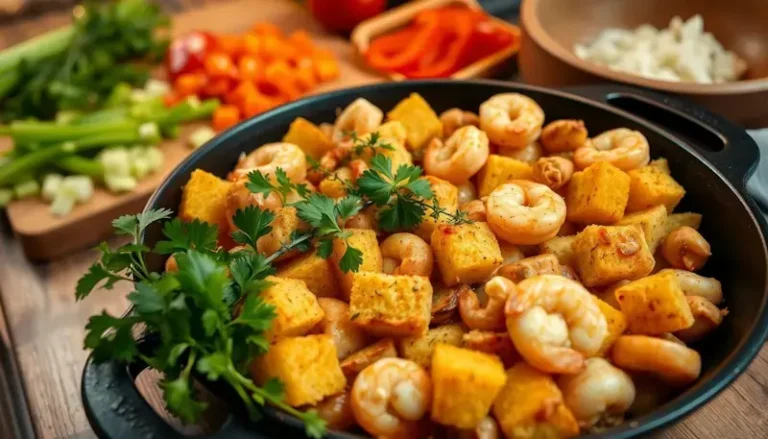
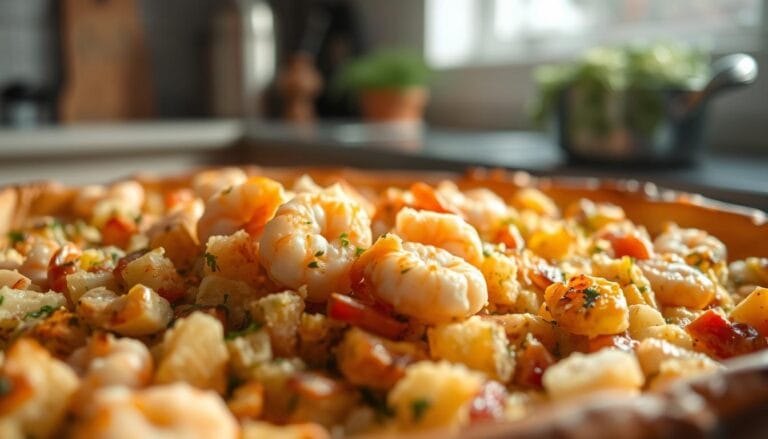
Imagine the table filling with steam and the smell of butter and Cajun spice. It’s a moment that brings everyone together. Neighbors, family, and friends gather, eager to try the seafood.
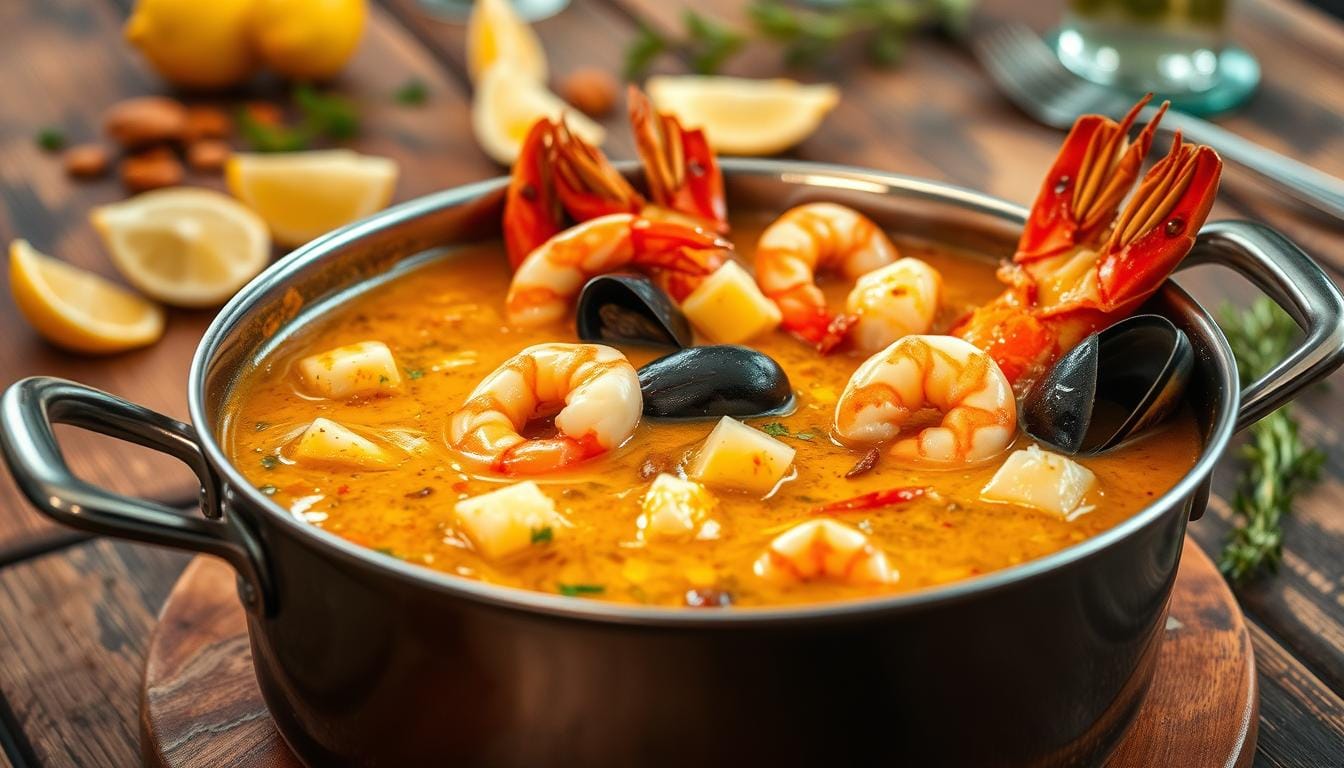
This guide will teach you how to make seafood boil sauce. You’ll learn about Cajun garlic butter and seasoned broths. It’s perfect for shrimp, lobster, crab, and more.
For a great sauce, use unsalted butter and mix in beer or water with chicken broth. Save some broth to make your sauce richer. If you’re watching sodium, choose low-sodium Cajun seasoning or use less butter.
Table of Contents
Essential seafood boil ingredients for flavor-packed boils
Start by gathering a focused set of ingredients that build depth and let the seafood shine. Use a strong liquid base, bold aromatics, and a mix of seasonings. This way, your pot turns into a true flavor vehicle. Keep proportions in mind so the butter sauce you make later echoes the same profile.
Core aromatics and liquids
Choose a cooking liquid first. Pale ale adds brightness, but plain water works if you prefer a neutral base. Chicken broth is useful when you want extra savory notes. If gluten is a concern, pick a gluten-free beer or stick with water.
Onions, lots of garlic, halved lemons, and bay leaves create a fragrant broth that clings to shellfish. For garlic, put whole heads with the top sliced into the pot and save minced garlic for the butter sauce.
Seasonings to build your boil
Layer a Cajun seasoning mix with smoked paprika and a touch of cayenne for heat. Old Bay delivers a New England profile; use hot Old Bay if you want more kick. Consider low-sodium or unsalted Cajun blends so you can control salt in the butter.
Add white pepper and dry mustard for balance. Reserve a portion of your seasoning to finish the butter sauce so the seafood boil tastes consistent from pot to plate.
Vegetables and proteins that absorb the sauce
Pick waxy potatoes cut in halves or quarters so they soak up the broth. Cut ears of sweet corn into thirds. Slice smoked andouille sausage on the diagonal to increase surface area for flavor.
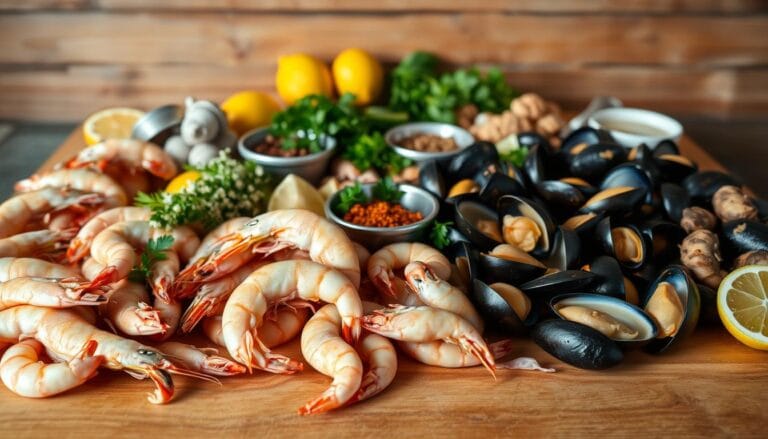
For seafood, limit varieties to about three for balance. Use jumbo uncooked shrimp with shells on, crab legs (snow, king, or Dungeness), lobster tails, mussels or clams after cleaning, and crawfish when available. Frozen seafood is fine when fresh is not an option; confirm shrimp are uncooked before cooking.
Use a large stockpot that will sit no more than two-thirds full after adding aromatics and liquids. An inset basket makes lifting ingredients easy and keeps cooking times tidy. With these seafood boil ingredients and crab boil ingredients lined up, you set the stage for a memorable seafood boil.
How to make the classic Cajun garlic butter sauce
Start with a short overview to set expectations. This sauce turns a simple boil into a showstopper. You will learn why each ingredient matters, how to cook it without burning the garlic, and quick fixes when the balance is off.
Ingredients and why they matter
Use unsalted butter so you control the salt level in your seafood boil sauce. Fresh garlic gives a bright, pungent base; mince for sauce, roast whole heads for the pot. Lemon juice brightens and lifts the butter.
Fresh parsley adds a clean finish and color contrast. Reserve your Cajun seasoning for the sauce to concentrate flavor. Smoked paprika and Worcestershire add smoky, tangy layers. Optionally whisk in 1/2 cup reserved seafood boil broth to deepen and thin the Cajun garlic butter sauce when needed.
Step-by-step technique
Melt unsalted butter over medium-low heat to avoid browning. Add minced garlic and cook gently 1–2 minutes until fragrant and lightly golden; stop before it turns bitter.
Stir in Cajun seasoning, smoked paprika, and onion powder so the spices bloom in the warm butter. Add cayenne or black pepper if you want heat. Pour in lemon juice and a splash of Worcestershire or hot sauce, then simmer 2–3 minutes to marry flavors.
Remove from heat and stir in chopped parsley. If you prefer a looser texture, whisk in up to 1/2 cup reserved pot broth. For service, mix about one-third of the butter sauce with pot water to spoon over the boil and leave the rest warm for dipping.
Troubleshooting and flavor adjustments
If the sauce tastes too salty, add more unsalted butter or a splash of reserved broth and a squeeze of lemon to rebalance. If garlic turns bitter, stop cooking immediately and discard any burnt bits; start again on lower heat.
Too thin? Simmer briefly to reduce and concentrate flavor. Too thick? Thin with reserved broth a tablespoon at a time. Want more heat? Increase cayenne, use a spicy Old Bay blend, or make a separate small batch with extra hot sauce so guests can choose their level.
Homemade Cajun seasoning blend for your boil sauce
You want a seasoning that makes every part of the boil shine. Start with a strong base that adds color, smoke, and just the right amount of heat. This mix is perfect for the pot and for finishing butter, tying the whole dish together.
Signature spice ratios
Here’s how to make about 1 cup of seasoning: Mix ½ cup smoked paprika, ¼ cup onion powder, and ¼ cup garlic powder. Add 1½ tablespoons kosher salt, 1 tablespoon ground white pepper, and 1 tablespoon ground mustard. Don’t forget 1 tablespoon dried oregano, 1 tablespoon dried thyme, 1 tablespoon cayenne pepper, and 1½ teaspoons dried basil.
Adjust the cayenne to your liking. Smoked paprika adds color and depth. Ground mustard and white pepper give a savory taste that makes this blend stand out.
Using your seasoning in the pot and in the butter
Put most of the homemade Cajun seasoning in the pot at the start. Add beer or water, halved garlic heads, quartered onions, lemon halves, and bay leaves. This step infuses the broth, making sure crab boil ingredients and vegetables are full of flavor.
Save 3–4 tablespoons for the finishing butter. Mix the reserved seasoning into melted butter with a bit of strained pot water. This makes the seafood boil sauce silky. Taste before adding salt if you used salty sausage or salted butter.
Using the same blend in both the pot and butter makes the seafood taste consistent and layered. Store any leftover blend in an airtight jar for future boils and pan sauces.
Garlic butter sauce for seafood boil: variations and add-ins
Begin with a simple garlic butter base to enhance your boil’s flavors. Melt unsalted butter slowly, then add minced garlic until it’s fragrant and pale. Finish with fresh lemon juice and chopped parsley. This sauce is great for dipping shrimp and lobster or drizzling over a mixed pot.
For a spicier version, make a separate batch of spicy garlic butter. Add cayenne, hot Old Bay, a dash of Tabasco, or extra Cajun seasoning. Offer an extra-spicy ramekin alongside the milder sauce for guests to customize.
To add smoky depth, include smoked paprika and a splash of Worcestershire sauce. These ingredients blend well with the butter and garlic without overwhelming the seafood. Remember, your boil pot and broth may already be seasoned, so use salt sparingly.
Clarifying butter improves its texture and shelf life, perfect for reheating or blending with broth. Melt butter slowly and skim off the white foam to remove milk solids. This makes the butter cleaner and richer, preventing it from burning when warmed.
After clarifying, add garlic and aromatics gently on low heat. Then, whisk in reserved pot broth to create a silky sauce. Use unsalted butter to control the salt level and balance with lemon or a touch of hot sauce.
Seafood boil sauce: incorporating pot broth for extra depth
Save a small cup of seasoned pot water before draining. This liquid holds the flavors of beer, onions, garlic, lemons, Cajun spice, and seafood. Adding it to your butter makes the sauce rich and memorable.
Why reserve and use broth
When you remove shrimp, crab, and corn, the liquid has absorbed the best flavors. Use 1/4–1/2 cup of this broth with your butter sauce. It adds depth without making the sauce too thick.
Broth helps stretch the sauce, so you can cover more food evenly. Use a light sauce for coating and reserve richer butter for dipping. This way, you save butter and keep the flavors balanced.
How to strain and balance seasoning
Strain the broth through a fine-mesh sieve to remove solids. Taste it and adjust as needed. If it’s too salty, add water. If it lacks flavor, add lemon juice or sugar.
Mix one third of your butter sauce with 1/2 cup of strained broth. Use this blend to coat the seafood. Serve the rest of the butter sauce on the side for dipping.
| Step | Action | Tip |
|---|---|---|
| 1 | Reserve 1 cup of pot liquid before draining | Use a heatproof measuring cup and pour carefully to avoid spills |
| 2 | Strain through fine-mesh sieve | Remove solids to keep the broth smooth for the sauce |
| 3 | Taste and adjust | Dilute if salty, add lemon or sugar to brighten flavor |
| 4 | Mix with butter sauce (example: 1/3 butter + 1/2 cup broth) | Spoon over plated seafood or serve as a lighter finishing sauce |
| 5 | Drain remaining hot pot liquid promptly | Prevents overcooking delicate proteins like shrimp and crab |
Cooking timeline: syncing potatoes, sausage, corn, and seafood
Begin by heating a seasoned pot until it boils. This step helps your seafood boil ingredients release their flavors. Let the liquid simmer for 5–10 minutes before adding the solids. This initial step is key to maintaining even cooking and texture.
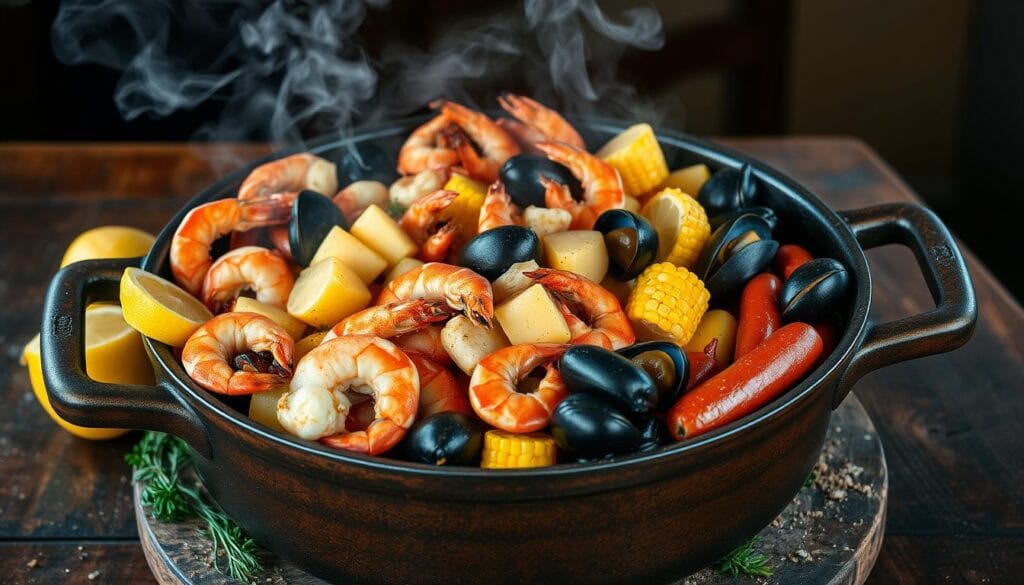
For a smooth cooking process, add ingredients in order. Start with potatoes and boil them for 5–10 minutes until they’re almost tender. They will continue cooking in the remaining heat while you add the other ingredients.
After that, add smoked or andouille sausage and cook for about 5 minutes. If using frozen corn, add it with the crab so it heats evenly.
Next, add crab legs and corn. If the crab is pre-cooked, cook for 4–5 minutes. For raw crab, add it 10–12 minutes early.
Lobster and shrimp are the last to go in. After adding shrimp, cover the pot and turn off the heat. Let the residual heat cook the shrimp for 4–6 minutes to keep them tender.
Tips for residual heat cooking
Residual heat is your friend when cooking proteins. Turning off the heat after adding shrimp prevents toughness and keeps juices in.
Use a basket or sheet pans to lift and drain cooked items quickly. This stops overcooking and preserves the right texture.
Adjust cooking times if using an outdoor gas burner, as it cooks faster. Plan for about ½–1 pound of seafood per person, including shells.
Keep things simple: start with the broth, then add potatoes, sausage, and shellfish. This order ensures a balanced finish for all ingredients.
Serving and presentation ideas for your seafood boil feast
Start with a simple plan. Lay butcher paper down the center of a long table or set rimmed baking sheets on trays for easy transport. This keeps the focus on the food and makes cleanup quick. Offer small bowls of extra seafood boil sauce so guests can dip or spoon more onto their plates.
Traditional and crowd-friendly setups
For a classic feel, spread the boil straight onto paper and let everyone dig in family-style. Use sheet pans or rimmed trays when you need to carry the feast from kitchen to table. Arrange proteins by type so shrimp, crab, and sausage are easy to find.
Provide ramekins of garlic butter sauce for seafood boil beside each tray. Keep wet wipes, paper towels, and small bowls for shells within reach. Serve a large ladle of butter mixed with reserved pot broth to pour over the spread for extra depth.
Sides and garnishes that pair with sauces
Balance rich seafood boil sauce with a crisp house salad or old-fashioned coleslaw. Offer crusty bread to sop up garlic butter sauce for seafood boil and pot juices. Add lemon wedges and chopped parsley for bright color and fresh flavor.
Set out optional condiments like hot sauce, extra melted butter, and cocktail sauce to suit different tastes. Slice sausage diagonally for long, attractive pieces. Place bowls for shells and waste so guests can keep their plates tidy.
Meal planning: quantities, make-ahead steps, and equipment
Plan ahead with a simple strategy to manage shopping, prep, and gear. Smart portioning and quick make-ahead steps reduce stress on cooking day. Use the right seafood boil equipment to focus on flavor and timing.
Portioning and shopping guide
Plan for 1/2 to 1 pound of shellfish per person. For mixed boils, offer 1–2 lbs shrimp and 1–2 lbs crab legs for a small group. Add 1–3 lobster tails for a premium touch.
Group sides by yield: 1 lb sausage and 2 lbs potatoes serve 4–6 people. For corn, count roughly 4 ears per 4–6 guests. Choose jumbo uncooked shrimp with shells for the best flavor. Select waxy red or yellow potatoes so they soak up sauce.
Stock up on key pantry items such as unsalted butter for sauces and lower-sodium Cajun seasoning if you prefer lighter salt. Make a shopping list that separates perishable seafood from canned and dry items for an efficient market run.
Prep tasks you can do ahead
Make your Cajun seasoning blend and store it airtight. Reserve part of the mix for the butter sauce so your flavors stay consistent.
Finish basic chopping the night before. Mince garlic, dice onions, cut potatoes and corn, and slice sausage. Portion seafood into meal-sized portions and keep it cold until cook day.
Prepare the butter sauce or clarified butter ahead for easier reheating. Reheat gently over low heat while the seafood cooks to preserve texture and aroma.
Essential equipment
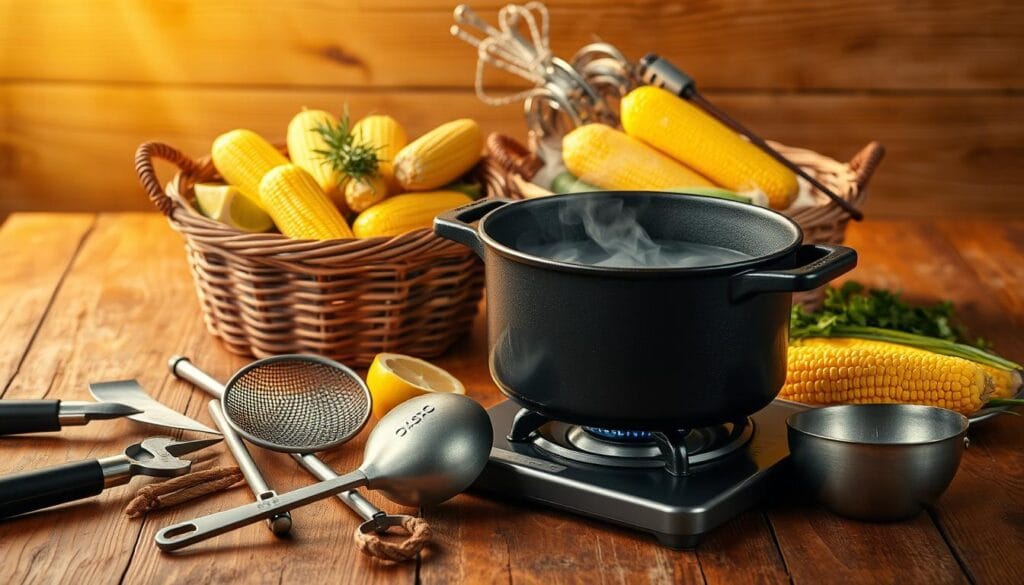
Choose a large stockpot with a basket insert or a brewing-style kettle when you host outdoors. An outdoor propane burner makes large boils fast and even.
Keep rimmed baking sheets or large pans for draining and serving. Butcher paper is handy for casual feasts. A fine-mesh strainer helps capture solids when you reserve pot broth for sauces.
Gather long-handled tongs, a slotted spoon, and heatproof gloves so you can move hot food safely. Check that your seafood boil equipment fits the group size before you buy or borrow.
| Task | When to do it | Why it helps |
|---|---|---|
| Make Cajun seasoning | 2–7 days ahead | Consistent flavor; frees time on cook day |
| Prep vegetables and sausage | Night before | Speeds assembly; reduces last-minute work |
| Portion seafood | Night before, keep chilled | Easier timing; prevents overcooking |
| Make butter or clarify it | Same day or day before | Smoother reheats; richer sauce texture |
| Check equipment fit | Days before event | Ensures you have the right seafood boil equipment and avoids last-minute rentals |
Safety, storage, and reheating tips for sauced seafood
Keeping your seafood boil safe and tasty is easy. Just remember to check for doneness, handle leftovers carefully, and reheat them gently. These steps help keep your food flavorful and safe from foodborne illness.
Food safety and doneness checks
Seafood cooks fast, so watch for visual signs. Shrimp turn white and form a loose “C.” Avoid tight “O” shapes, which mean they’re overcooked. Lobster meat should be firm and opaque.
Clams and mussels that stay closed after cooking are safe. Use a thermometer for fish, aiming for 145°F. For shellfish, check their appearance instead.
Drain the pot quickly after cooking to stop overcooking from heat.
Storage and reheating methods
Put leftovers in airtight containers within two hours of cooking. Add a bit of broth or pot water to keep them moist. This helps keep the flavor and texture during storage.
Reheat on the stovetop over low heat with a splash of water or broth. Stir often until it’s just warm. Don’t use high heat, as it can make seafood tough.
If your butter sauce separates, whisk it while warming. Adding a bit of warm broth can also help.
Cooked seafood is best eaten the same day. But leftovers can be safely reheated for 1–2 days. Plan your reheating to keep the seafood tender and flavorful.
Conclusion
To make a standout seafood boil sauce, start with fresh ingredients. Use aromatics, homemade Cajun seasoning, and a clear plan for timing. Put potatoes and corn in first, then sausage, and lastly shellfish.
This order keeps everything tender. It lets your garlic butter sauce and seasoned broth stand out.
Make the garlic-Cajun butter ahead of time with unsalted butter. This way, you control the salt and spice. You can also clarify the butter for a smooth finish or mix in reserved broth for extra flavor.
Stick to three seafood varieties and choose between beer or water based on your budget and taste. Adjust the spice to fit your guests and cooking method, whether it’s stovetop or outdoor.
Plan ahead by blending Cajun seasoning, melting butter, and chilling broth. When reheating, add reserved broth to keep the sauce loose and flavorful. With these tips, your seafood boil sauce will be flexible, tasty, and easy to make for any event.
We Value Your Opinion!
Tell us how this recipe worked for you — your voice counts.
There are no reviews yet. Be the first one to write one.