5-Star Seafood Cornbread Dressing for Thanksgiving
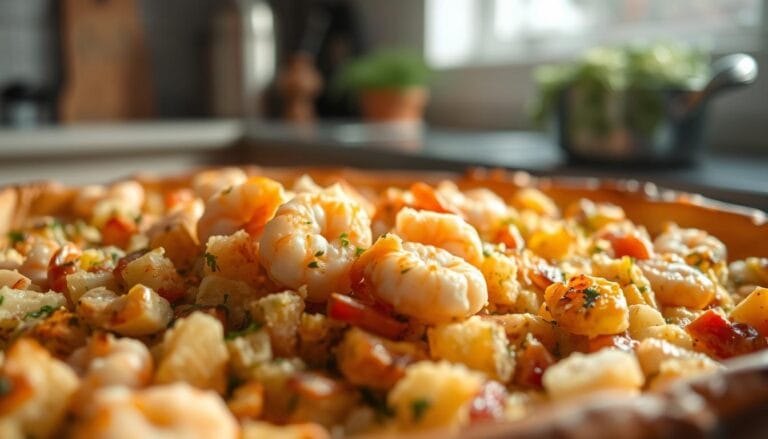
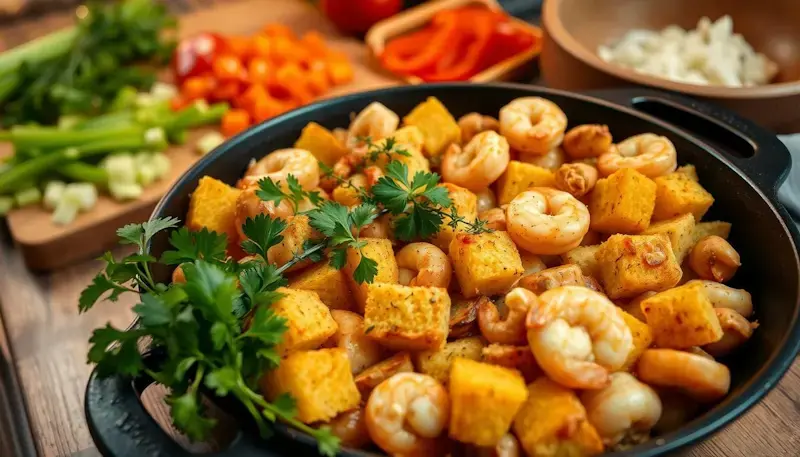
This seafood cornbread dressing is a classic holiday side dish made with tender crab, seasoned shrimp, and buttery cornbread. Perfect for Thanksgiving and Christmas gatherings, this Southern favorite delivers rich flavor, balanced moisture, and a crowd-pleasing texture. In this guide, you’ll learn exactly how to make seafood cornbread dressing step by step, with tips for seasoning, scaling, and make-ahead success.
Table of Contents
Why Seafood Dressing Is a Holiday Showstopper
Seafood dressing brings a unique twist to holiday meals. Guests are often surprised and delighted. They often ask for seconds.
It’s also very stretchy. A single recipe can feed more people than you think.
The tradition and regional roots of seafood dressing
Seafood dressing has deep roots in Gulf Coast and Lowcountry kitchens. Families in Louisiana, South Carolina, and coastal Georgia have long used crab and shrimp in their festive recipes. This Southern seafood dressing tradition is a staple at Thanksgiving and Christmas tables across the region. This Southern seafood dressing is especially popular in Louisiana and coastal Georgia.
What makes seafood dressing different from classic stuffing
Classic bread stuffing uses poultry drippings and herbs. Seafood dressing, on the other hand, uses crab, shrimp, and Old Bay seasonings. This gives it a briny, savory flavor that pairs well with holiday meals.
Why your guests will love a seafood cornbread dressing
A seafood cornbread dressing combines sweet corn with rich seafood flavors. Cornbread adds a tender crumb that soaks up broth and butter without getting soggy. Using lump crab or plump shrimp makes it both comforting and special, a true holiday showstopper.
| Feature | Seafood Cornbread Dressing | Classic Bread Stuffing |
|---|---|---|
| Main proteins | Crab, shrimp, or mixed shellfish | Poultry drippings, sausage, or vegetables |
| Base | Crumbly cornbread with sweet notes | White or sourdough bread for a neutral base |
| Seasoning highlights | Old Bay, parsley, cayenne, thyme | Sage, thyme, rosemary, onion |
| Textural appeal | Moist, slightly grainy crumb that holds shellfish | Soft to slightly crisp depending on bake |
| Guest appeal | Feels festive and regionally rooted; great for sharing | Comforting and traditional; widely expected |
Choosing the Best Seafood: Crab, Shrimp, and More
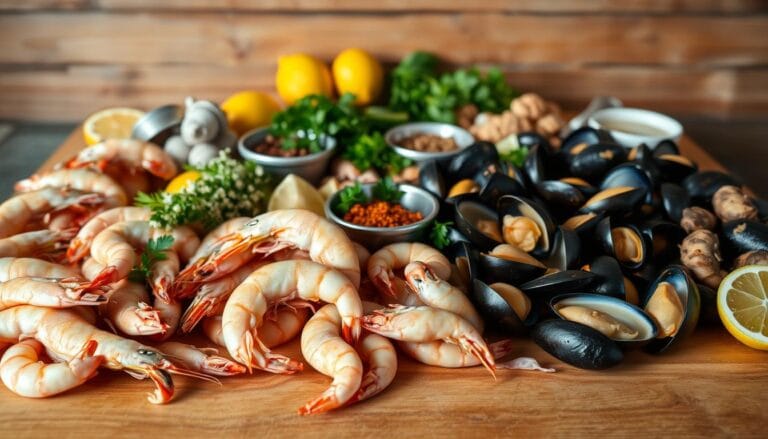
Choosing the right ingredients is key to making great seafood dressing. Look for crab, shrimp, or other seafood that’s fresh and has a clean taste. Make sure it smells briny, not fishy. Fresh seafood should always be handled and stored properly from purchase to preparation. Keeping crab and shrimp well chilled and avoiding cross-contamination helps preserve both flavor and safety. Following safe handling and storage of seafood best practices ensures optimal freshness and reduces food safety risks when preparing holiday dishes.
Fresh lump crab vs. canned crab — flavor and texture differences
Fresh lump crab is sweet and flaky, making it perfect for holiday sides. Opt for U.S.-sourced crab for the best flavor.
Canned crab is a good backup when time is short. It’s softer and milder than fresh crab. Drain it well and mix it in gently to keep its texture.
Selecting shrimp for cornbread shrimp stuffing — size and freshness tips
For cornbread shrimp stuffing, choose medium to large shrimp. They should be firm and have a sweet smell. Counts like 16–20 or 21–25 are best.
Season the shrimp lightly with Old Bay or lemon before cooking. Cook them until they’re just opaque. This keeps them tender in the dressing.
Substitutions and shellfish allergy considerations
If someone has a shellfish allergy, offer a clear label and an alternative dish. Bay scallops or flaked white fish like cod are good substitutes.
For serious shellfish allergies, consider a mushroom-and-cornbread dressing or a cornbread with sage and sausage. These options are safe and festive.
| Seafood | Best Use | Texture | Notes |
|---|---|---|---|
| Fresh lump crab | Classic seafood dressing | Sweet, flaky, firm | U.S.-sourced lump or backfin gives best flavor |
| Canned crab | Quick or budget-friendly recipes | Softer, milder | Drain well; fold in at the end to keep texture |
| Shrimp (16–25 count) | Cornbread shrimp stuffing | Firm, juicy when cooked properly | Cook until just opaque; season lightly before combining |
| Bay scallops | Seafood substitute | Tender, slightly sweet | Good when you want uniform bites throughout |
| Flaked white fish (cod, haddock) | Mild seafood option | Flaky, meaty | Use for those who avoid shellfish but accept fish |
| Mushroom & cornbread | Allergy-friendly alternative | Earthy, hearty | Safe choice for guests with shellfish allergies |
Best Base: Cornbread vs. Traditional Bread for Seafood Dressing
You want a base that carries seafood flavor without collapsing under broth. Cornbread adds a sweet corn touch and a coarse crumb. This texture soaks up crab and shrimp juices well.
Pick slightly stale or day-old cornbread for the best absorption. Fresh cornbread can turn mushy when mixed with stock. Dry cornbread soaks liquid evenly and holds its shape through baking.
For homemade cornbread, use buttermilk and creamed corn for moisture and richness. Cut back on sugar to let Old Bay, parsley, and roasted shrimp flavors shine. A coarse grind of cornmeal gives the right crumb for seafood dressing.
If you prefer traditional bread, choose sturdy loaves like brioche or French bread. They offer a less sweet profile and can handle more liquid. Expect a softer mouthfeel compared to cornbread shrimp stuffing, which has a firmer bite and corn flavor.
Aim for a crumb that holds together when squeezed but breaks apart easily. Test pieces after mixing in broth: if they collapse, add more dry cornbread. If they sit dry, add a splash of warmed seafood or chicken broth until moist but not soggy.
Use these checks before baking to avoid a wet center. Taste the mix for seasoning and texture. With the right cornbread and careful moisture control, you get a seafood dressing that highlights crab and shrimp while staying true to classic Southern roots.
Essential Seasonings and Spices for Flavorful Seafood Dressing
Seasoning is the heart of your seafood stuffing recipe. You want flavors that show off crab and shrimp without being too strong. Use spice blends and fresh herbs to add depth from start to finish.
Classic blends are best when they enhance seafood, not hide it. Old Bay or Zatarain’s are great for that salty, ocean taste. They’re perfect for pre-seasoning crab and shrimp before cooking.
Salt and black pepper are must-haves. If you use packaged crab or broth, taste and adjust salt early. This keeps your dish balanced and avoids being too salty.
Start with aromatics like celery, yellow onion, and bell pepper. Cook them until they’re soft and sweet. Add garlic towards the end to avoid bitterness and enhance flavors.
Fresh herbs add a bright touch. Add chopped parsley and thyme towards the end. They complement seafood and cornbread well.
For a bit of heat and color, use cayenne or smoked paprika. A little goes a long way, adding warmth without overpowering the seafood.
Always taste as you go. Add spice blends, salt, and pepper in small amounts until it tastes just right. This way, your seafood dressing will be vibrant and ready for guests.
Preparing the Seafood: Sauteing, Simmering, and Seasoning
Before mixing everything, pre-cook and season the seafood. This step is key for a great cornbread dressing. A light sauté and a brief simmer add depth without overpowering the cornbread.
For crab, use lump crab if you can. Warm it in a skillet with butter or oil. Add Old Bay, lemon, and white wine for extra flavor. Heat it until the crab is warm and flakes easily. Save the pan juices for the dressing.
When cooking shrimp, choose medium to large ones and peel them first. Dry them, then sauté in butter or oil. Season with Old Bay, salt, and pepper. Add lemon or wine and simmer for a minute after they turn opaque. This keeps them tender in the oven.
Use these techniques to balance the dressing’s texture. If using canned crab, warm it briefly and pick out shells. Keep cooked seafood separate from the bread to avoid sogginess.
Simmer the seafood with aromatics for extra flavor. After cooking shrimp or crab, add chopped celery, onion, and bell pepper to the pan. Simmer until the aromatics soften and flavors blend. This step adds savory juices to the pan, which you can mix into the cornbread.
Time your pre-cook carefully to protect the seafood’s texture. Shrimp should be opaque and firm, crab warm and flaky. Save any pan juices and taste before mixing. These steps enhance the dish and make the bake easier.
| Step | What to Do | Why It Matters |
|---|---|---|
| Seasoning | Use Old Bay, lemon, salt, pepper, optional white wine | Builds classic seafood flavor that pairs with cornbread |
| Sauté | Quickly cook shrimp and crab in butter or oil until just done | Prevents overcooking during the final bake |
| Simmer aromatics | Add celery, onion, bell pepper to pan and simmer briefly | Infuses pan juices and softens vegetables for better texture |
| Reserve juices | Save pan liquids to add to cornbread mix | Enhances moisture and seafood flavor without thinning dressing |
| Timing | Remove seafood when shrimp turn opaque; crab is warm and flaky | Keeps seafood tender and prevents dryness after baking |
Building the Best Seafood Dressing: Step-by-Step Technique
Plan ahead to make your seafood dressing a success. Prepare all vegetables and measure broths before starting. This ensures everything is ready when the pan is hot and the seafood is cooked.
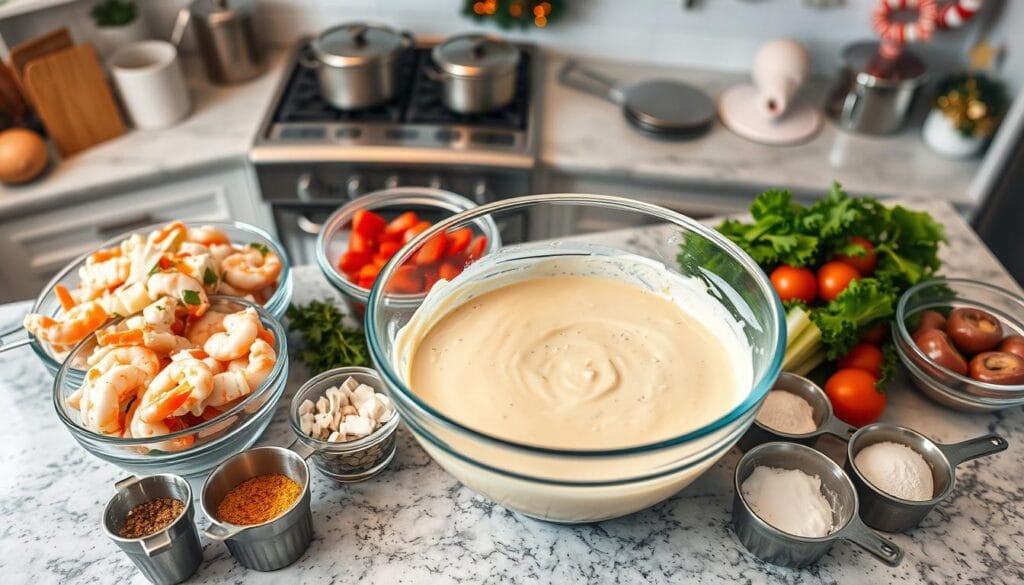
Preparing vegetables: mirepoix with celery, onion, and tri-color bell pepper
Sauté diced celery, yellow onion, and tri-color bell pepper in butter or olive oil. Cook over medium heat until they’re soft and smell good. Stir often to prevent them from browning. This mirepoix adds a bright flavor to your seafood stuffing.
Combining cornbread, seafood, aromatics, and broth
Start by crumbling cornbread in a big bowl. Mix in the softened mirepoix and pre-cooked seafood, like crab and shrimp. Add chopped parsley and seasonings like Old Bay and black pepper.
Warm your broth before adding it. Pour it slowly and mix gently until it’s just right. Following steps closely and using a checklist helps keep everything balanced.
Adjusting moisture with additional chicken or seafood broth
If your dressing is too dry, add more liquid. Start with a little and add more as needed, up to 2 cups. One cook found two extra cups made a big batch just right.
Season again after adding liquid. Put the mixture in a buttered dish, top with butter or olive oil, and bake until golden. This method works for any seafood dressing with a cornbread base, ensuring great results every time.
Seafood Stuffing Recipe Variations to Try
This seafood stuffing recipe can be adapted depending on your preferred seafood and texture. You can make many dishes from one basic recipe. Here are three ways to make your holiday menu special. Each change affects the texture, moisture, and baking time. Adjust the broth and eggs as needed.
Classic dressing with crab and shrimp
Begin with cornbread, fresh crab, and shrimp. Sauté celery, onion, and bell pepper in butter. Add Old Bay and black pepper, then mix in warm chicken broth and eggs. Bake until it’s set.
This classic seafood dressing is a hit. It keeps the original’s flavor by using seafood instead of sugar.
Creamy dressing for a richer texture
For a creamy center, add béchamel or cream cheese and heavy cream. Use less broth to avoid a soggy bake. It will take longer to bake and cool down.
Lightened-up cornbread dressing with more veggies
Add more veggies like scallions and corn. Use low-sodium broth and less butter. Whipped egg whites help bind without adding calories. This version needs more baking time if you add raw veggies.
For all versions, make sure the mix holds its shape but isn’t too wet. If using more dairy, bake at a lower temperature for longer. For the light version, check it early and stir in steamed veggies to avoid water. Use the classic recipe as a guide.
How to Make a Crowd-Pleasing Cornbread Shrimp Stuffing
Need a big holiday dish? This cornbread shrimp stuffing is perfect. It’s easy to make more, pick the right pans, and reheat it well. Your dish will be hot and tasty.This cornbread shrimp stuffing is perfect for large Thanksgiving gatherings.
Scaling the recipe for large gatherings — yield tips from tested experiences
To make more seafood dressing, just multiply everything the same way. The amount will change based on the bread. Start with a small batch to see how many it serves.
Adding more liquid helps if it looks too dry. Doubling the recipe often means using two containers of broth. Keep track of how much broth you use for next time.
Tips for serving a crowd: baking vessels and timing
For big groups, use hotel pans or many 9×13 casseroles. Disposable pans are great for travel and reheating. Deeper pans take longer to bake, so check them often.
Bake one pan first to figure out the timing. Then, bake the rest in batches or keep them warm in a 200°F oven. Have serving utensils ready for guests.
Make-ahead and reheating strategies that keep flavor and texture
Make the dressing ahead of time to save time. You can assemble it and refrigerate for up to 24 hours. Then, bake it from chilled, adding 10–20 minutes.
Or, bake it all the way, cool it, and refrigerate. Reheat it covered at 325°F until warm. Then, uncover to crisp the top. For travel, bake in disposable pans and reheat on-site.
These tips will help you make a delicious cornbread shrimp stuffing for holidays and gatherings. Keep notes for future improvements.
Seafood Dressing Recipes Cornbread: Recipe Card Essentials
You want a clear recipe card for seafood dressing that you can print and follow easily. This section has a detailed ingredient list, simple steps with cooking times, and portion sizes. This way, your cornbread shrimp stuffing will always turn out right.
Ingredient list with precise measurements and suggested brands
For a 9×13 pan serving 8–10, use these exact amounts. You’ll need 4 cups of crumbled cornbread, 8–12 oz of fresh lump crab, and 1 lb of peeled shrimp. Also, 2 cups of diced mirepoix, 3 large eggs, and 2–3 cups of warm low-sodium chicken broth are required. Add 4 tbsp of unsalted butter, 1–2 tsp of Old Bay or Zatarain’s, 1 tsp of kosher salt, 1/2 tsp of black pepper, and 2 tbsp of chopped parsley. Remember, no added sugar is needed to keep the flavor true.
recipe card seafood dressing: Clear step-by-step instructions and cook times
- Preheat oven to 350°F. Butter a 9×13 baking dish.
- Sauté mirepoix in 4 tbsp butter until soft, about 6–8 minutes. Stir in 1–2 tsp Old Bay and let spices bloom for 30 seconds.
- Add shrimp and cook 2–3 minutes until just opaque. Remove shrimp, reserve. Fold in lump crab and warm through for 1–2 minutes, keeping pieces intact.
- In a large bowl, combine crumbled cornbread, cooked seafood, and mirepoix. Whisk eggs with 2 cups warm broth; add more broth if mixture seems dry. Aim for a moist but not soupy texture.
- Transfer to the prepared dish. Bake at 350°F for 30–45 minutes depending on depth of pan. A 9×13 will finish near 35–40 minutes. Top should be set with a light golden crust.
Nutritional considerations and portion sizing
For nutrition control, choose low-sodium broth and smaller amounts of butter. Seafood provides lean protein; cornbread adds carbs. If you need calorie estimates, use the exact brands listed to get the most accurate numbers per serving.
Use portion sizing of 1/2 to 3/4 cup per person when serving as a side. If dressing acts as a main course, plan on 1 to 1 1/4 cups per person. For large gatherings, scale ingredients linearly and give each 9×13 pan a yield estimate of 8–10 side servings.
Quick printable recipe card layout
- Title: Cornbread Shrimp & Crab Dressing
- Ingredient list: place amounts and brands on left, prep notes on right.
- Steps: numbered, with cook times in bold next to each action.
- Portion sizing: list side and main serving recommendations at the bottom.
Presentation and Serving Suggestions for Holiday Tables
When you plate your seafood dressing, think about color, texture, and ease of serving. A shallow casserole shows off a golden crust and invites guests to dig in. For more formal settings, portion the mix into individual ramekins for neat, warm servings that look refined on the plate.
Plating ideas: casserole, individual portions, and stuffing turkey
Serve from a shallow baking dish to highlight the browned top and crunchy edges. This approach is ideal when you are serving seafood cornbread dressing to a group.
For plated dinners, use ramekins or hollowed-out bell peppers to present neat portions. Individual servings keep the texture intact and make reheating simple.
If you are stuffing turkey with dressing, warm the mixture thoroughly, then loosely fill the bird just before roasting. Follow safe handling times and internal temperature guidelines to protect food safety.
Pairing seafood dressing with traditional holiday sides and mains
Pair cornbread-based seafood dressing with roasted turkey or glazed ham for classic harmony. Sides like collard greens and green beans add color and balance rich flavors.
Cranberry relish cuts through richness and brightens the plate. When serving seafood cornbread dressing, offer hot broth or pan juices on the side to adjust moisture at the table.
Garnishes and finishing touches to elevate the dish visually and flavor-wise
Small touches lift presentation and flavor. Try chopped parsley or sliced scallions for fresh green contrast. Lemon zest adds brightness without overpowering delicate crab or shrimp.
Sprinkle smoked paprika for a warm color and subtle aroma. Think about garnishes for seafood dressing that guests can see and taste at first bite.
| Serving Style | Best Use | Visual Effect | Notes |
|---|---|---|---|
| Shallow casserole | Family-style dinner | Golden crust, rustic appeal | Shows texture; easy to reheat and serve extra portions |
| Individual ramekins | Formal plated meals | Neat, elegant presentation | Retains shape; perfect for controlled portions |
| Stuffing turkey with dressing | Traditional roast centerpiece | Integrated flavors, classic look | Loosely fill cavity and follow food safety temps |
| Skillet finish under broiler | Extra-crisp top | Deep browning, dramatic texture | Watch closely to avoid burning |
| Garnish board | Buffet or family-style | Colorful, customizable | Offer lemon wedges, parsley, scallions, and smoked paprika |
Common Problems and How to Fix Them
Your holiday seafood dressing might face a few common problems. Quick fixes can help you get back on track. These adjustments will keep the dish balanced and safe for your guests.
What to do if the dressing is too dry or too wet
If it’s too dry, add warm chicken or seafood broth a little at a time. This will help it become moist and tender. Adding a beaten egg mixed with milk will also make it firmer and more sliceable.
To fix wet dressing, bake it uncovered at 350°F for 10–20 minutes. This lets the excess liquid evaporate. You can also add extra crumbled cornbread or toasted breadcrumbs to soak up moisture and improve the texture.
How to rescue overcooked or underseasoned seafood
If crab or shrimp gets tough, take out the big pieces and save them. Then, chop the rest into small bits and mix them back into the dressing. This spreads the texture evenly.
For overcooked seafood, add a creamy sauce like béchamel or sour cream mixed with lemon and Old Bay. This softens the texture and adds moisture. If the dressing is underseasoned, make a quick pan sauce with butter, lemon juice, and Old Bay. Toss it through after baking to enhance the flavor.
Storage, seafood dressing leftovers, and safe reheating seafood dressing
Keep seafood dressing leftovers in airtight containers in the fridge for 3–4 days. If guests have shellfish allergies, label dishes and offer a vegetarian cornbread dressing as an alternative.
For safe reheating, cover the dressing at 325°F until it reaches 165°F, about 20–30 minutes. Then, uncover for 5–10 minutes to crisp the top. You can freeze parts up to 2 months; thaw them in the fridge overnight before reheating.
| Problem | Quick Fix | When to Use |
|---|---|---|
| Too dry | Stir in warm chicken or seafood broth, 1/4 cup at a time; or add beaten egg with milk | Immediately after mixing, before baking, or when reheating leftovers |
| Too wet | Bake uncovered to evaporate liquid; fold in crumbled cornbread or toasted breadcrumbs | Right after baking if texture is loose, or before serving |
| Overcooked seafood | Remove large pieces, chop salvageable bits, add light béchamel or cream to soften | After cooking and before final assembly or when adjusting leftovers |
| Underseasoned | Toss with a pan sauce of butter, lemon, and Old Bay; finish with fresh herbs | After baking, just before serving for best flavor impact |
| Storage concerns | Refrigerate 3–4 days in airtight containers; freeze up to 2 months; thaw overnight | For managing seafood dressing leftovers and planning make-ahead meals |
| Reheating safely | Reheat covered at 325°F to 165°F internal temp; uncover briefly to crisp | Every time you reheat to ensure safe reheating seafood dressing |
Key Takeaways
- Seafood dressing can become a treasured holiday dish when you use fresh lump crab and well-seasoned shrimp.
- Seafood stuffing recipe yields often expand in practice—plan for extra broth to hit the right moisture.
- Cornbread pairs beautifully with seafood flavors; choose a sturdy, slightly sweet cornbread for best results.
- Season early with Old Bay and let seafood simmer before combining with vegetables and bread.
- Make-ahead and reheating tips help keep your seafood cornbread dressing tender and crowd-pleasing.
Conclusion
Make this seafood dressing a holiday tradition your family will request every year. This recipe has been tested across multiple holiday gatherings to ensure reliable texture, flavor, and yield. Use fresh crab or firm shrimp, a cornbread base, and Old Bay for flavor. Add celery and onion for a bright taste.
Pre-cook seafood gently and check its moisture when mixing. Add broth slowly to keep the dressing moist but not soggy. Remember, most recipes make more than you think, so plan for extra.
Share a printable recipe and note any allergies to ensure everyone can enjoy it. With the right seasoning, pre-cooking, and moisture control, your seafood dressing will be a hit. It will become a favorite at your holiday gatherings.
FAQ
Is seafood dressing the same as seafood stuffing?
Seafood dressing and seafood stuffing are often used interchangeably. Both use a bread or cornbread base mixed with seafood, aromatics, broth, and seasonings. The name usually depends on regional preference.
Why use cornbread instead of traditional bread?
Cornbread adds a slightly sweet flavor and a sturdy texture that absorbs broth and seafood juices without becoming soggy. It gives seafood dressing its distinctive Southern character.
What seasonings are essential for seafood cornbread dressing?
Essential seasonings include Old Bay or similar seafood blends, kosher salt, black pepper, celery, onion, and fresh herbs like parsley or thyme. These enhance the natural flavor of crab and shrimp.
How long and at what temperature should I bake seafood dressing?
Bake seafood dressing at 350°F for 30–45 minutes until the top is golden and the center is set. Deeper dishes may require additional baking time.
Can I make seafood dressing ahead of time?
Yes. Assemble the seafood dressing up to 24 hours in advance and refrigerate. Bake from chilled, adding 10–15 extra minutes to the cooking time.
How do I know the correct moisture level?
The mixture should hold together when pressed but not be soupy. Add warm broth gradually until the texture is moist but structured before baking.
What are the best storage and reheating practices?
Store leftover seafood dressing in an airtight container for up to 4 days. Reheat covered at 325°F until warmed through, then uncover briefly to crisp the top.
We Value Your Opinion!
Tell us how this recipe worked for you — your voice counts.
There are no reviews yet. Be the first one to write one.

Similar Posts
Ultimate Seafood Boil Sauce Recipes: Cajun & Garlic Butter
Elevate your seafood feast with homemade seafood boil sauce! Discover recipes for Cajun spice blends and rich garlic butter in our guide.
Easy Seafood Stuffing Recipe Packed with Flavor
Discover an easy seafood stuffing recipe that transforms your holiday meal with shrimp, crab, and herbs for unforgettable coastal flavors.
Complete Guide to Seafood Boil Ingredients for the Perfect Feast
Discover the essential seafood boil ingredients for a delectable feast. Learn how to blend flavors for the ultimate seafood celebration.