Complete Guide to Seafood Boil Ingredients for the Perfect Feast
Ever felt that excitement when the steam rises and the air is filled with lemon, garlic, and spice? That first bite of salted shrimp, sweet corn, and kielbasa turns a simple night into a cherished memory. Whether it’s a backyard gathering or a holiday feast, the right seafood boil ingredients are key.
This guide covers everything you need: from essential shellfish like jumbo shrimp and Alaskan king crab legs to pantry staples like Old Bay and kosher salt. You’ll learn about the exact amounts used in tested recipes. This ensures your prep time of about 30 minutes and cook time of roughly 1 hour will yield consistent results for 14 servings.
You’ll pick up useful tips for crab boil ingredients and timing. Start with potatoes and smoked kielbasa early, add clams and mussels later, and finish with shrimp for perfect textures. You’ll also discover sauce ideas, from garlic butter to Cajun-style seafood boil sauce, so everyone can enjoy their favorite flavor.
Table of Contents
What Is a Seafood Boil and Why Ingredients Matter
A seafood boil is a fun way to cook. It mixes shellfish, veggies, and seasonings in one big pot. This lets all the flavors blend together.
Origins and regional styles
The seafood boil started in Louisiana. Cajun cooking uses lots of garlic and spicy blends. Creole cooking adds tomatoes and herbs for more taste.
Other places have their own twists. They might use different sausages or seasonings based on local tastes.
How ingredients build the flavor profile
The cooking liquid is key. It’s made with water or seafood stock, lemons, onions, garlic, thyme, and bay leaves. Spice mixes like Old Bay add heat and depth.
Seafood and smoked sausage release juices. This makes the broth richer as it cooks. Your seafood boil gets more flavorful.
Why ingredient quality affects the final feast
Fresh seafood is best. It tastes better and stays firmer. Buying clams fresh and keeping them cold helps keep their flavor.
Big, high-quality items like king crab legs or jumbo shrimp impress guests. Using stock instead of water makes everything taste better. Potatoes and sausage soak up more flavors.
So, pick the freshest seafood you can. Use shell-on when you can. And add seasonings during cooking to get the most flavor.
seafood boil ingredients
Plan your seafood boil with proteins, timing, and portions in mind. Mix shellfish with sturdier proteins for balanced flavors. This way, guests can enjoy a variety of bites.
Core seafood options
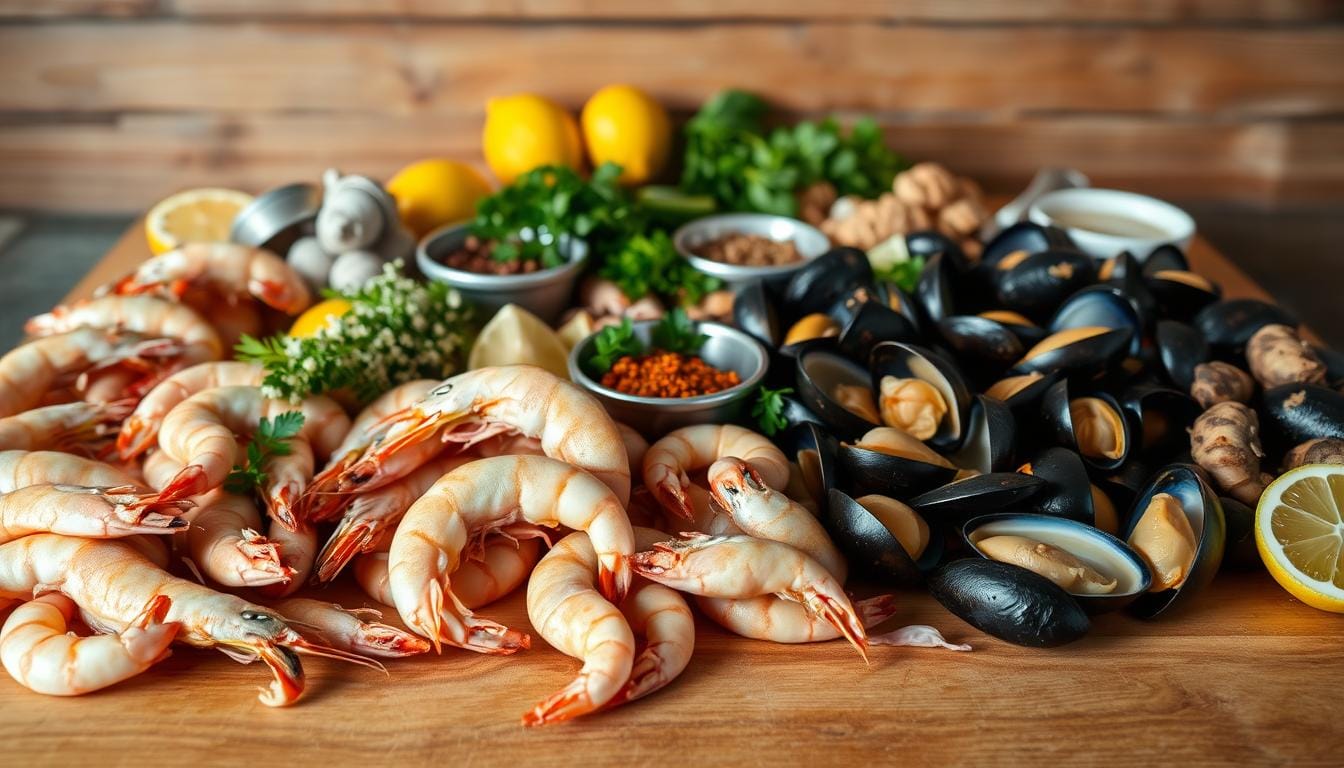
Shrimp are key in most seafood boils. For big parties, use jumbo or large shrimp. A big recipe might need 4 lb of shrimp.
Crab legs add sweetness and flair. Alaskan king crab, about 2.5 lb, is perfect for a party. Littleneck clams are great with muskier shellfish, about 30 clams.
Mussels cook quickly and stretch servings. Lobster tails are a luxury option. Scallops should be added last to avoid overcooking.
Shell-on vs peeled
Cooking shell-on seafood keeps juices in and deepens broth flavor. Shells add body and flavor to the stock. Peeled options are quicker to eat but may lose flavor.
Best to cook most items shell-on and then peel at the table. This way, everyone can enjoy the flavors.
Portion planning and servings
Use benchmarks to scale your menu. A recipe for 14 might include 3 lb potatoes, 4 lb shrimp, and 2.5 lb crab. It also includes 30 clams, five packages of kielbasa, and six ears of corn.
For each person, plan for 0.25–0.5 lb shrimp, 0.2–0.5 lb crab legs, and 0.2 lb potatoes. These help estimate costs and cooking times.
Timing integration
Prep takes about 30 minutes. Cooking takes around 1 hour with items added in layers. Start with potatoes and large crab legs.
Add kielbasa and corn mid-cook. Save delicate proteins like shrimp and scallops for the end. This keeps everything tender and the broth flavorful.
Practical takeaway
Choose a mix of shellfish and proteins. Favor shell-on for flavor. Use sample serving sizes to plan for your guests. Add delicate items last to keep everything tender and flavorful.
Building a Flavorful Broth and Base Seasonings
You start with the liquid that will carry flavor into every bite. Use about 8 quarts of water in a very large stockpot. Or, fill the pot halfway and add homemade or store-bought seafood stock for extra depth. Plain water works if you season boldly, while seafood stock adds umami and richness.
Season generously so potatoes and sausage soak up bold taste. For a very large pot, aim for roughly 1 2/3 cups seafood seasoning like Old Bay and about 6 teaspoons kosher salt, plus 6 bay leaves. Stir these in during the brief simmer to build a strong base. If you want heat, blend in Cajun/Creole blends to taste; those mixes of cayenne, smoked paprika, garlic powder, thyme, and oregano give the broth complexity.
Bring aromatics into the pot early so they release fragrance. Add halved lemons, two medium sweet onions quartered, two heads of garlic peeled and halved, and two bunches of fresh thyme tied together. Simmer aromatics and seasonings for about 10 minutes before adding solids so citrus, sweetness, and herbal notes infuse the liquid.
Taste the broth as it simmers. You should aim for a strong, salty, and spicy profile so flavor transfers to shellfish, corn, and potatoes. Reserve a cup or two of boiling liquid to pour over served seafood or to thin sauces like a garlic butter sauce for seafood boil when you want a finishing splash of seasoned juice.
Use the following quick reference to balance volume, seasoning, and aromatics for a large pot so your seafood boil ingredients yield consistent results.
| Component | Suggested Amount | Purpose |
|---|---|---|
| Water / Stock | 8 quarts water or half water, half seafood stock | Base liquid; stock adds umami and deeper color |
| Seafood seasoning (Old Bay) | 1 2/3 cups | Layered savory and aromatic backbone for all solids |
| Kosher salt | 6 teaspoons | Enhances natural flavors and helps seasoning absorption |
| Bay leaves | 6 leaves | Mild herbal depth and aroma |
| Cajun/Creole blends | To taste (start with 2–4 tablespoons) | Adds heat, smoke, and regional spice profile |
| Halved lemons | 3–4 lemons | Bright citrus acid that lifts richness |
| Sweet onions (quartered) | 2 medium | Sweetness and body to the broth |
| Garlic (halved heads) | 2 heads | Savory depth and aromatic heat when simmered |
| Thyme (bundled) | 2 bunches | Fresh herbal lift that pairs with seafood and sausage |
Vegetables and Starches to Round Out the Boil
Start by picking vegetables and starches that soak up the broth. Red potatoes and sweet corn are key. Onions add sweetness that balances the spice.
Classic choices: red potatoes, sweet corn, onions
Use 3 lb of red potatoes, halved if they’re medium. This ensures they cook evenly and soak up flavors. Simmer them for 15–20 minutes until they’re tender.
Six ears of sweet corn, cut in half, work well. Add them for about 5 minutes to keep them bright and crisp. Quarter two medium Vidalia onions to release their sweetness and scatter them on serving trays.
Optional vegetable add-ins: bell peppers, green beans, Brussels sprouts
Slice bell peppers for color and crunch. Add green beans for freshness and quick cooking. Brussels sprouts and mushrooms add earthy texture for depth.
Nontraditional fruits like orange slices or pineapple can absorb spice and add brightness. This is great if you prefer a sweeter note.
Cooking order and timing so potatoes and corn absorb seasoning
Follow a layered schedule for the right timing. Simmer aromatics and seasonings for 10 minutes first. Then add potatoes and simmer for 15–20 minutes.
Add sausage and corn for an extra 5 minutes. Next, add clams and cook until they open, about 8 minutes. Toss in shrimp, shut off the heat, and let them steep for 10 minutes. Press crab into the liquid for the last 5 minutes to finish.
Keep the pot covered during simmering to trap steam and flavor. Adjust times for smaller pots or different potato sizes. This ensures your crab boil ingredients and other seafood boil ingredients are balanced and well seasoned.
Sausage, Meats, and Non-Seafood Additions
Start by choosing sausages and meats that add both texture and depth. Pick smoked kielbasa or andouille for classic smoky spice. These sausages give your pot palpable richness and season the vegetables and potatoes as they cook.
Timing matters: add sausage with the corn so it simmers about five minutes. If you use five 13-oz packages of smoked kielbasa cut into 2″ pieces, the slices will warm through and release savory oils without drying out. Place andouille slightly earlier when you want more spice in the broth.
Try unexpected, sturdy add-ins for variety. Hard-boiled eggs absorb seasoned broth and provide extra protein. You can boil them separately or in the pot toward the end so they soak up flavor without cracking.
Mushrooms such as cremini or button hold up well in a boil. They add an earthy contrast and soak up the seafood boil sauce and spiced broth, balancing the briny seafood notes.
Meats leach fat, smoke, and spices into the liquid as they simmer. That process deepens the broth and helps bind flavors across shellfish, starches, and vegetables. Plan the order so meats release flavor early enough to enrich the pot, but late enough to avoid overcooking.
Use sausage for both heft and flavor. Combine expected choices like smoked kielbasa and andouille with surprising items—eggs and mushrooms—to diversify texture and taste. Place meats strategically in your cooking sequence to maximize broth enrichment.
| Add-in | When to Add | Effect on Broth | Portion Guideline |
|---|---|---|---|
| Smoked kielbasa | With corn, last 5–7 minutes | Imparts smoky fat and savory oils | Five 13-oz packs, cut into 2″ pieces for a 10–12 person boil |
| Andouille | 5–10 minutes before finishing | Adds spice and deepens Cajun notes | 1–2 lbs depending on spice tolerance |
| Hard-boiled eggs | Last 3–5 minutes or pre-boiled and added at service | Soaks up seasoned broth, adds protein | 1 egg per 2 servings as a side option |
| Cremini/button mushrooms | 10 minutes before finish | Provides earthy contrast, absorbs seafood boil sauce | 8–12 oz per pot for texture balance |
Homemade and Store-Bought Sauces for Serving
Your boil needs sauces that add heat, richness, and a bright finish. Start with a warm garlic butter sauce for seafood boil in a communal pot. Also, have individual bowls of dipping sauces. Offer a creamy option, an acidic lift, and a hot sauce for different tastes.
Garlic butter basics and easy variations
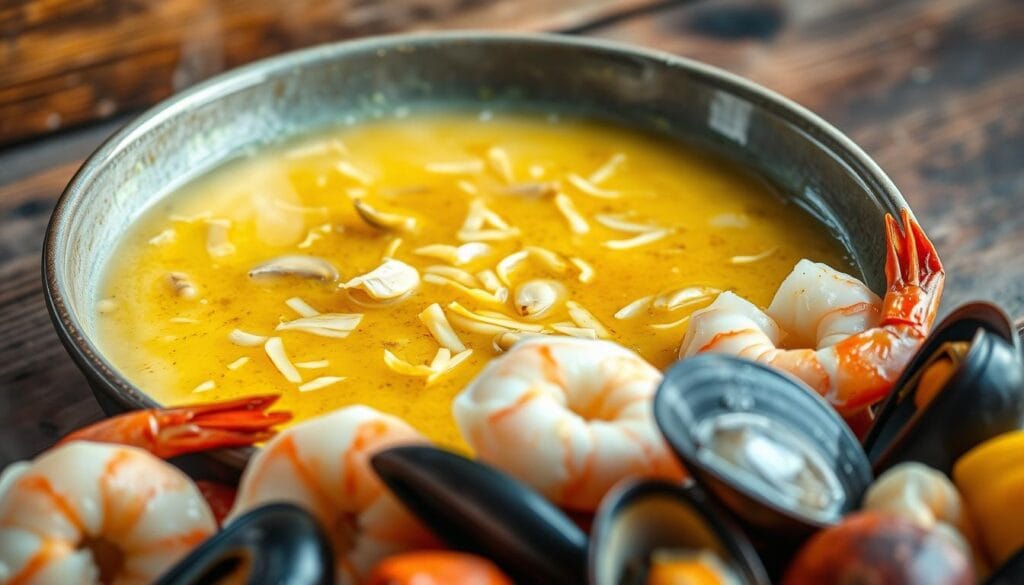
To make a classic garlic butter sauce, melt 1 cup (2 sticks) of unsalted butter. Sauté 6 minced garlic cloves for 1–2 minutes. Then, stir in 1 tablespoon Cajun seasoning and 1 teaspoon lemon juice. Simmer for 3–4 minutes to blend flavors. Add a few drops of hot sauce for extra kick.
Try different variations for the crowd. Add chopped parsley and smoked paprika for herbs and smoke. Swap lemon juice for orange juice for a citrus twist. For a spread, mix softened butter with roasted garlic and herbs to make compound butters for crab or lobster.
Cajun butter, compound blends, and acids
A simple Cajun butter is melted butter mixed with Cajun seasoning until smooth. Add a dash of lemon juice to brighten it. Keep it warm in a small pot or thermal vessel for easy pouring.
Compound butters offer control over texture and flavor. Mix softened butter with minced garlic, parsley, and Cajun seasoning, then chill. Slice rounds to melt over seafood, or use melted compound butter as a sauce over corn or potatoes.
Three dipping sauces to offer
Make Cajun mayo by folding 1 cup mayonnaise with 1–2 teaspoons Cajun seasoning and lemon. It’s great with shrimp and fries. Offer classic hot sauces like Tabasco or Louisiana brands for those who like it hot.
Save a cup of seasoned cooking broth as a pouring sauce. Warm it and serve in a ladle or pitcher for guests to splash over their servings.
Serving tips to keep sauces at peak
Warm sauces just before guests arrive. Use thermal containers for garlic butter sauce and seafood boil sauce blends. Place small bowls at each place and a large communal pot in the center for easy dipping and passing.
| Sauce | Key Ingredients | Best Use |
|---|---|---|
| Garlic Butter Sauce | Unsalted butter, minced garlic, Cajun seasoning, lemon juice | Communal dipping for shrimp, crab, lobster |
| Cajun Butter | Butter, Cajun seasoning, optional citrus | Pour over crab or melt on lobster; spreadable compound butter for rolls |
| Cajun Mayo | Mayonnaise, Cajun seasoning, lemon juice | Dipping for corn, sausage, fries |
| Reserved Broth | Seasoned boil liquid (salt, spices, aromatics) | Pouring sauce to moisten servings and boost flavor |
| Hot Sauce | Vinegar-based peppers (Tabasco, Louisiana) | Bright acidic heat for those who want spice |
Step-by-Step Cooking Timeline and Equipment
Plan your cook so guests arrive when food is hot and timing is relaxed. Aim for 30 minutes prep, 1 hour cook, and a total of about 1 hour 30 minutes. Use these benchmarks to set a guest arrival window and to pace tasks like chopping, seasoning, and heating the pot.
Start by building a seasoned base: fill a very large stockpot with about 8 quarts of water. Squeeze lemons into the pot and add onions, chiles, whole garlic, thyme, seafood seasoning (about 1 2/3 cups Old Bay), 6 teaspoons kosher salt, and bay leaves. Bring to a boil, then simmer aromatics for roughly 10 minutes so flavors marry.
Use a clear, layered timeline to avoid overcooking. Add potatoes first and simmer 15–20 minutes so they absorb seasoning and become fork-tender. Next, drop in sausage and corn and cook about 5 more minutes. Add clams and boil until they open, roughly 8 minutes. Toss in shrimp, turn off the heat, and cover so shrimp steep for about 10 minutes. Add crab in the final 5 minutes, pressing it into the liquid to warm through, then drain and serve.
Work with the right tools so you can move fast and stay safe. A very large stockpot with a basket insert makes lifting and draining simple. An outdoor propane burner keeps heat steady for big crowds. Have strainers, large slotted spoons, long tongs, and heatproof gloves within reach.
Lay out serving gear before you begin. Use large trays or newspaper-lined tables for communal service, bowls for sauces, and plenty of napkins and wet wipes. Keep a bit of boiling liquid aside for ladling over portions if items cool too fast.
Follow practical safety measures while you cook. Label allergen items and monitor clams for freshness; buy them same-day and keep them on ice. Adjust crab boil timing if your pot is larger or quantities increase. Test doneness at the listed intervals, not just by time.
Below is a concise timing table to use at the stove. It maps common ingredients to cook windows so you can follow a pace that keeps texture and flavor steady.
| Ingredient | When to Add | Cook Time |
|---|---|---|
| Potatoes (red) | After aromatics simmer ~10 min | 15–20 minutes until fork-tender |
| Sausage (andouille or kielbasa) | With corn | ~5 minutes to heat through |
| Corn on the cob | With sausage | ~5 minutes |
| Clams | After sausage/corn | ~8 minutes, until shells open |
| Shrimp | After clams | Turn off heat; steep covered ~10 minutes |
| Crab | Last 5 minutes | Warm through; avoid overcooking |
Keep a simple checklist of seafood boil ingredients and seafood boil equipment handy on cook day. That list saves time and prevents last-minute runs. With the timeline and gear ready, you will move through the recipe confidently and serve a hot, well-timed feast.
Storage, Reheating, and Serving Tips for the Perfect Feast
Keep leftovers safe and tasty by moving them into airtight containers. Refrigerate within two hours of serving. Use cooked seafood and mixed boil leftovers within 1–2 days for best safety and texture.
If you need longer storage, freeze cooked shrimp or crab in single layers inside freezer bags. This way, you can store them for up to one month. Just remember, the texture may soften.
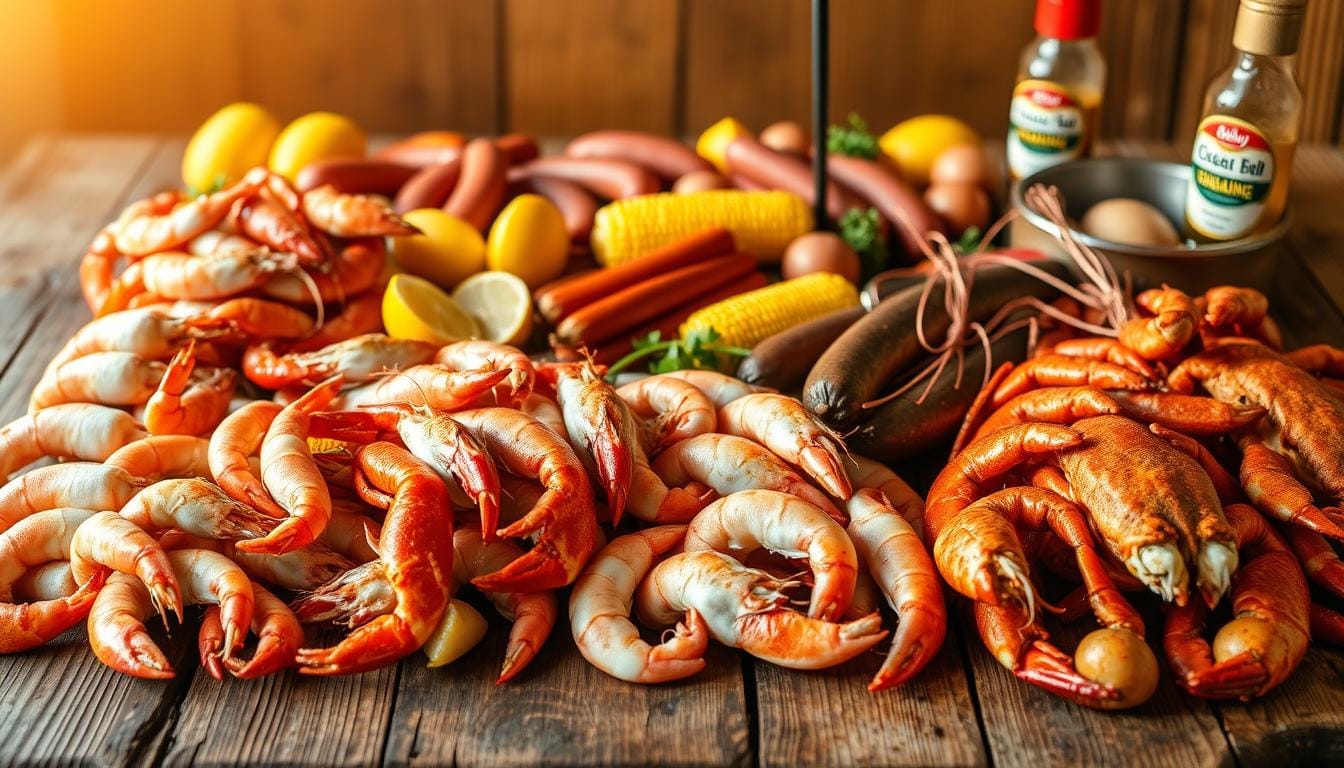
Save a cup or two of the seasoned boiling liquid before you drain the pot. Chill that broth separately to use as a flavor boost for soups or when reheating seafood. Pouring a little of the cooled broth over servings helps keep the meal juicy and tastes like the original boil.
Choose gentle reheating methods to protect delicate proteins. A steamer brings items back to temperature without drying them out. Steam for short bursts until warm, checking often to avoid overcooking.
If you prefer stovetop reheating, simmer a small amount of water or reserved broth with a pat of butter in a skillet. Add the seafood and vegetables just long enough to heat through. This method preserves texture and revives seasoning better than high-heat shortcuts.
Avoid microwaving shellfish when possible. Microwaves create hot spots that toughen shrimp and crab. If microwave use is your only option, cover the dish, use low power, and heat in 20–30 second intervals.
Set up service stations for relaxed, communal dining. Lay large trays or newspaper-lined tables and drain the boil before spreading it out. Offer crab crackers, small shell bowls, wet wipes, and sturdy napkins so guests can dig in comfortably.
Provide a selection of finishing touches to suit every palate. Put out garlic butter sauce, Cajun mayo, hot sauce, and extra Old Bay for sprinkling. Cold drinks such as beer, sweet tea, and lemonade pair well with rich flavors and help guests pace the meal.
Label condiments and keep utensils handy for those who prefer less hands-on eating. A pitcher of reserved broth warmed lightly makes an excellent pour-over for plated portions. This keeps the feast tasting fresh.
Key Takeaways
- Plan about 30 minutes prep and 1 hour cook time for a full seafood boil that yields ~14 servings.
- Use measured seasonings: 1 2/3 cups seafood seasoning, six teaspoons kosher salt, and six bay leaves for consistent flavor.
- Core solids: 3 lbs red potatoes, 5 packages smoked kielbasa, 6 ears corn, 30 littleneck clams, 4 lbs shrimp, 2.5 lbs crab legs.
- Finish with a garlic butter sauce for seafood boil or a tangy seafood boil sauce to elevate the feast.
- Watch sodium—complete recipe sodium can be high; adjust salt for dietary needs.
Conclusion
A great seafood boil starts with smart choices. Pick fresh seafood and choose shell-on options for deeper flavor. Gather the right crab boil ingredients and seasonings.
Build a rich, well-seasoned broth. Layer ingredients by cook time. This way, potatoes and corn soak up the seasoning. Shrimp and clams cook quickly. Save some seasoned liquid for serving.
Follow this guide for about 30 minutes prep and one hour total cook time. Use ingredient quantities as a guide for groups of a dozen or more. Mix proteins like shrimp, crab, clams, mussels, and lobster with red potatoes, corn, and smoked kielbasa or andouille.
Finish with warm sauces to elevate every bite. Try garlic butter sauce, Cajun butter, or tangy seafood boil sauce. Serve on trays or newspaper, keep sauces warm, and offer cold drinks and plenty of napkins.
Store leftovers properly. Reheat gently with a steamer or simmering broth. This keeps texture and flavor.
FAQ
What is a seafood boil and why do ingredients matter?
Where did the Cajun and Creole seafood boil styles originate and how do they differ?
How do ingredients build the flavor profile of a boil?
Why does ingredient quality affect the final feast?
What core seafood options should I consider and what quantities work for a large boil?
Should I cook shell-on seafood or peeled items?
How do I plan portions and servings for a crowd?
Should I use water or seafood stock for the boil?
What essential seasonings and quantities do I need for a large pot?
Which aromatics should I add and why?
What vegetables and starches are classic, and what optional add-ins work well?
What is the correct cooking order and timing so everything cooks properly?
How do smoked sausage and andouille contribute, and when do I add them?
What unusual add-ins should I consider and how do they perform?
How do meats release flavor into the broth and balance the feast?
What is a reliable garlic butter sauce recipe for a seafood boil?
What finishing butters and acids should I offer?
What dipping sauces should I provide alongside garlic butter?
What are the prep, cook, and total time benchmarks for planning?
What equipment is essential for a big seafood boil?
How should I store leftovers and how long will they last?
What’s the best way to reheat seafood without ruining texture?
How should I present and serve a seafood boil for a crowd?
How can I balance sodium and dietary needs during the boil?
Any quick safety tips when buying and handling shellfish?
We Value Your Opinion!
Tell us how this recipe worked for you — your voice counts.
There are no reviews yet. Be the first one to write one.