Easy Seafood Stuffing Recipe Packed with Flavor
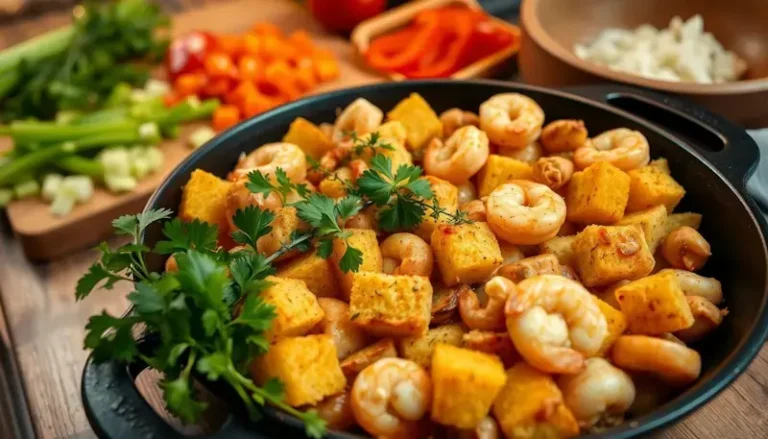
Explore a tasty seafood stuffing recipe that brings the coast to your dinner. This simple recipe turns basic ingredients into a dish that wows everyone. It uses canned crab meat and frozen shrimp for a real seafood taste without hard cooking.
Picture a stuffing full of sea flavors. Our recipe mixes soft shellfish with Cajun spices and fresh veggies. It’s a side that’s both cozy and thrilling, great for holidays or big events.
Table of Contents
Creating this delicious easy stuffing is surprisingly easy. It’s perfect for both experienced cooks and beginners. This seafood stuffing will quickly become a favorite in your kitchen.
What Makes Seafood Stuffing a Coastal Tradition
Seafood stuffing is more than a tasty holiday dish. It’s a journey through America’s coastal heritage. Your coastal stuffing recipe links you to generations of cooks who made memorable meals from local seafood.
The history of oyster stuffing is deep in American cooking. Coastal communities found creative ways to make tasty dishes with seafood. Necessity truly became the mother of culinary invention.
The History of Oyster and Shellfish Stuffing
Oyster stuffing was a cheap protein for families near the coast. New England and Southern coastal areas turned plenty of shellfish into legendary dressings.
- Oysters were cheap and plentiful in coastal areas
- Low-income families relied on seafood dressing as a nutritious meal
- Each region developed unique seafood stuffing techniques
Regional Variations from New England to the Gulf Coast
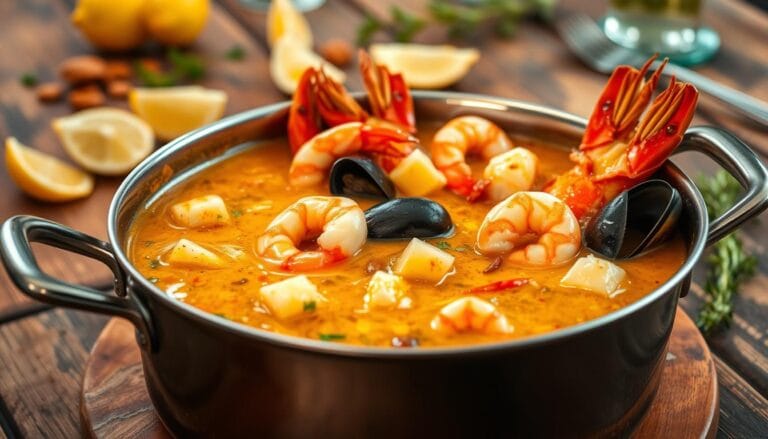
Different coastal areas made their own seafood stuffing styles. New England used oysters and fish, while the Gulf Coast went for shrimp, crab, and Cajun spices.
Seafood stuffing isn’t just a recipe—it’s a delicious piece of American culinary history.
Your oyster stuffing recipe connects you to a rich tradition of resourceful cooking. It turns local ingredients into something truly special.
Why This Seafood Stuffing Recipe Works for Everyone
Your holiday stuffing doesn’t have to be complicated to be delicious. This Thanksgiving stuffing recipe is a mix of traditional comfort and coastal flavors. It’s a hit with everyone.
This seafood stuffing is incredibly versatile. It’s perfect for seafood fans and those who prefer milder flavors. It has something for everyone.
- Uses easily accessible ingredients like frozen shrimp and canned crabmeat
- Adaptable texture for different preferences
- Familiar stuffing elements with a coastal twist
This recipe is smart because you can adjust how much seafood you use. Seafood lovers can have big chunks. Those who prefer less can chop it finer.
“A simple dish exploding with flavor” – Home Cook Review
With this stuffing, you can enjoy coastal flavors anywhere. You don’t need to live by the sea. Just use ingredients from your local grocery store.
| Ingredient Accessibility | Preparation Ease | Flavor Profile |
|---|---|---|
| Frozen Shrimp | Simple Chopping | Mild Seafood Taste |
| Canned Crab Meat | Quick Mixing | Rich Coastal Flavor |
This stuffing makes your Thanksgiving meal unforgettable. It’s special yet feels like home.
Essential Ingredients for the Perfect Seafood Stuffing
To make a great seafood stuffing, you need the right ingredients. Each one adds flavor and texture. Knowing how they work together will make your Cajun stuffing a hit with your guests.
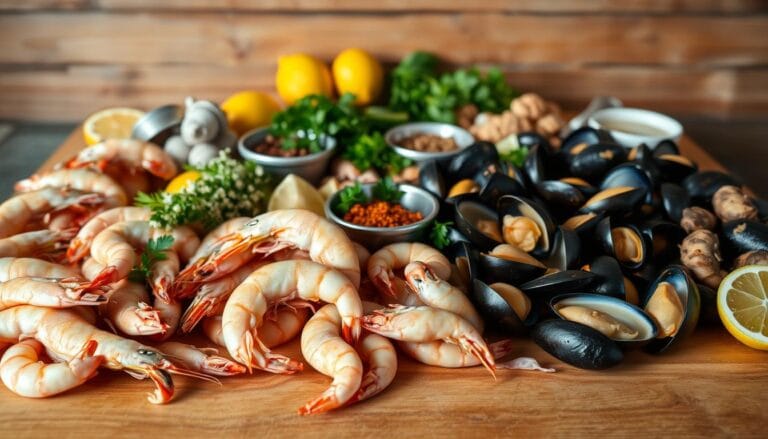
Choosing the Right Shellfish: Shrimp, Crab, and Beyond
Quality is key when picking shellfish for your stuffing. Go for fresh, raw shellfish. Raw shrimp keeps it tender, and fresh crabmeat adds amazing flavor.
- Raw shrimp prevents overcooking
- Fresh crabmeat offers best taste
- Consider adding scallops or oysters for variety
The Cajun Holy Trinity for Maximum Flavor
The heart of Cajun stuffing is the holy trinity: onions, celery, and green peppers. These veggies add a deep flavor that makes your stuffing stand out.
| Ingredient | Flavor Profile | Purpose |
|---|---|---|
| Onions | Sweet, pungent | Base flavor |
| Celery | Crisp, fresh | Aromatic depth |
| Green Peppers | Mild, slightly bitter | Complexity |
Best Bread Options for Your Stuffing Base
Choosing the right bread is important. Day-old bread soaks up flavors better than fresh bread, making your stuffing more cohesive.
- White sandwich bread
- Crusty sourdough
- Panko breadcrumbs for lighter texture
Pro tip: Avoid fresh bread, as it can become soggy and compromise your stuffing’s texture.
Step-by-Step Instructions for Making Seafood Stuffing
Making the perfect baked seafood stuffing needs precision and care. Your shellfish stuffing will come to life with careful preparation. Follow these steps to create a delicious dish that captures coastal cuisine’s essence.
- Fresh shrimp and crab meat
- Butter for sautéing
- Cajun seasoning
- Fresh bread cubes
- Aromatics like onion, celery, and bell pepper
First, preheat your oven to 375°F. In a large skillet, melt two tablespoons of butter over medium heat. Cook your seafood quickly—shrimp should curl and turn opaque after 2-3 minutes per side. Then, transfer the cooked seafood to a large mixing bowl.
The secret to a flavorful baked seafood stuffing is in building layers of taste. Use the same skillet to sauté your vegetable base. Cook onions, celery, and bell pepper until tender, about 7-8 minutes. Add minced garlic for an extra flavor punch during the last minute of cooking.
Combine your cooked seafood with the vegetable mixture. Stir in Cajun seasoning, thyme, salt, and pepper. Add chicken stock and a beaten egg to bind the ingredients. Gently fold in bread cubes and fresh parsley, ensuring even distribution.
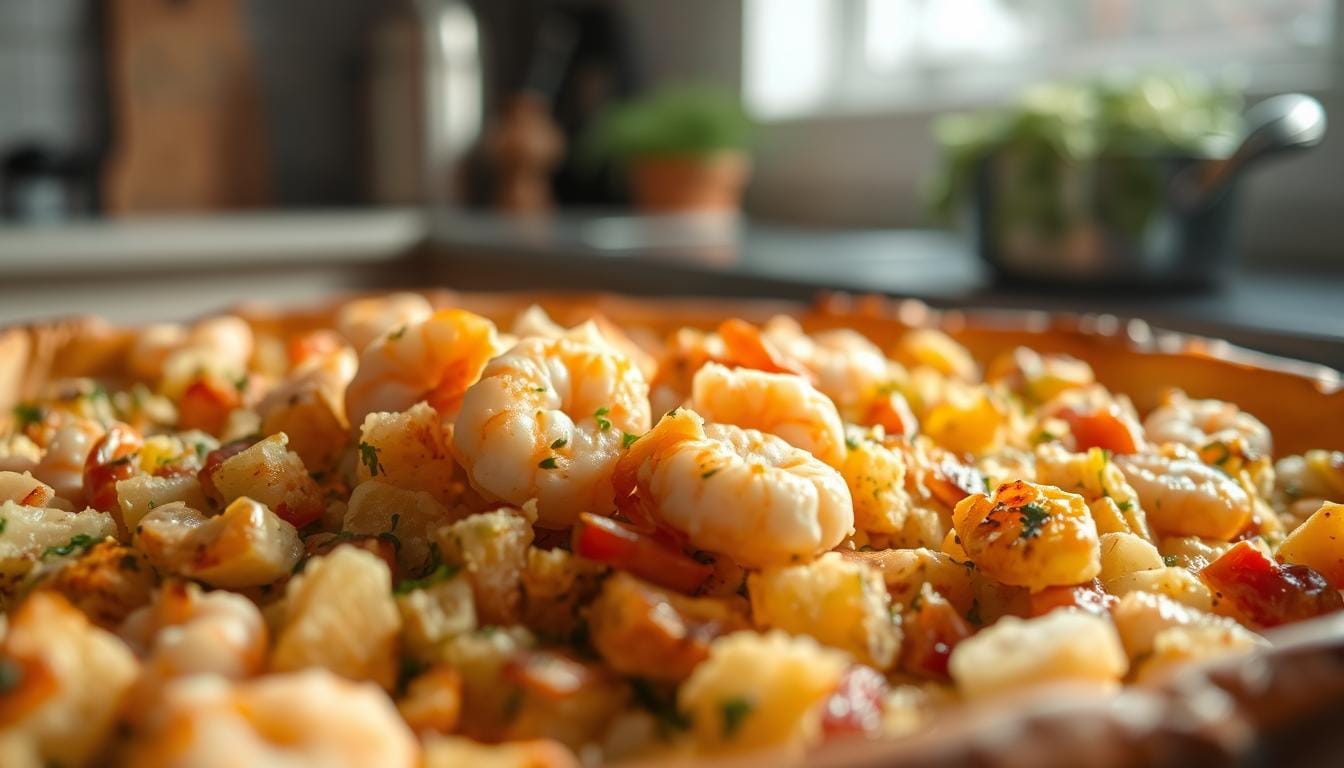
Transfer the mixture to a greased 13×9-inch baking dish. Bake for 30-35 minutes until the top turns a beautiful golden brown. Your seafood stuffing is ready to become the star of your holiday table!
Cooking the Seafood to Perfection
To make a great seafood stuffing, you need to prepare your seafood right. The right cooking method can make your stuffing go from good to amazing. This ensures it’s tender and full of flavor every time.
When you’re getting your seafood ready, knowing how to cook it is key. Raw seafood needs special care to avoid being tough and to keep it safe to eat.
Mastering Shrimp Preparation
Shrimp can get tough if they’re cooked too long. Here’s how to make your seafood stuffing perfect:
- Start with raw shrimp for the best texture
- Cook shrimp briefly on the stovetop
- Remove when shrimp turn slightly opaque
- Allow carryover cooking to finish the job
Navigating Crabmeat Options
Your seafood stuffing can use different types of crabmeat. Each type needs its own special preparation:
| Crabmeat Type | Preparation Method | Best Use |
|---|---|---|
| Canned Crabmeat | Drain and rinse with cool water | Budget-friendly option |
| Fresh Crabmeat | Cook and clean thoroughly | Premium flavor |
| Imitation Crab | Dice into small pieces | Easy alternative |
Pro tip for your easy stuffing recipe: Always slightly undercook seafood on the stovetop. The heat from baking will finish cooking it. This keeps your seafood stuffing tender and delicious.
Building Layers of Flavor with Aromatics and Seasonings
Creating a great Cajun stuffing is all about building complex flavors. The secret to a memorable holiday stuffing is in layering aromatics and seasonings. These elements turn simple ingredients into a culinary masterpiece.
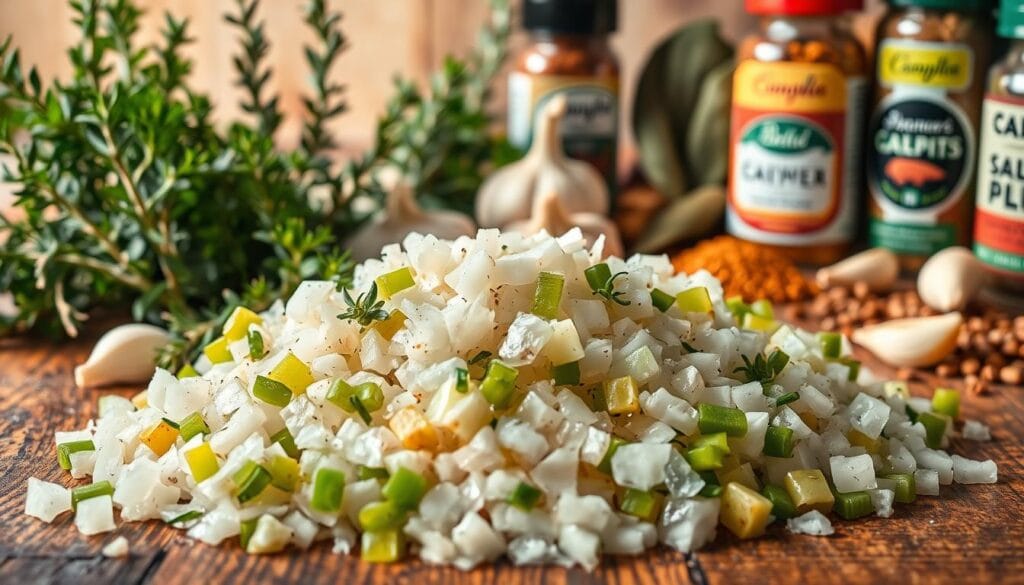
The foundation of any great seafood stuffing starts with the Cajun holy trinity. This magical combination of ingredients adds depth and character to your dish:
- Onions: Providing a sweet, subtle base
- Celery: Adding crisp, fresh undertones
- Green peppers: Introducing a mild, slightly spicy note
When making your holiday stuffing, the key is to cook these aromatics slowly in butter. Patience is key – cook them over medium heat for 7-8 minutes. This makes them tender and releases their full flavor.
| Ingredient | Flavor Profile | Cooking Tip |
|---|---|---|
| Garlic | Nutty, pungent | Add in the last minute to prevent burning |
| Cajun Seasoning | Spicy, complex | Use homemade or store-bought blend |
| Fresh Parsley | Bright, fresh | Add at the end for color and flavor |
Don’t be afraid to try new things with your Cajun stuffing seasonings. A pinch of dried thyme, a sprinkle of salt and pepper, and a generous helping of Cajun spice will make your stuffing stand out.
“The difference between good cooking and great cooking is in the layers of flavor you build.” – Chef’s Secret
Baking Your Seafood Stuffing to Golden Perfection
Turning your seafood stuffing into a delicious dish needs precision and care. Baked seafood stuffing needs the right temperature and timing. This ensures a golden-brown crust and a juicy inside.
Optimal Temperature for Baking
Your seafood stuffing recipe is at its best when baked at the right temperature. Here are the key guidelines:
- Standard baking temperature: 375°F
- Baking time: 30-35 minutes
- Goal: Achieve a golden-brown top with crispy edges
Mastering the Doneness Test
Knowing when your baked seafood stuffing is perfectly cooked is easy with a few checks:
- Visual Check: Look for a golden-brown surface
- Fork Test: Gently insert a fork into the thickest part
- Texture Indicator: Seafood should flake easily and appear opaque
“The secret to perfect baked seafood stuffing is watching it closely and trusting your instincts!” – Professional Chef
Pro tip: Check your stuffing early to prevent overcooking. The difference between perfectly baked and dry can be just minutes. Use an instant-read thermometer to ensure the center reaches 165°F for food safety.
Creative Variations to Customize Your Stuffing
Turn your oyster stuffing into a masterpiece with these exciting variations. They will make your seafood dish stand out. Every cook has their own special touch, and these ideas let you add your own flair while keeping the flavors great.
Here are some fun ways to make your seafood stuffing unique:
- Cornbread Base: Try using crumbled homemade cornbread instead of bread cubes for a Southern twist. Gluten-free cornbread is great for those with dietary needs.
- Expanded Seafood Selection: Add scallops or clams to your oyster stuffing for more flavors.
- Flavor Boosters: Add white wine, lemon pepper, or fresh herbs like dill and thyme to boost the taste.
When trying new stuffing ideas, remember a few things. Use fresh pre-shucked oysters for the best taste. Chop shellfish into small pieces for a better texture. The USDA says to cook oysters and other shellfish well before baking for safety.
For a fancy finish, sprinkle grated Parmesan cheese on top. It adds a rich, umami flavor that goes well with the seafood. Your guests will love the creativity and depth of your oyster stuffing.
Storage and Make-Ahead Tips for Busy Holidays
Planning your Thanksgiving stuffing recipe ahead can save you valuable time during the holiday rush. A make ahead stuffing strategy helps you manage your kitchen workflow while ensuring delicious results. Proper storage and preparation are key to maintaining the quality of your seafood stuffing.
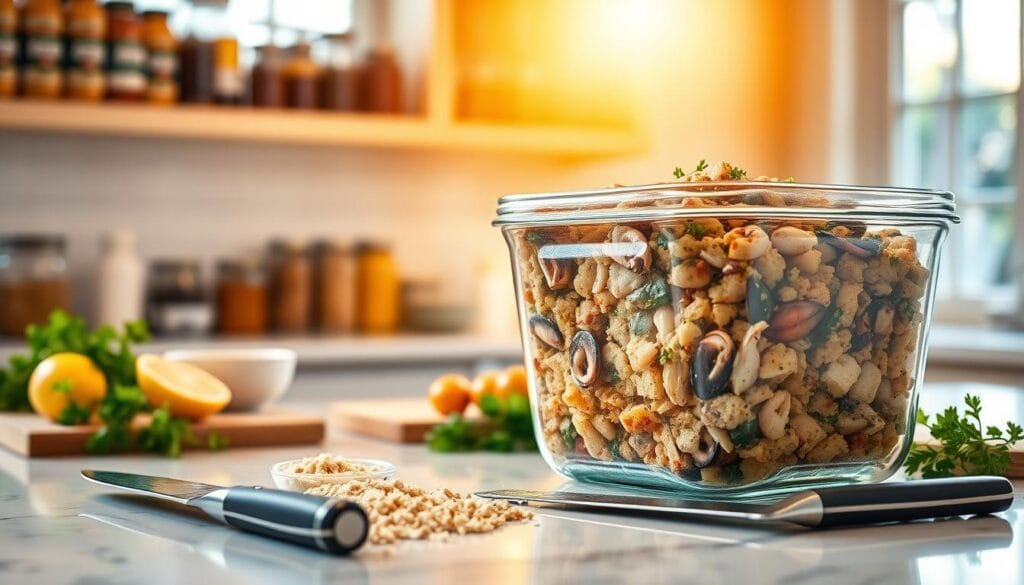
When preparing your seafood stuffing, follow these essential storage guidelines:
- Cool the stuffing completely within 2 hours of cooking
- Use airtight containers for storage
- Divide into smaller portions for faster cooling
- Refrigerate immediately after cooling
How Long Does Seafood Stuffing Last?
Your carefully crafted seafood stuffing can safely remain in the refrigerator for 3-4 days. Pro tip: Avoid freezing seafood stuffing, as the delicate texture of shrimp and crabmeat will deteriorate during the freezing process.
Safe Reheating Methods
Reheating your make ahead stuffing requires careful attention to maintain its texture and ensure food safety. The best method is using an oven:
- Preheat oven to 375°F
- Cover stuffing with foil to prevent drying
- Heat until internal temperature reaches 165°F
- Check temperature with a food thermometer
Avoid microwave reheating, which can make seafood tough and compromise the stuffing’s delightful texture. Your Thanksgiving stuffing recipe deserves the best treatment to keep it as delicious as when it was first prepared.
What to Serve with Your Seafood Stuffing
Your holiday stuffing needs the right side dish. Think about what goes well with the seafood flavors. You want a balance that makes your stuffing shine.
Lighter vegetable dishes are great with this stuffing. Here are some good choices:
- Roasted Brussels sprouts with crispy edges
- Honey-glazed carrots
- Butternut squash with fresh herbs
- Crisp spinach salad with light vinaigrette
For a Southern twist, try sides that match your seafood stuffing’s Cajun flair. These sides will tie your meal together:
- Black-eyed peas
- Collard greens
- Roasted fresh okra
- Cornbread
Seasonal sides are important too. In the cold months, go for roasted root vegetables or crispy potatoes. In warmer weather, grilled veggies add a refreshing touch.
Your seafood stuffing is packed with protein. Pick sides that offer different textures and tastes. This way, every bite of your Thanksgiving meal will be exciting and tasty.
Using Leftover Seafood Stuffing in Creative Ways
Don’t let leftover seafood stuffing go to waste! You can turn it into new dishes easily. These ideas will make your leftover stuffing into something exciting.
Leftover seafood stuffing is very versatile. You can make it into many tasty dishes. Here are some ideas to try:
- Crispy Seafood Stuffing Cakes: Mix leftover stuffing with a beaten egg, form into patties, and pan-fry until golden brown
- Breakfast Stuffing Cups: Press stuffing into muffin tins, create an egg well, and bake until eggs are set
- Stuffed Pasta Shells: Fill jumbo pasta shells with seafood stuffing and bake with a creamy sauce
- Fish Roulades: Use stuffing as a filling for rolled fish fillets
Innovative Stuffing Transformations
Seafood stuffing can make many dishes better. Try it on baked potatoes, in creamy chowders, or as a salad topping. The secret is to be creative and mix flavors.
| Dish Type | Leftover Seafood Stuffing Application |
|---|---|
| Breakfast | Stuffing Egg Cups |
| Lunch | Stuffing Crab Cakes |
| Dinner | Fish Roulades |
| Side Dish | Roasted Squash Filling |
With these ideas, you’ll see leftover seafood stuffing in a new light. Each method is a fun way to enjoy your dish and reduce waste.
Key Takeaways
- Uses readily available seafood ingredients
- Combines Cajun-inspired flavors with classic stuffing technique
- Easy to prepare with minimal cooking skills
- Versatile side dish for multiple occasions
- Delivers restaurant-quality taste at home
Conclusion
Your seafood stuffing recipe journey has turned a classic dish into something exciting and easy to make. This recipe mixes home cooking with fancy flavors. It shows that you don’t need to be a pro or spend a lot to make great food.
You’ve learned how to make a seafood stuffing that can become a family favorite. You’ve picked up tips on choosing the best seafood and cooking it just right. This will help you impress everyone at your next meal, whether it’s a big holiday or a cozy dinner at home.
This seafood stuffing recipe is all about trying new things. You can use different seafood, change up the spices, and even find new ways to use leftovers. With these skills, you can make a dish that’s full of coastal flavors but easy to make.
By trying out this recipe, you’re not just cooking a meal. You’re joining a long tradition of cooking that values fresh ingredients, bold tastes, and the fun of cooking. Your seafood stuffing is more than just food. It’s a way to bring people together and make memories with every bite.
FAQ
Can I use pre-cooked shrimp in my seafood stuffing?
What if I can’t find fresh seafood in my area?
How long can I store seafood stuffing in the refrigerator?
Can I make seafood stuffing ahead of time?
Is seafood stuffing gluten-free?
Can I freeze seafood stuffing?
What’s the best way to reheat seafood stuffing?
Can I substitute the seafood in the recipe?
How spicy is this seafood stuffing?
What’s the difference between stuffing and dressing?
We Value Your Opinion!
Tell us how this recipe worked for you — your voice counts.
There are no reviews yet. Be the first one to write one.