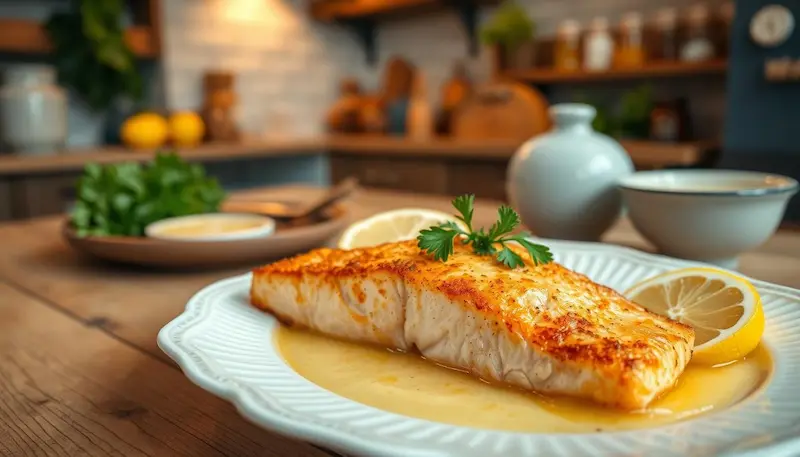
Perfect Oven-Baked Lemon Butter Salmon in 20 Minutes
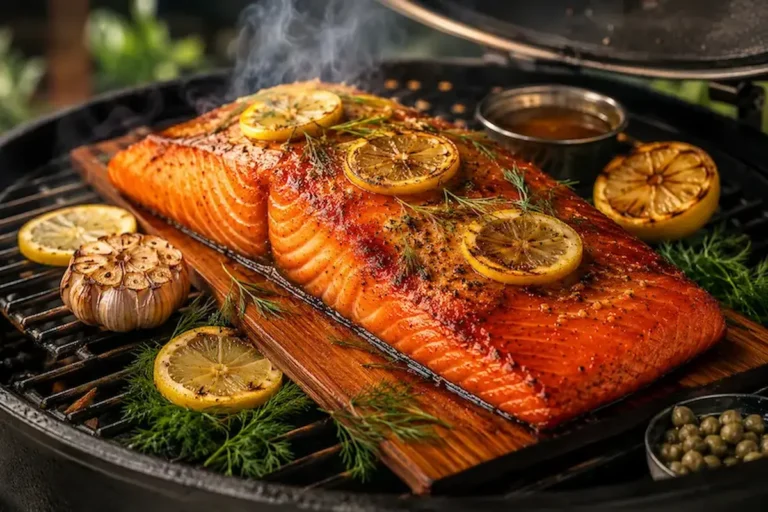
Some nights, you want a delicious homemade dinner without spending hours in the kitchen. That’s where this oven-baked lemon butter salmon recipe shines. With just a handful of ingredients and minimal prep, you can create a restaurant-quality meal that’s tender, flaky, and full of fresh flavor.
This simple baked salmon recipe takes only 5 minutes to prepare and about 12–15 minutes to bake. The rich butter, fresh lemon juice, and garlic create a flavorful sauce that keeps the salmon moist while developing a lightly caramelized finish in the oven.
Whether you’re looking for a quick salmon fillet recipe for busy weeknights or a healthy salmon meal for family dinners, this easy recipe delivers reliable results every time.
Table of Contents
Recipe at a Glance
- Prep Time: 5 minutes
- Cook Time: 12–15 minutes
- Total Time: 20 minutes
- Servings: 4
- Difficulty: Easy
- Method: Oven-Baked
- Diet: High Protein
Key Takeaways
- Oven-baked lemon butter salmon is a quick salmon fillet option that cooks in 12–20 minutes.
- Active hands-on time can be as little as 5 minutes, making it ideal for an easy weeknight dinner.
- Use 425°F for faster caramelization or 375°F for moister, gentler results.
- Typical recipes serve four 6-ounce fillets; consider 1.5 lb for four generous portions.
- Works well as a simple baked salmon or healthy salmon meal and adapts to other fish with adjusted cooking times.
Why you’ll love this lemon butter salmon oven recipe
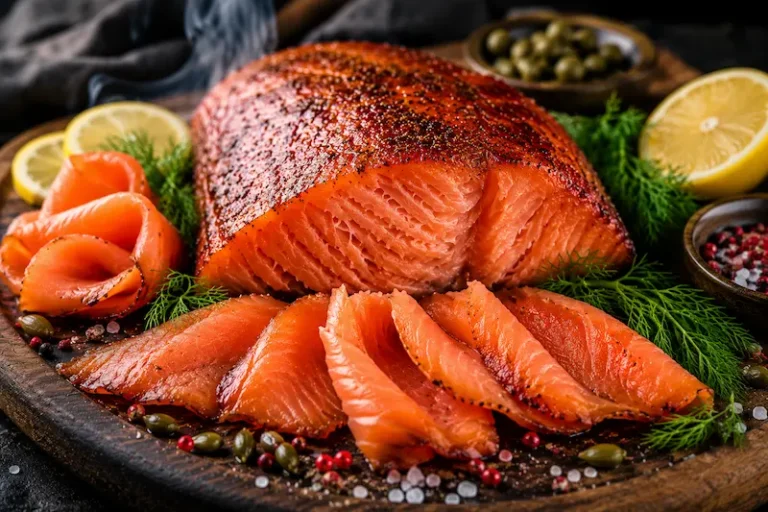
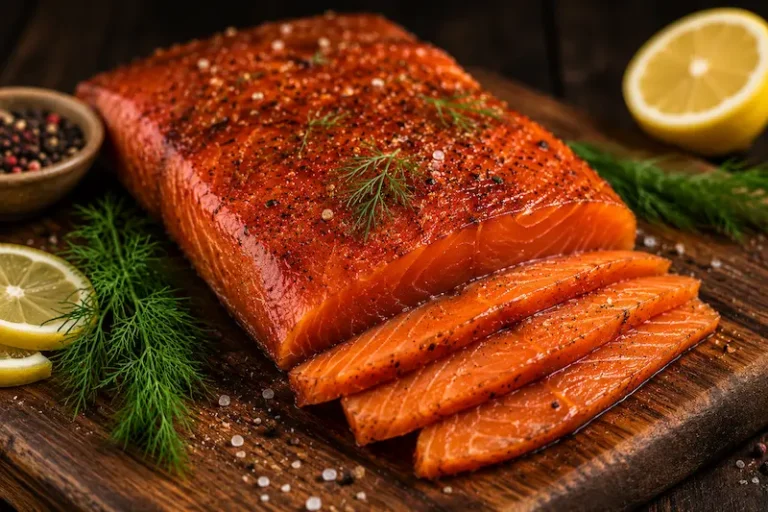
This method is perfect for busy nights and simple entertaining. Prep takes just five minutes. The fillets bake for about 12–15 minutes, or 12 plus a quick three minutes under the broiler for a golden top. If you enjoy preparing salmon in different ways, don’t miss our Perfect Brine for Smoked Salmon guide for rich smoky flavor and consistent results.
The lemon garlic butter browns in the oven, adding flavor. The ingredients include lemon juice, garlic, honey, paprika, oregano, salt, pepper, and a pinch of chili flakes. This creates a caramelized finish that looks and tastes like a restaurant dish.
Baking preserves moisture and omega-3 fats better than pan-searing. Salmon is naturally rich in heart-healthy omega-3 fatty acids. If you’d like to learn more about the benefits of eating fish, see this guide on fish and omega-3 fatty acids. Aim for an internal temperature near 125°F–130°F for moist, flaky flesh. Leaving the skin on during baking helps the fillet cook evenly and stay juicy.
Home cooks say this approach consistently yields flaky, tender salmon. It’s great for light lunches, weeknight family dinners, and small dinner parties. The balance of speed, nutrition, and flavor makes it a favorite in many kitchens.
Ingredients for perfect oven-baked lemon butter salmon
Start with quality ingredients for a delicious lemon butter salmon oven dish. Use fresh, skin-on fillets for crisp edges and moist flesh. Keep seasonings simple to let the lemon butter shine.
Salmon and main seasoning
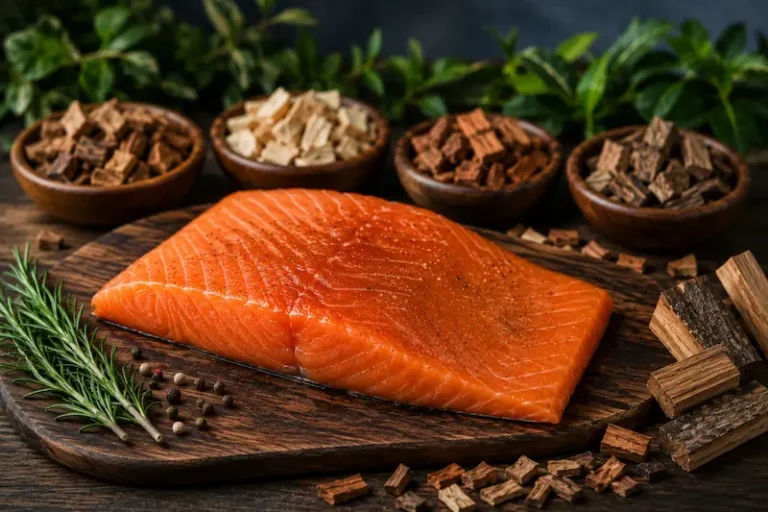
You’ll need four skin-on salmon fillets, about 6 oz each. Many cooks prefer 1.5 lb for larger portions. Season with kosher or sea salt flakes and black pepper. Add a light sprinkle of sweet paprika for color and flavor.
Lemon butter marinade
Mix 2 tbsp melted unsalted butter with 2 tbsp extra-virgin olive oil. Add 2 tbsp fresh lemon juice, 1 tsp minced garlic, 1 tsp honey, 1 tsp sweet paprika, and 1 tsp sea salt flakes. Stir in 1 tsp dried oregano or 1 tsp each chopped parsley and dill for a fresh taste. Finish with 1/2 tsp cracked black pepper and optional 1/2 tsp red pepper flakes. For dairy-free, use ghee or extra olive oil.
Suggested sides and swaps
Classic sides include mashed potatoes, steamed green beans, or crusty bread. For a light meal, choose leafy salads, roasted vegetables, or cauliflower rice. If you prefer another fish, try trout, cod, or sea bass. If you’re interested in more salmon dinner ideas, explore our Easy Sockeye Salmon Recipes for Any Meal for additional cooking inspiration. Reduce bake time for thinner fillets to about 8–10 minutes.
| Ingredient | Standard Amount | Common Swap | Why it matters |
|---|---|---|---|
| Skin-on salmon fillets | 4 fillets (~6 oz each) or 1.5 lb total | Trout, cod, sea bass | Skin crisps and protects flesh during baking |
| Unsalted butter | 2 tbsp (melted) | Ghee or extra-virgin olive oil | Adds richness; swap for dairy-free option |
| Extra-virgin olive oil | 2 tbsp | Avocado oil | Balances butter and helps with browning |
| Fresh lemon juice | 2 tbsp (or 1/2 tbsp for milder) | White wine vinegar (small amount) | Bright acidity that lifts the dish |
| Garlic | 1 tsp minced (or 3 cloves if you like) | Garlic powder (smaller amount) | Key aromatic that complements lemon |
| Herbs | 1 tsp dried oregano or 1 tsp each parsley & dill | Fresh tarragon or chives | Fresh herbs give a brighter finish |
| Salt & pepper | 1 tsp sea salt flakes, 1/2 tsp cracked pepper | Fine sea salt and extra pepper to taste | Seasoning controls overall balance |
| Sides | Mashed potatoes, steamed rice, green beans | Leafy salad, roasted veg, cauliflower rice | Choose comfort or light options for a healthy salmon meal |
Equipment and prep tips for an easy weeknight dinner
Get ready before you start cooking. A few key tools and simple steps make cooking a lemon butter salmon oven dish easy on busy nights.
Essential tools
Choose a roasting or baking dish, or an enamelware casserole pan. Make sure it fits your fillets well. Have a small bowl for the lemon butter marinade ready. A sharp knife makes cutting and portioning easy.
Use tongs or a thin spatula to move the salmon without tearing it. An instant-read thermometer helps check if it’s cooked just right.
Preheat and room-temperature tips
Preheat the oven to 425°F (220°C) for fast caramelization or 375°F (190°C) for gentle cooking. Wait until the oven is at the right temperature before adding the fish. This takes about 20 minutes at high heat.
Let the salmon sit at room temperature for about 15 minutes before baking. This ensures it cooks evenly.
Step-by-step oven method for flaky salmon
Follow a clear, hands-on process to turn a simple baked salmon into a restaurant-worthy dish. Start by preparing the lemon garlic butter so flavors soak into the fish. Then marinate, arrange, and choose the bake method that fits your time and desired finish.
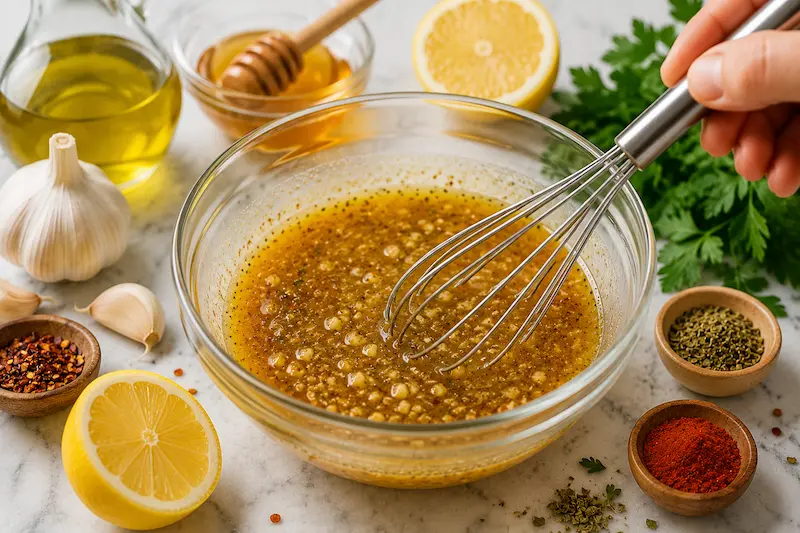
Make the lemon garlic butter
Mix 2 tablespoons melted butter with 2 tablespoons olive oil and 2 tablespoons fresh lemon juice. Add 1 teaspoon minced garlic, 1 teaspoon honey, 1 teaspoon paprika, and 1 teaspoon dried oregano. Season with 1 teaspoon sea salt, freshly ground black pepper, and a pinch of chili flakes if you like heat. Taste and adjust. This mix doubles as a quick sauce you can make up to three days ahead and refrigerate.
Marinate and arrange
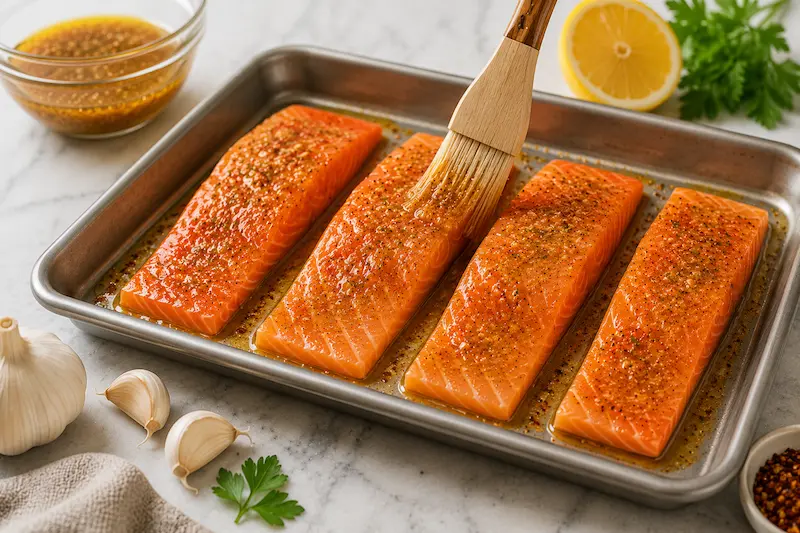
Pat fillets dry and place them skin-side down on a roasting tin or baking dish. Spoon or brush the lemon garlic butter evenly over the top. Let the fish rest for 10–20 minutes at room temperature if you have the time. For simple baked salmon on busy nights, a brief slathering boosts flavor and yields flaky salmon.
Bake and finish for caramelization
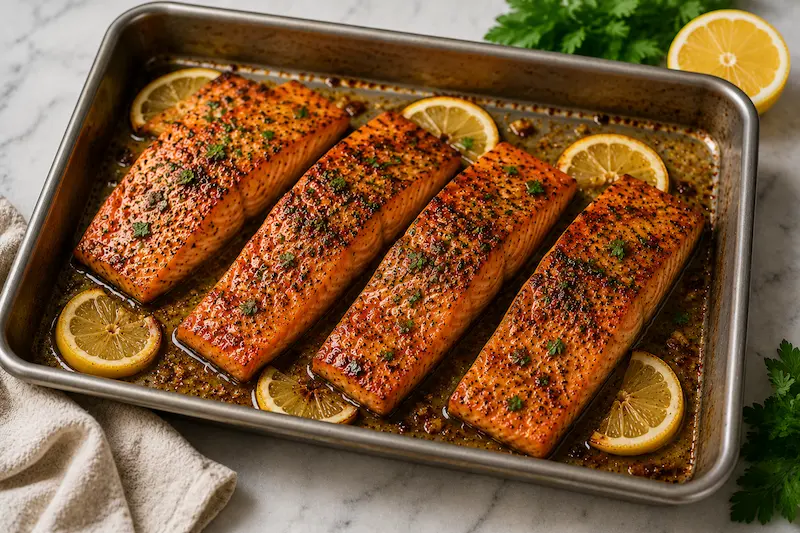
For a quick method, preheat oven to 425°F (220°C). Bake standard fillets for about 12 minutes, then switch to the broiler on high for 2–3 minutes to caramelize the top. For gentler cooking, set the oven to 375°F (190°C) and bake for 12–15 minutes until the fillets are flaky and reach the temperature you prefer. Use the timing guide: standard fillet 12–13 minutes, thicker fillet 13–15 minutes, whole side 15–20 minutes. Serve with lemon slices, extra black pepper, and chopped fresh parsley for brightness.
How to tell when your salmon is perfectly cooked
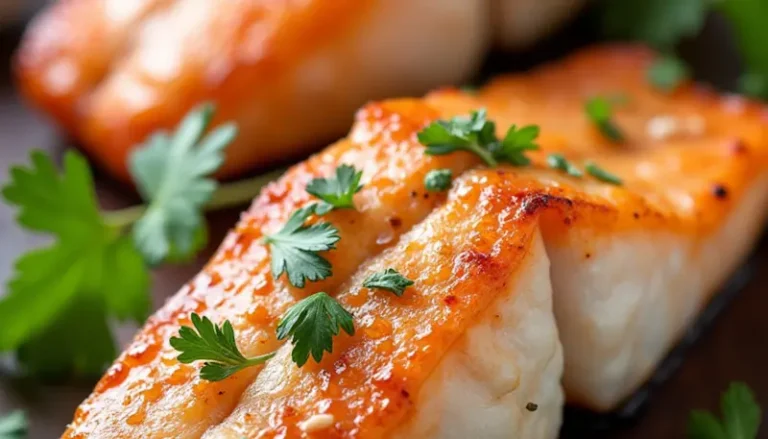
A quick visual check and a simple touch can tell you a lot about doneness. Look for flesh that is mostly opaque with a slightly translucent center. When your fork slides in and the fillet separates into clean flakes, you have flaky salmon ready to serve.
Visual and texture cues
Check the color: cooked salmon turns from glossy and raw to a warm pink that is firm but tender. Press gently near the thickest part. If the layers separate easily, that is the flake test you can trust for a quick salmon fillet.
Using a thermometer
If you prefer precision, use an instant-read thermometer. Aim for 125°F–130°F in the center for moist, slightly rare salmon. A reading in that range gives you the buttery mouthfeel many home cooks expect from a lemon butter salmon oven recipe.
For additional seafood handling, thawing, and cooking recommendations, review the FDA guide on selecting and serving fresh and frozen seafood safely.
About albumin (white ooze)
That white substance is albumin, a harmless protein that solidifies as the fish cooks. Faster, higher heat makes more albumin show on the surface. To reduce thick white layers, bake at moderate heat like 375°F (190°C) so the albumin gently coagulates and your fillet stays glossy.
Variations and flavor twists for simple baked salmon
Explore new flavors to keep your baked salmon exciting. Small changes in herbs, spices, or toppings can make a big difference. These tweaks are perfect for both weeknights and special occasions.
Garlic-lemon herb classic
Mix melted butter, extra lemon juice, and minced garlic. Brush this over the fillets before baking. Finish with chopped parsley and dill for a bright, fresh note that complements the natural richness of the fish.
Spicy honey paprika glaze
Whisk 1 tsp sweet paprika and 1 tsp honey into your butter. Add 1/2 tsp red pepper flakes for a gentle heat level. Apply during the last few minutes of baking and broil briefly to caramelize the honey for a sticky, savory finish.
If you enjoy sweet and savory flavors, our Easy Honey Soy Salmon at Home recipe is another quick and family-friendly option worth trying.
Serving suggestions and side pairings for a healthy salmon meal
Think about balance when serving. Baked salmon is rich and buttery. Pair it with textures and colors to make the plate pop.
Classic comfort pairings
Mashed potatoes and steamed greens make a cozy plate. The creamy mash absorbs lemon garlic butter. Add crusty sourdough or a baguette to clean up the sauce.
Light and healthy options
Choose sides that are light and quick. Steamed rice or cauliflower rice are easy bases. Leafy green salads or roasted Brussels sprouts add crunch and vitamins.
Trimmed green beans, lightly steamed and finished with lemon, keep the meal healthy. They’re fast to prepare for a weeknight dinner.
Leftover ideas
Store cooked salmon in an airtight container for 2–4 days. Cold flakes are great on salads or sandwiches.
Leftover cooked salmon can also be transformed into our Easy Salmon Croquettes Soul Food Recipe for a delicious Southern-inspired meal.
Reheat gently to avoid drying. Flake leftover salmon into pasta with olive oil and capers. Or, roll it into sushi-style wraps or layer it over grain bowls for a quick lunch.
Meal prep, storage, and make-ahead tips for easy weeknight dinner planning
Plan a simple strategy to keep weeknights calm and flavorful. A few prep steps on the weekend save time. This makes it easy to serve a restaurant-style meal at home. Keep ingredients fresh, label containers, and set aside 20 minutes to assemble items before the busiest nights.
Make-ahead lemon garlic butter
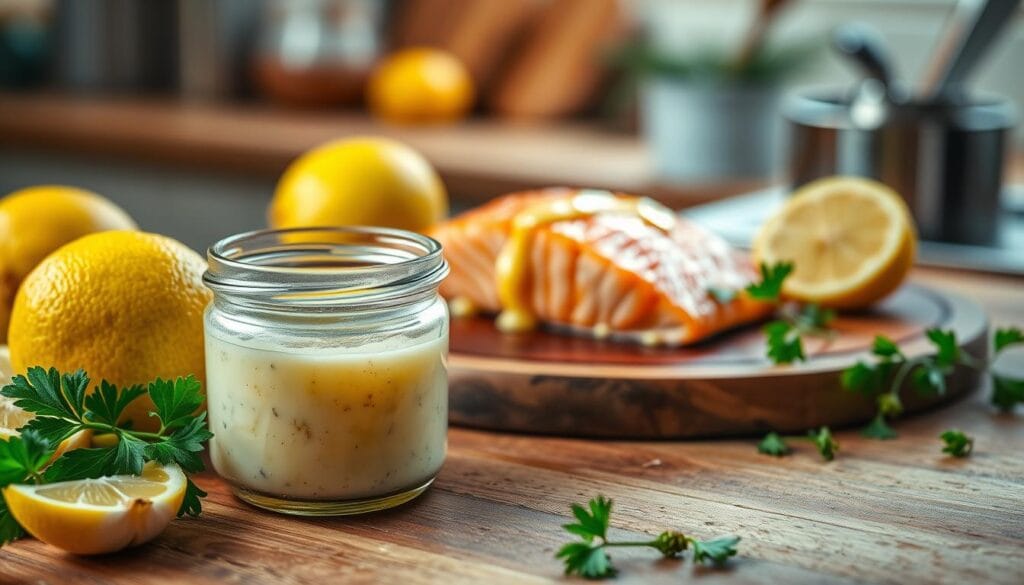
Mix the lemon garlic butter up to three days ahead and store it in an airtight container in the fridge. Chop herbs like parsley or dill and trim vegetables on the weekend to speed assembly. When you brush the butter on salmon just before baking, flavor stays bright and the meal feels effortless.
Storing cooked salmon
Cool cooked salmon quickly, then place it in an airtight container. Shelf life varies; some say use it within two days, others up to three or four. If freezing, test a small portion first, as texture can change.
Reheating without drying
Reheat gently to preserve moisture. Warm salmon in a low oven at about 350°F (175°C) for a few minutes. Or use a covered pan over low heat with a splash of water, lemon, or extra butter. Short microwave bursts can also work. Cold salmon also works well in salads, which avoids reheating entirely.
Common troubleshooting and tips to avoid overcooked salmon
Follow a few simple checks to keep your fillets tender and flavorful. Small changes in temperature, time, and handling make a big difference. Use these practical tips to rescue a near-overcooked piece or to stop the problem before it starts.
Preventing dryness
Set your oven to a moderate heat, about 375°F (190°C). Pull salmon at 125°F–130°F internal temperature for carryover cooking. Keep the skin on during baking to shield the flesh and lock in juices.
Let the fish rest under foil for a few minutes before serving. This helps the heat even out and avoids a dry finish.
Even cooking for different thicknesses
Adjust times by thickness for even cooking. A standard fillet takes roughly 12–13 minutes. Thicker pieces need 13–15 minutes, and a whole side bakes for 15–20 minutes.
Thin fillets or white fish usually finish in 8–10 minutes. Bring fillets to room temperature for 10–15 minutes. This reduces cold centers and promotes consistent doneness.
Substituting proteins
The method translates well to trout, barramundi, snapper, basa, cod, sea bass, or grouper. Cook thinner fillets for less time. Treat fattier fish like trout similar to salmon.
If you avoid dairy, swap butter for ghee or extra-virgin olive oil. This gets similar browning and flavor without lactose.
When you need a quick salmon fillet, trim predictable thickness, pat dry, and use a timer. A brief check with an instant-read thermometer avoids guesswork. This keeps results reliable whether you’re baking one fillet or a tray of mixed sizes.
Conclusion
This oven-baked lemon butter salmon is one of the easiest ways to prepare a flavorful seafood dinner at home. The combination of butter, garlic, and fresh lemon creates a simple sauce that enhances the natural richness of the fish without overpowering it.
Whether you’re making a quick salmon fillet for a busy weeknight or serving a healthy salmon meal for family and friends, this recipe delivers tender, flaky salmon with very little effort.
For best results, bake at 375°F for a gentler, juicier texture or at 425°F for a faster cook and lightly caramelized finish. Keep an eye on the internal temperature and remove the salmon at 125–130°F for perfectly moist results.
Once you try this simple baked salmon recipe, it may become one of your favorite easy weeknight dinner options.
FAQ
How long do you bake salmon at 425°F?
Bake salmon at 425°F for 12–15 minutes, depending on thickness. For extra caramelization, broil for 2–3 minutes at the end. The salmon is ready when it flakes easily and reaches an internal temperature of 125–130°F.
Is it better to bake salmon at 375°F or 425°F?
Both temperatures work well. Baking at 425°F creates a golden, caramelized surface and cooks the fish faster. Baking at 375°F is gentler and often results in a more moist and tender fillet.
Do you bake salmon covered or uncovered?
For this oven-baked lemon butter salmon recipe, bake the salmon uncovered. This allows the lemon butter sauce to caramelize and gives the top of the fish a beautiful golden finish.
How do you know when salmon is fully cooked?
Salmon is done when it flakes easily with a fork and looks mostly opaque with a slightly translucent center. For the best texture, aim for an internal temperature of 125–130°F.
What is the white stuff that comes out of salmon when baking?
The white substance is albumin, a natural protein found in salmon. It is completely safe to eat. Cooking at a lower temperature, such as 375°F, can help reduce the amount that appears.
Can I use frozen salmon?
Yes. Thaw frozen salmon overnight in the refrigerator or place the sealed fillets in cold water for about one hour. Pat the fish dry before seasoning to help it bake evenly and develop better color.
What sides go well with lemon butter salmon?
This healthy salmon meal pairs well with mashed potatoes, steamed rice, green beans, roasted vegetables, cauliflower rice, or a fresh green salad. Crusty bread is also perfect for soaking up the lemon butter sauce.
How do I keep baked salmon from drying out?
To keep salmon moist and flaky, leave the skin on during baking, avoid overcooking, and remove the fish when it reaches 125–130°F internally. Let it rest for a few minutes before serving to retain its juices.
We Value Your Opinion!
Tell us how this recipe worked for you — your voice counts.
There are no reviews yet. Be the first one to write one.