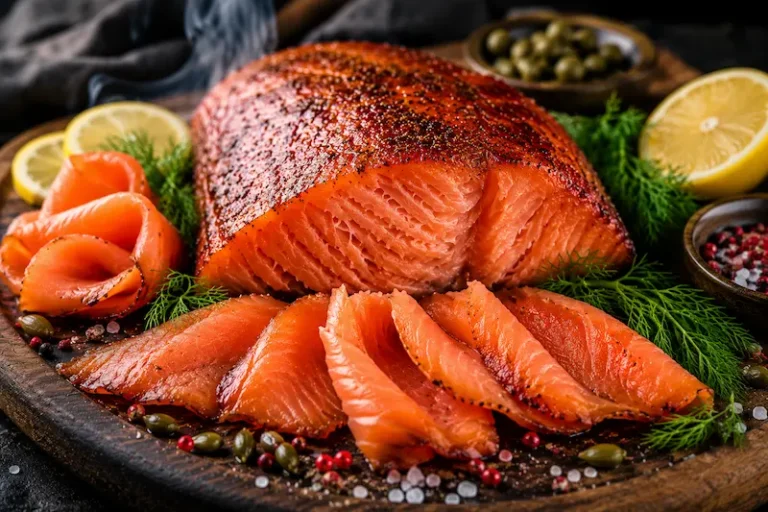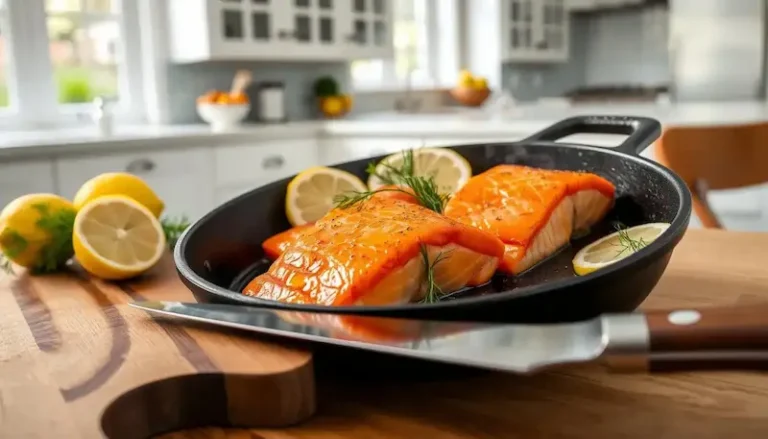
Smoked Salmon Dry Brine Recipe: 5 Easy Steps for Better Flavor
The first time I tried a smoked salmon dry brine recipe, I wasn’t expecting much of a difference.
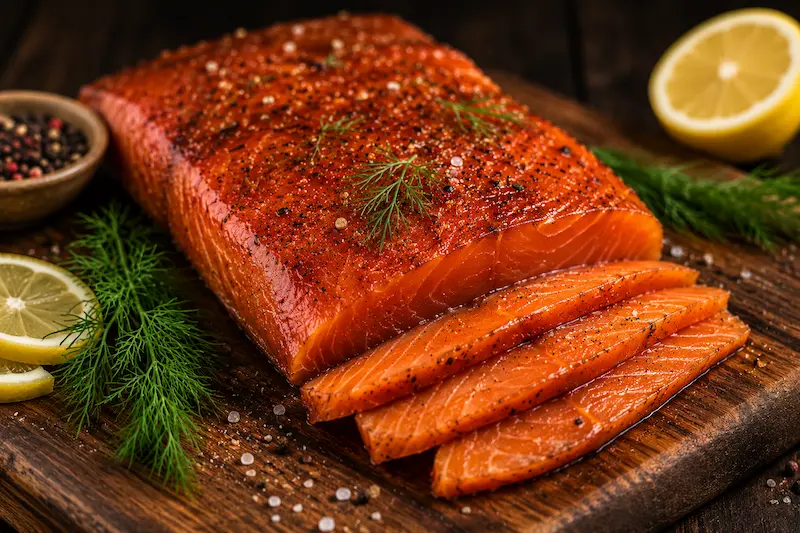
For years, I used traditional wet brines whenever I smoked salmon. The results were good, but the process required extra containers, more cleanup, and a bit more planning. One weekend, I decided to test a simple dry brine instead. After an overnight rest in the refrigerator and a few hours in the smoker, the salmon came out with a richer flavor, firmer texture, and a beautiful glossy surface.
Since then, I’ve used dry brining for many of my smoked salmon recipes. It’s simple, effective, and perfect for home smokers who want excellent results with minimal effort.
If you’re looking for an easy way to improve flavor, texture, and moisture retention, this smoked salmon dry brine recipe is one of the best techniques you can learn.
Table of Contents
Recipe At A Glance
- Prep Time: 15 minutes
- Brine Time: 8–12 hours
- Smoking Time: 2–3 hours
- Total Time: 10–15 hours
- Servings: 6
- Difficulty: Easy
Why You’ll Love This Smoked Salmon Dry Brine Recipe
- Easier than traditional wet brining
- Creates deeper salmon flavor
- Helps retain moisture during smoking
- Produces a beautiful pellicle
- Works with pellet, electric, and charcoal smokers
- Beginner-friendly
Many home smokers prefer dry brined smoked salmon because it delivers concentrated flavor without the mess of a liquid brine. If you’re wondering how to dry brine salmon for smoking, this method is simple, reliable, and works with almost every salmon variety. It’s also considered by many pitmasters to be the best dry brine for salmon when the goal is rich flavor and a firm, silky texture.
Dry Brine vs Wet Brine
Is This Smoked Salmon Dry Brine Recipe Better Than Wet Brining?
One of the most common questions is whether dry brining is better than wet brining.
Both methods work well, but they produce slightly different results.
Wet Brine
Benefits:
- Adds moisture
- Traditional method
- Great for beginners
Drawbacks:
- Requires more space
- More cleanup
- Takes longer to prepare
If you prefer this method, check out my Perfect Brine for Smoked Salmon guide.
Dry Brine
Benefits:
- Concentrates flavor
- Firmer texture
- Easier preparation
- Less mess
Drawbacks:
- Slightly less moisture than a wet brine if overdone
For many home smokers, dry brined smoked salmon offers the best balance between flavor and convenience.
Ingredients
- 2 pounds salmon fillet
- ¼ cup kosher salt
- ¼ cup brown sugar
- 1 teaspoon black pepper
- 1 teaspoon garlic powder (optional)
- 1 teaspoon onion powder (optional)
Why Each Ingredient Works
Kosher Salt
Salt draws moisture to the surface and helps season the fish evenly.
Brown Sugar
Brown sugar balances the saltiness and encourages beautiful color development during smoking.
Black Pepper
Adds subtle warmth without overpowering the salmon.
Garlic and Onion Powder
Optional but excellent for adding savory depth.
Best Salmon for Dry Brining
During testing, I found that several salmon varieties respond well to dry brining.
Whether you’re preparing Atlantic, Sockeye, Coho, or King salmon, this salmon dry brine method helps improve texture while enhancing natural flavor.
If you’re choosing salmon for smoking, it’s also worth reviewing sustainable salmon choices before buying.
Atlantic Salmon
Rich and fatty.
The higher fat content helps maintain moisture throughout the smoking process.
Sockeye Salmon
Lean and flavorful.
Sockeye develops excellent smoke flavor but requires careful temperature monitoring.
If you’re using wild-caught Sockeye, see my Easy Sockeye Salmon Recipe for additional preparation tips.
King Salmon
The premium option.
Its high fat content makes it extremely forgiving during smoking.
Step-by-Step Smoked Salmon Dry Brine Recipe (5 Easy Steps)
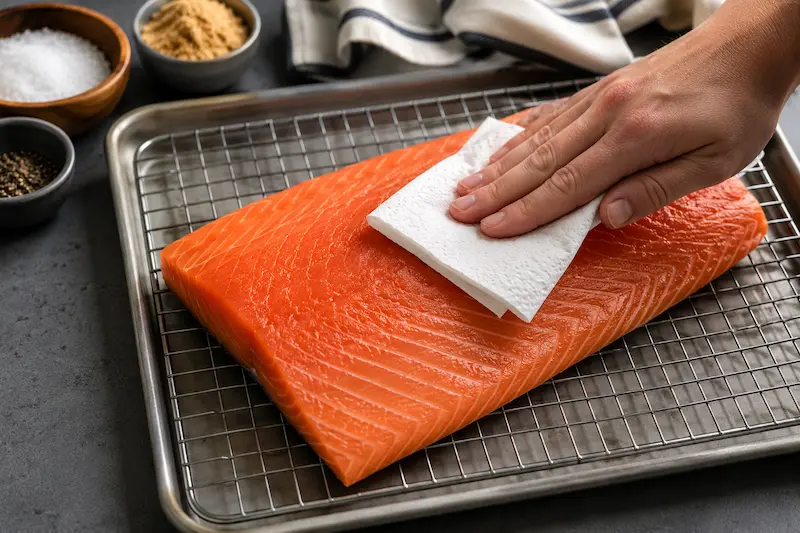
Step 1: Pat the Salmon Dry
Remove excess moisture using paper towels.
A dry surface helps the salt and sugar mixture adhere more evenly.
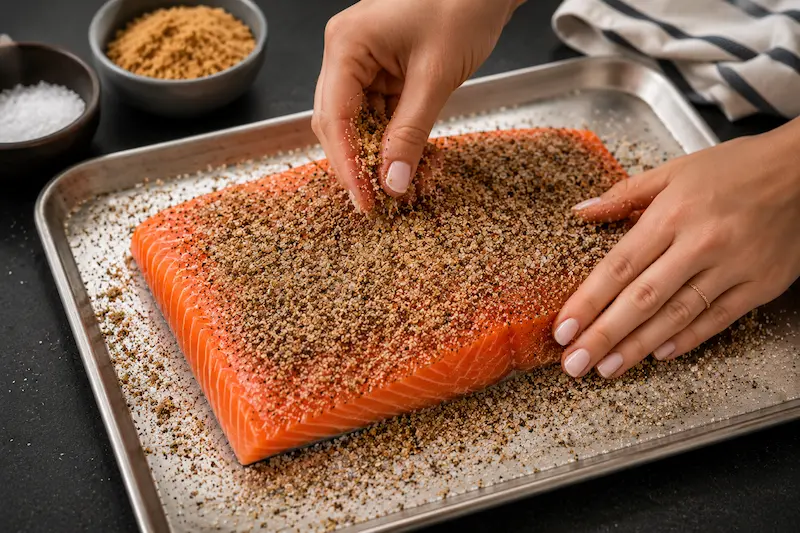
Step 2: Apply the Dry Brine
Mix the kosher salt, brown sugar, black pepper, garlic powder, and onion powder.
Coat the salmon evenly on all sides.
Be sure to cover the thicker portions thoroughly.
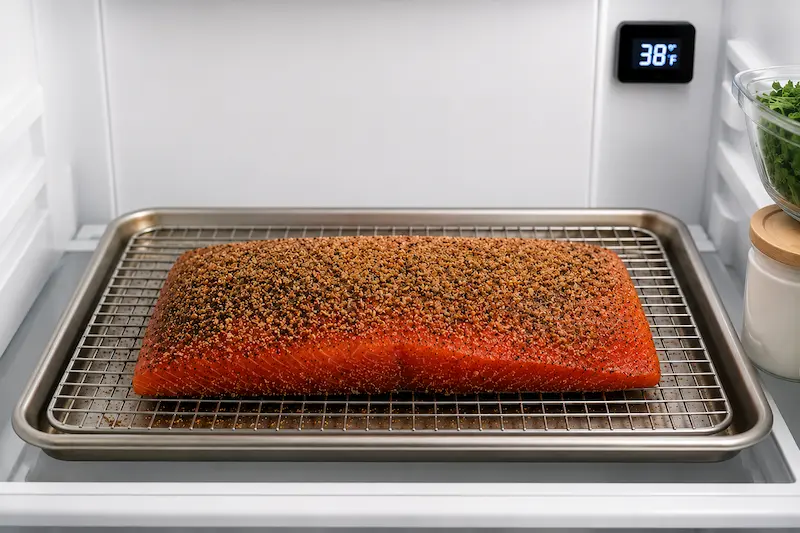
Step 3: Refrigerate Overnight
Place the salmon on a wire rack set over a tray.
Refrigerate uncovered for 8 to 12 hours.
During this time, the dry brine salmon will begin developing flavor while drawing moisture to the surface.
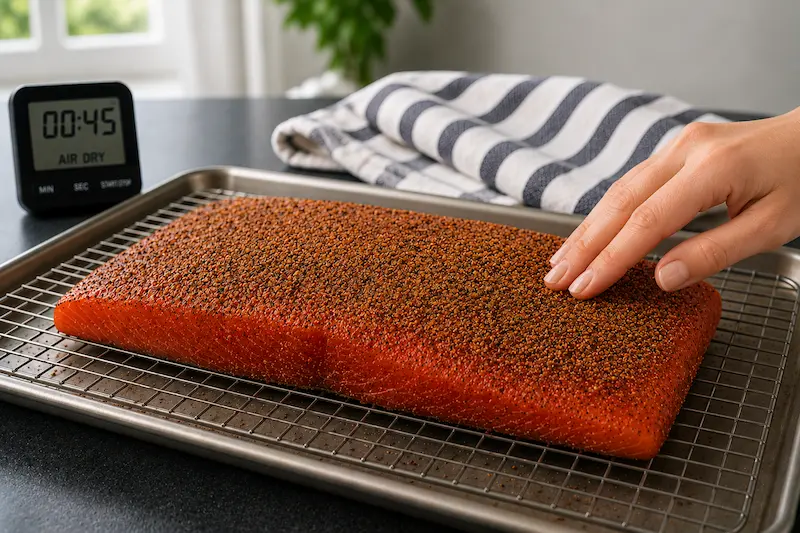
Step 4: Form the Pellicle
Remove the salmon from the refrigerator.
Allow it to air-dry for 30 to 60 minutes.
A slightly tacky surface known as a pellicle will form.
This pellicle helps smoke adhere to the fish and improves the final appearance.
Many experienced smokers consider pellicle formation one of the most important steps for achieving consistent smoked salmon results.
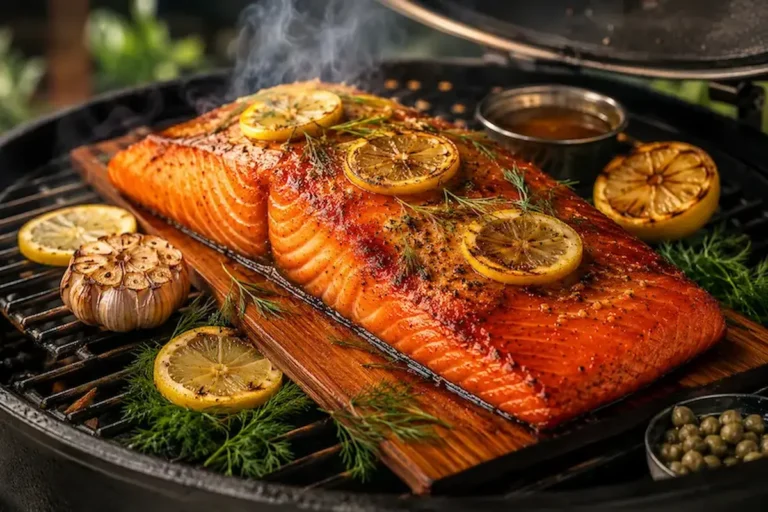
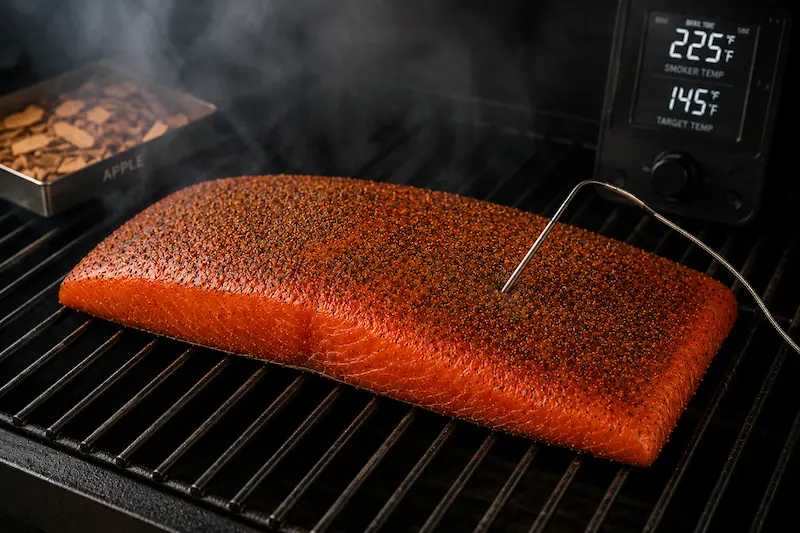
Step 5: Smoke the Salmon
Preheat your smoker to 225°F.
Place the salmon skin-side down on the smoker grates.
Smoke until it reaches your preferred internal temperature.
Most dry brined smoked salmon takes between 2 and 3 hours at 225°F, although thicker fillets may require additional time.
For food safety, the USDA recommends cooking fish to a safe internal temperature of 145°F.
For complete timing recommendations, see my How Long to Smoke Salmon guide.
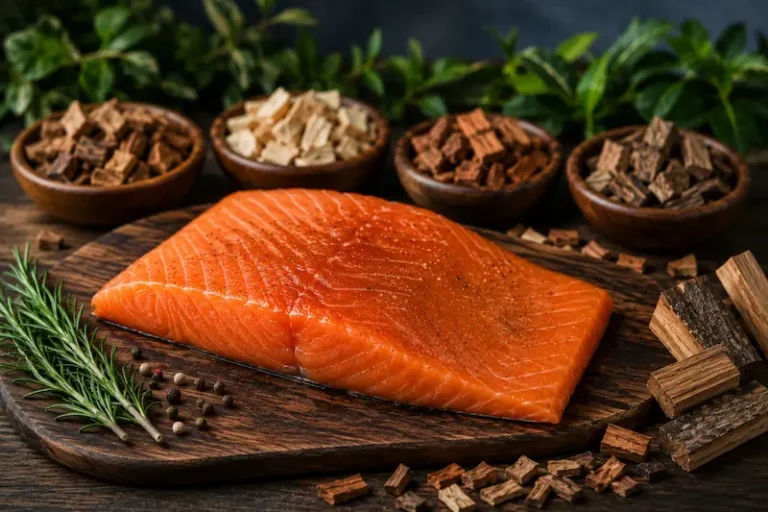
For the best flavor, I recommend using alder, apple, or maple. My Best Wood for Smoking Salmon guide explains the differences between each option.
Dry Brine Timing Chart
One of the most common questions is how long to dry brine salmon before smoking.
Use this chart as a general guide:
| Salmon Thickness | Dry Brine Time |
|---|---|
| Thin Fillet (1 inch) | 6–8 hours |
| Standard Fillet (1.5 inches) | 8–12 hours |
| Thick Fillet (2 inches) | 12–16 hours |
For most home smokers, 8 to 12 hours provides the best balance of flavor and texture.
The Biggest Mistake to Avoid
The most common mistake is using too much salt.
When I first started experimenting with dry brined smoked salmon, I assumed more salt would create more flavor. Instead, the salmon became overly salty and masked its natural richness.
Follow the recommended measurements and avoid extending the dry brine beyond 16 hours unless you’re working with an exceptionally thick fillet.
Real Tests I Tried
Brown Sugar vs No Sugar
I tested two nearly identical salmon fillets.
One received only salt and pepper.
The other included brown sugar.
Results:
Salt Only
Pros:
- Clean flavor
- Traditional profile
Cons:
- Less color development
- Slightly firmer texture
Salt + Brown Sugar
Pros:
- Better color
- More balanced flavor
- Improved appearance
Cons:
- Slightly sweeter finish
For most people, I recommend including brown sugar.
8 Hours vs 12 Hours
Both worked well.
However, the 12-hour dry brine consistently produced a better pellicle and more developed flavor.
What to Serve With Smoked Salmon
Dry brined smoked salmon pairs well with a variety of side dishes.
My favorites include:
- Cream cheese and bagels
- Roasted asparagus
- Rice bowls
- Fresh cucumber salad
- Mixed greens
- Roasted potatoes
- Crackers and soft cheese
It also makes an excellent protein for sandwiches and wraps.
Leftover smoked salmon can also be transformed into Easy Salmon Croquettes for a quick and flavorful meal the next day.
Storage and Reheating
Refrigerator
Store smoked salmon in an airtight container for up to 4 days.
Freezer
Wrap tightly and freeze for up to 3 months.
Reheating
If reheating, use low heat.
High temperatures can quickly dry out smoked salmon and reduce the benefits of the dry brine.
Nutrition Information (Estimated)
Per serving:
- Calories: 250
- Protein: 31g
- Fat: 12g
- Carbohydrates: 3g
- Fiber: 0g
Values vary depending on the salmon variety and exact ingredients used.
Salmon is also well known for its high concentration of omega-3 fatty acids and essential nutrients.
Expert Tips
After testing dozens of batches, these are the tips that consistently produce the best results:
- Use kosher salt instead of table salt.
- Don’t skip the overnight refrigeration period.
- Allow enough time for a pellicle to form.
- Use a thermometer instead of relying solely on time.
- Smoke at 225°F for the best balance of flavor and texture.
- Choose mild woods such as alder, apple, or maple.
If you’re new to smoking fish, remember that a dry brine salmon recipe is designed to improve both texture and moisture retention. Consistency matters more than perfection, so focus on temperature control and proper drying before smoking.
FAQ
What is a smoked salmon dry brine recipe?
A smoked salmon dry brine recipe uses salt, sugar, and seasonings applied directly to the fish instead of soaking it in liquid. This method enhances flavor and improves texture before smoking.
How long should I dry brine salmon for smoking?
Most salmon fillets benefit from 8 to 12 hours of dry brining. Thicker fillets can be brined for up to 16 hours.
Is dry brine better than wet brine?
Both methods work well. Dry brining is easier, less messy, and produces a firmer texture, while wet brining may provide slightly more moisture.
Do I rinse dry brined salmon before smoking?
Many smokers lightly rinse the salmon and pat it dry before forming the pellicle. Others leave the seasoning intact. Both methods can work successfully.
Can I dry brine frozen salmon?
Yes, but thaw the salmon completely before applying the dry brine.
What is the best dry brine for salmon?
A simple mixture of kosher salt, brown sugar, and black pepper provides excellent results for most smoked salmon recipes.
Does dry brining make salmon salty?
Not when used correctly. Following the recommended measurements helps create balanced flavor without excessive saltiness.
Who Should Use This Smoked Salmon Dry Brine Recipe?
This method is ideal for home smokers who want a simple way to improve flavor, texture, and moisture retention without preparing a liquid brine.
Can I leave salmon in a dry brine too long?
Yes. Excessive brining can make the salmon overly salty and affect texture. For most fillets, 8 to 12 hours is ideal.
Final Thoughts
This smoked salmon dry brine recipe has become one of my favorite preparation methods because it’s simple, reliable, and consistently produces flavorful results.
After testing both wet and dry brines, I found that dry brining offers the perfect combination of convenience, texture, and rich salmon flavor. Combined with proper smoking temperatures and quality wood, it’s one of the easiest ways to create restaurant-quality smoked salmon at home.
Whether you’re smoking Atlantic, Sockeye, Coho, or King salmon, learning how to dry brine salmon for smoking can dramatically improve your results and help you produce juicy, flavorful fish every time.
If you’re new to smoking salmon, I recommend starting with Perfect Brine for Smoked Salmon, then learning How Long to Smoke Salmon and Best Wood for Smoking Salmon to build a complete smoking workflow.
We’d Love Your Feedback
Made this recipe? We’d love to hear how it turned out! Leave a star rating and share your experience to help other home cooks cook with confidence.
There are no reviews yet. Be the first one to write one.